Richard Justice’s confusion about David Carr

David_Carr 032307 So, the Houston Chronicleís Richard Justice is now writing in the San Francisco Chronicle that it was the fault of former Texans GM Charley Casserly and former head coach Dom Capers that former Texans QB David Carr did not develop into a decent NFL quarterback.

Of course, Justice extolled the virtues of that same Texansí management team immediately before their disastrous 2-14 season in Year Four of the franchise (2004):

The Texans have made good use of their honeymoon. They’ve drafted wisely and spent shrewdly on free agents. They’ve assembled a front office admired around the NFL. Their players seem to be quality people. [. . .]

The danger for them is that their greatest strength could become their greatest weakness. They’ve done so many things right and have built such a model operation that it’s impossible not to put expectations on a fast track. [. . .]

So far, it’s impossible not to be impressed with what the Texans have done. They are run as efficiently as any sports franchise I’ve ever been around.

Just before the start of training camp, Casserly gathered his employees and thanked them for all their hard work. Then he went down the list of different departments and explained some little thing each had done that made the team – and the organization – better.

That’s the kind of thing the people who run sports franchises almost never do, and it left every person who was mentioned proud to be associated with the Texans.[. . .]

Capers believes it’s vital to emphasize doing things right because "if you ever slip, you can never get it back."

So far, the Texans haven’t slipped in any significant way.

In fact, look at what Justice was saying about the Casserly-Capers-Carr regime even after it had put up a horrid 1-8 record through nine games of the 2004 season:

The Texans are respectable. They’re coming close. They’ve got four 2-7 teams left on their schedule. They almost won in Jacksonville, and they made a run at the Indianapolis Colts before losing 31-17 Sunday. [.   .  .]

The Texans are a better offensive team since [offensive coordinator Joe] Pendry took over [for the fired Chris Palmer]. David Carr looks like he’s on his way to becoming a first-rate quarterback. He’s quicker and more accurate in his throws, less likely to take a sack.

But then a couple of months later, after Carr and the Texans had cemented a perfectly awful 2-14 season, Justice had changed his tune to something similar to the one he sings now:

What we’ll never know is what would have happened if Carr had gotten with an organization that knew what it was doing. The Texans never protected him or coached him, never put enough talent around him. Shame on you, Charley Casserly. Shame on you, too, Bob McNair. Maybe you guys were wrong about what David Carr could have been, but you never gave him a chance to find out.

Uh, Richard. Five seasons is long enough. Yes, the Texansí offensive line wasnít all that good during that span. But Carr wasnít very good, either, and that didnít help the offensive lineís performance.

The bottom line is that David Carr was a poor NFL quarterback in Houston. Nothing that he has done with two other teams (with decent offensive lines) since his time here has changed that evaluation. The Texans made a big mistake in selecting him as the teamís first draft choice.

It really is that simple, Richard.

If you are interested in really first-rate analysis of the Texans, then check out local bloggers such as Stepanie Stradley, Lance Zerlein and Alan Burge. Their work beats the Chron sportswriters product hands down.

Smartphone Etiquette

no-cell-phone-sign Iím routinely amazed at how oblivious some people are regarding their rude cell phone manners. So, the 5Across video conversation below on smartphone etiquette interested me.

However, what starts as a discussion about smartphone etiquette turns into a more engaging conversation on the various ways in which different people are processing information in their daily interactions with friends and co-workers.

Proper etiquette is pretty simple. But the way in which people of different social and work groups communicate with each other is not. Watch this fascinating discussion and discover why.

The National Enquirer one ups the MSM

enquirer-499x414 The Washington Postís Paul Farhi makes the interesting point in this American Journalism Review op-ed that the biggest scandal in regard to the Tiger Woods affair may be that the National Enquirer tabloid newspaper did a better job of following proper journalistic procedures in breaking the scandal than much of the mainstream media did in follow-up reporting on it:

[National Enquirer Editor] Barry Levine finds himself surprised, appalled and somewhat amused by the way much of the mainstream media handled the Woods scandal. The Enquirer’s original story, he notes, took months of reporting. It involved many hours of interviews, polygraph tests, stakeouts, document dives and travel. It was checked and re-checked.

But many members of the MSM, he notes, exercised no such care in reporting subsequent aspects of the story. "It would have taken us a couple of years to properly investigate each of these women’s claims as thoroughly as we did the first" woman’s, Levine says. "The stories were all over the place. There was just some outrageous coverage."

That’s right. The editor of the National Enquirer doesn’t think much of the way the "respectable" media covered Tiger Woods. Anyone paying close attention would concur that he has a point. It might be that the biggest scandal to come out of the Woods affair wasn’t the one about a golfer. It was the one about the news media.

Meanwhile, The New York Times ñ that paragon of the mainstream media ñ is currently taking it on the chin around the blogosphere because one of its leading business reporters essentially doesnít know what she is talking about in this article from over the weekend.

The blogosphere exposed the vacuous nature of how much of the mainstream media addressed complex issues. Now the tabloids are doing a better quality of reporting than many MSM publications on certain major stories. Will the mainstream media have any credibility or meaningful stature left when the reformation of how we process information is complete?

Making good on Baylor Med’s bad bet

27937 The Chronicleís Todd Ackerman and Loren Steffy did a good job in this weekend article of chronicling the series of bad bets that Baylor College of Medicineís Board of Trusteeís made in the wake of the schoolís unfortunate 2004 divorce from The Methodist Hospital. Baylor Medís travails have been a regular topic on this blog, most recently here.

The elephant in the parlor of Baylor’ Medís financial problems is the $600 million in bond debt that Baylor Med incurred in connection with its currently mothballed hospital project. Indeed, the difference between the total bond debt and the value of the underlying collateral would gobble up a large chunk of Baylorís endowment, which is currently a tad under a billion dollars. That was enough to scare off Rice University, although I question whether that was the right long-term decision for Rice.

So, the future is bit cloudy for Baylor. But what Iím wondering is whether there is a local partnership that could bail Baylor out of most of current problems while providing an essential benefit for the Houston community?

The last time I look into the issue, estimates in the Houston metro area has one of the largest percentages of uninsured residents in the U.S. (over 30% versus a national average of about 16%). The Harris County Hospital District ultimately ends up with the issues involved with financing indigent care as well as ensuring that adequate medical facilities exist for local citizens.

Given the HCHDís projected need for facilities to keep up with the growth of the Houston area, it makes sense for the HCHD to engage Baylor in discussions over a partnership in which HCHD would make an investment in the hospital in return for Baylorís agreement to staff the institution as its primary teaching facility.

Baylor and the HCHD already work closely in connection with the staffing of the Ben Taub Hospital trauma unit in the Texas Medical Center. A pure teaching hospital for Baylor would provide a quasi-public, low-cost alternative to the Med Centerís impressive but expensive array of private hospitals.

Sure, the details would have to be worked out, such as management of the facility. But doesnít such an investment by the county make sense, particularly when compared to ones such as this?

The Last Four Minutes of Air France Flight 447

Airbus_3 I’ve been meaning to pass along for awhile  this superb Gearld Traufette/Spiegel Online article on the continuing investigation into last summer’s horrific crash of Air France 447 into the Atlantic Ocean (earlier post here).

Although the black box still has not been recovered (and quite likely won’t be), investigators are becoming more confident that they understand what happened, including the following interesting theory:

According to this scenario, the pilots would have been forced to watch helplessly as their plane lost its lift. That theory is supported by the fact that the airplane remained intact to the very end. Given all the turbulence, it is therefore possible that the passengers remained oblivious to what was happening. After all, the oxygen masks that have been recovered had not dropped down from the ceiling because of a loss of pressure. What’s more, the stewardesses weren’t sitting on their emergency seats, and the lifejackets remained untouched. "There is no evidence whatsoever that the passengers in the cabin had been prepared for an emergency landing," says BEA boss Jean-Paul Troadec.

Read the entire article, including this informative graphic.

Colbert’s interview of Shaun White at the Olympics

“How much of your hair is Red Bull?”

The NBA Bubble

A_ToyotaCenter Looking for the next bubble to burst?

How about the National Basketball Association, where the local Houston Rockets play in what has been nicknamed ìThe Library on LaBranchî because of the lack of fan interest at their home games.

ESPNís Bill Simmons dissects and then sums up the leagueís dilemma well:

.  .  . The current system doesn’t fly. The salary cap and luxury threshold ebb and flow with yearly revenue — so if revenue drops, teams have less to spend — only there’s no ebb and flow with the salaries. When the revenue dips like it did these past two seasons, the owners are screwed.

They arrived at this specific point after salaries ballooned over the past 15 years — not for superstars, but for complementary players who don’t sell tickets, can’t carry a franchise, and, in a worst-case scenario, operate as a sunk cost. These players get overpaid for one reason: Most teams throw money around like drunken sailors at a strip joint. When David Stern says, "We’re losing $400 million this season," he really means, "We stupidly kept overpaying guys who weren’t worth it, and then the economy turned, and now we’re screwed."

This isn’t about improving the revenue split between players and owners. It’s about Andre Iguodala, Emeka Okafor, Elton Brand, Andrei Kirilenko, Tyson Chandler, Larry Hughes, Michael Redd, Corey Maggette and Luol Deng making eight figures a year but being unable to sell tickets, create local buzz or lead a team to anything better than 35 wins.

It’s about Jermaine O’Neal making more money this season than Kevin Durant, Russell Westbrook, James Harden, Serge Ibaka, Eric Maynor, Thabo Sefolosha and Jeff Green combined.

It’s about Rasheed Wallace — a guy who quit on his team last season, then showed up for this one with 34Cs and love handles — roping the Celtics into a $20 million, three-year deal that will cost Boston twice that money in luxury tax penalties.

With at least a dozen or so NBA teams facing serious financial problems, my sense is that the league is facing a radical restructuring whether the players like it or not. Of course, a substantial component of those teamsí financial problems is attributable to the transfer of capital that many teams made to players as a result of not needing to rat-hole capital for arenas that local governments naively financed instead.

Sort of makes one re-think this boondoggle, eh?

An interesting health care finance contrast

health_insurance This Sean P. Murphy/Boston Globe article details how local government-subsidized health insulation ìinsuranceî plans are crippling municipal budgets throughout Massachusetts.

On the other hand, this WSJ op-ed by Indiana Governor Mitch Daniels explains how the state is saving $20 million of health care expenses in 2010 through the introduction of a highly-popular state employee health finance plan based upon Heath Savings Accounts.

This is not surprising. The most efficient way to spend less on health care is to consume less of it. As a result, someone ñ be it the consumer, an insurer or the government ñ at some point has to say no to the consumption of more health care. As Steve Lansburg recently pointed out, that eating more cake diet just doesnít work. The WSJ’s Holman Jenkins agrees.

Unfortunately, the present U.S. employer and government-based, third-party payor health care finance system provides powerful incentives to consume more health care. And, as Milton Friedman was fond of saying, consumers will consume as much health care as they can so long as someone else is paying for it.

Until we change the reliance on such consumer insulation from health care decisions, the dynamic of rising costs is unlikely to cease.

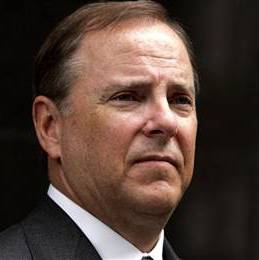
Jeff Skilling Day at SCOTUS

Got to love the response of Sri Srinivasan — who handled yesterday’s oral argument for Jeff Skilling in his appeal to the U.S. Supreme Court — to the government’s contention that a five-hour voir dire of the jury was sufficient in Skilling’s trial to rebut the presumption of community prejudice against Skilling.

According to Lyle Denniston, whose account of the argument is the most comprehensive that I’ve seen, Srinivasan pointed out that the far less complicated criminal trial of Martha Stewart involved six days of juror selection in a case where there was no evidence of “deep-seated passion and prejudice” among jurors.

As Denniston notes, the SCOTUS Justices are usually hard to read during oral argument and the Skilling argument was no different. Jeffrey Toobin observes in his recent book on the Supreme Court, Supreme Court decisions are often more the product of coalition-building between the Justices than the legal theories.

From reading Denniston’s account and from talking with a couple of friends who attended the argument, I’m guessing that the Justices have already decided either to invalidate or dramatically limit the honest-services wire fraud statute (18 U.S.C. 1346), and that much or all of Skilling’s conviction will be overturned on that basis.

If I’m right on that, then the Justices are now only deciding whether to knock out Skilling’s conviction entirely on the District Court’s refusal to change venue from Houston or to conduct a thorough voir dire of jurors and leave the honest services issues for the other two pending cases involving the same issue.

But ignored among all the media reports on the Skilling SCOTUS argument is that the Skilling case is far from over even if SCOTUS were to uphold Skilling’s conviction. Put on hold pending the outcome of the SCOTUS appeal is the Fifth Circuit’s order to U.S. District Judge Sim Lake to re-sentence Skilling because of errors in the calculation of the length of the sentence.

But even more importantly, the Skilling team is awaiting the outcome of the Supreme Court appeal before filing what will certainly be a scalding motion for new trial in the District Court based on pervasive prosecutorial misconduct involved in the Enron Task Force’s prosecution of Skilling.

And that could well be more revealing than any Supreme Court argument.