Colbert on Protestantism

Stephen%20Colbert%20book.jpgClear Thinkers favorite Stephen Colbert is back at it, this time taking dead aim at American Protestantism (Colbert is a Catholic) in his new book, I Am an American (and So Can You!) (Grand Central 2007). Ben Witherington has read the book and passes along Colbert’s view on Religion from chapter 4:

Chapter 4 of the book is devoted to “Religion” and begins auspiciously with a quote from a Doobie Brothers song “Jesus is just alright with me.” To this is added Colbert’s retort– “But are they alright with Jesus? Drop the reefer boys, and pick up a Bible!”
His discussion of denominations begins with the reminder that the Roman Catholic Church is “the church.” He adds “Catholics have many advantages over other Christians. One is marble. For the buck I put into the collection plate, I want some production value. That means a church, not some community center that doubles as basketball court. Also Catholics have saints– more than 10,000 of them. They’re like God’s customer service reps, and each of them has a speciality.” (p. 53).
But then he gets down to brass tacks with Protestanism, here defined as “This is a variant form of Christianity, or ‘heresy’.” He adds “Protestants don’t make me angry as much as disappointed. Unlike the world’s crazy made up religions, they’re so close to getting it right. They’re a single Pope away from reaching their full potential.” (p. 53). He says that now that Protestants have had “their little 490 year protest, it’s time to move on and stop dwelling in the past.” Here’s his blow by blow account of various Protestant denominations:
Episcopal Church: “Why don’t Episcopalians just come out and say it– their Anglicans! A bunch of Tory Loyalist Brito-philes…waiting for the day America let’s her guard down and they can reinstate Henry VIII”
Methodist Church: “What, the Church of England wasn’t heretical enough for you?”
Presbyterian Church: “Presbyterians are identical to Methodists except that one of them says “debt’s” instead of “trespasses” in the Lord’s prayer. Hundreds of years of bitter armed conflict has failed to resolve this difference. How many more lives must be lost?”
Baptist Church: “I’m a pious guy but even I have my limits. I draw the line right around spending eight hours in church every Sunday. Church should be a solemn 45 minutes to sit quietly and feel guilty, with donuts at the end to make you feel better. I don’t go for a full day of singing, dancing, and rejoicing, no matter how nice the hats are. I prefer my Gospel monotonously droned to me from the pulpit, thank you very much.”
Quaker Church: “There folks produced only two things I like–Oatmeal and Richard Nixon.”
(all the above is on pp. 54-55).
I will spare you his comments on Unitarians, Mormons, and Jews. He defines agnostics as “Atheists, without balls.”
He also provides a svelte commentary on the nature of the Bible, for example stressing “After Jesus showed up, the Old Testament basically became a way for Bible publishers to keep their word count up.” (p. 57).

Say what?

TomBrady%20010708.jpgLet’s see now. Patriots quarterback Tom Brady has had one of the best seasons from a performance standpoint of any QB in NFL history. He led his team to a 16-0 record, which is the best regular season record in NFL history. And someone still actually voted for Brett Favre over Brady as the NFL’s Most Valuable Player?
I think I know who voted for Favre.

Last chance for glory

tackle%20football.jpgThis is one of the best ideas for a birthday party that I’ve seen in quite awhile.
My wife told me not to bother to sign up because she would kill me before I could even attend a practice. ;^)

“Che” Kennedy, Hugo Chavezís useful idiot

Joe%20kennedy.jpgThis Examiner.com article picks up on something that this previous post noted over a year ago — the economic absurdity of Joe “Che” Kennedy’s deal with Venezuelan strongman Hugo Chavez under which Kennedy’s non-profit Citizens Oil Corp buys discounted oil from Venequela to provide low-income American customers with a 40 percent discount on a one-time delivery of up to 200 gallons of heating oil. Kennedy rationalizes this program despite the fact that the poorest of Citizen’s customers are relatively wealthy in comparison to the 40% of Venezuelans who subsist on about $2 a day. The Examiner concludes its story with the following observation:

Curiously, despite his wealth, Kennedy receives a $400,000 annual salary [from Citizens, which is a non-profit]. Instead of embracing his uncle’s [the late John F. Kennedy] courageous anti-communist legacy, he has become just another smarmy celebrity who yammers on about having compassion for the poor from the doorways of multimillion-dollar mansions and private jets, all the while accepting oil stolen by a dictator. Lenin had a name for Western liberals who did this kind of thing ñ “useful idiots.”

The Great Debaters

The%20Great%20Debaters.jpgMy younger daughter, my wife and I took in Denzel Washington’s new film the other night, The Great Debaters. Although the story was somewhat formulaic and the movie certainly not perfect, we found the movie to be hugely entertaining. The acting is superb, particularly the reliable Mr. Washington and newcomer Denzel Whitaker, a delightful young actor who literally steals the show as the youngest of the college debaters. Mr. Washington, who also directed, wisely decided to tell the story through Mr. Whitaker’s character (James Farmer, Jr.), and Mr. Whitaker is more than up to the task. What a talent!
Interestingly, the always-excellent Forest Whitaker plays James Farmer, Sr., the father of the young Mr. Whitaker’s character in the movie. However, despite their common last name, the two are not related.
At any rate, in discussing the movie on the way home afterward, my daughter observed that it sure is a good thing that the horrific racism depicted in the movie is not condoned in American society anymore. My reply was that brutal discrimination of blacks is still not as uncommon as we like to think. Scott Henson and Radley Balko comment on the unacceptable revelations of, at minimum, prosecutorial negligence in Dallas. Where is the outrage?

Judge Easterbrook has some fun with snake oil

QRay%20bracelet%20Gold.jpgMessage to Snake Oil salespeople — don’t expect any breaks from Seventh Circuit Judge Frank Easterbrook.
In this clever opinion, Judge Easterbrook goes after the snake oil salespeople who promoted the Q Ray Ionized Bracelet. The promoters of the bracelet contend that it miraculously relieves arthritic pain through enhancing and balancing the “bio-energies” of the wearer. According to the promoters, the bracelet is even smart — it “knows” its owner so as to prevent second-hand use of its magical qualities. Unfortunately, these magical properties wear off in after about a year, so the wearer has to buy another one to regain the magical healing properties. But $200 per bracelet is a small price to pay for pain relief, right?
After this form of snake oil had been peddled for a few years on infomercials, the Federal Trade Commission finally stepped in to enjoin the promoters and seek disgorgement of profits, which the District Court allowed to the tune of $16 million. On appeal, the promoters contend that they didn’t commit any fraud because the placebo effect of the bracelet provided pain relief for many of its wearers. Judge Easterbrook isn’t buying it:

Although it is true, as Arthur C. Clarke said, that ì[a]ny sufficiently advanced technology is indistinguishable from magicî by those who donít understand its principles (ìProfiles of the Futureî (1961)), a person who promotes a product that contemporary technology does not understand must establish that this ìmagicî actually works. Proof is what separates an effect new to science from a swindle. . .
The ìtestsî on which they relied were bunk. (We need not repeat the magistrate judgeís exhaustive evaluation of this subject.) What remain are testimonials, which are not a form of proof because most testimonials represent a logical fallacy: post hoc ergo propter hoc. (A person who experiences a reduction in pain after donning the bracelet may have enjoyed the same reduction without it. Thatís why the ìtestimonialî of someone who keeps elephants off the streets of a large city by snapping his fingers is the basis of a joke rather than proof of cause and effect.) [. . .]
Physicians know how to treat pain. Why pay $200 for a Q-Ray Ionized Bracelet when you can get relief from an aspirin tablet that costs 1¢? Some painful conditions do not respond to analgesics (or the stronger drugs in the pharmacopeia) or to surgery, but it does not follow that a placebo at any price is better. Deceit such as the tall tales that defendants told about the Q-Ray Ionized Bracelet will lead some consumers to avoid treatments that cost less and do more; the lies will lead others to pay too much for pain relief or otherwise interfere with the matching of remedies to medical conditions. Thatís why the placebo effect cannot justify fraud in promoting a product. Doctor Dulcamara was a charlatan who harmed most of his customers even though Nemorino gets the girl at the end of Donizettiís Líelisir díamore.

That’s just a taste. Read the entire opinion. H/T Robert Loblaw.

Interesting golf stat of the week

Tiger%20Golf%20World.jpgThe first edition of Golf World magazine each year is my favorite of the year. It’s a stathead’s dream as GW previews the upcoming PGA Tour season by providing extensive individual statistics of each Tour player from the previous season. It’s always interesting to compare each player’s financial performance on the Tour for the previous season with the statistical analysis of what he was doing well and not so well.
One particularly interesting GW comment involved Jeff Maggert, the longtime Tour player from The Woodlands. Maggert made over $845,000 in prize money during the 2007 season, but that was only good enough for 123rd on the Tour money list and a 255 ranking in the World Golf Rankings. GW’s comment on Maggert highlights one of the dramatic changes in Tour golf over the past 14 years:

“Maggert’s driving distance average (284.2 yards) ranked tied for 142nd on the Tour, but it would have led the Tour in that category as recently as 1994.”

And this Ron Sirak article over at Golf Digest provides even more perspective on the dominance of Tiger Woods:

“There have been 44 majors played since Tiger turned pro. Besides Woods, five players have won multiple times: Phil Mickelson and Vijay Singh, both with three; and Ernie Els, Mark O’Meara, and Retief Goosen, two apiece. Add their totals and it comes to a dozen–one fewer than Woods.”

Not much bang for the buck

big-money-int_02.gifA frequent topic on this blog (see earlier post here) is how the NCAA’s hyper-regulation of big-time college football causes all sorts of financial disparities, not the least of which is that a part of the excess rents that should be paid to compensate players is paid to the top head coaches.
Well, not that big money paid to coaches is a hot topic on college campuses or anything, but I bet that the following performance of the five top-paid college football coaches will be the subject of at least a few conversations in faculty lounges around the country:
1. Charlie Weis ($4,000,000) – worst season in Notre Dame history.
2. Bob Stoops ($3,620,000) – fourth Oklahoma BCS bowl loss in a row.
3. Nick Saban ($3,503,000) – ‘Bama avoided a losing record with an Independence Bowl win.
4. Urban Meyer ($3,384,000) – Gators have four losses with a Heisman Trophy winner at QB.
5. Kirk Ferentz ($3,030,000) – After finishing last season 6-7 with a bowl loss, Iowa finished this season 6-6 with a loss to a 5-7 MAC team and no bowl game.
H/T Get the Picture.

Landing the tuna rather than the barracuda

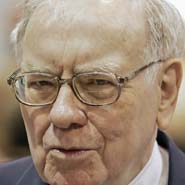
warren_buffett.jpgAs noted here last month, Berkshire Hathaway chairman and mainstream media folk hero Warren Buffett is a key player and, as these NY Times and W$J articles report, perhaps even a key witness in the upcoming criminal trial of a former AIG executive and four former executives of Berkshire’s General Reinsurance Corp, including former General Re CEO, Ronald E. Ferguson.
Although Buffett knew about the finite risk transactions that are at the heart of the prosecution, he is exempt from prosecution under the Buffett Rule. Previous posts on this case are here, here, here, here and here.
What’s particularly interesting about all this is that the prosecution is attempting to prevent the defense from even mentioning Buffett, whose knowledge of the transactions (and the government’s election not even to include Buffett as an unindicted co-conspirator, much less a defendant) is at least some evidence of the defendants’ lack of criminal intent (Warren Buffett would not engage in any criminal conduct, now would he?). The prosecution is contending that any evidence relating to Buffett’s knowledge of the transactions is hearsay and, thus, inadmissible. But until the testimony regarding Buffett’s knowledge is propounded in court, who knows whether it is hearsay?
Of course, the prosecution is not shy about using hearsay testimony when it comes from someone who is not an avuncular media darling such as Buffett. The prosecution has fingered former AIG chairman Maurice “Hank” Greenberg as an unindicted co-conspirator in the trial, which — based on previous experience — means that the prosecution will use testimony about Greenberg’s statements that would otherwise be hearsay.
As usual, Larry Ribstein sums up the vagaries of the government’s policy of selectively criminalizing merely questionable business transactions:

One might think that the government would have been trying to ensnare Buffett, who would be a high-profile trophy. The problem is that trying a cultural icon like Buffett would raise public doubt about the legitimacy of the government’s corporate crime enterprise. So Buffett gets the benefit of a version of the Apple rule — . . . the Buffett rule. In this case, unlike Enron, it’s better for the government to land the tuna than the barracuda.
According to the WSJ, the prosecution is arguing that “[t]he defendants want to deflect the issue of their involvement, knowledge and the intent relating to … the fraudulent transaction at the heart of this case by creating a trial-within-a-trial about Warren Buffett.” Deflect? Yes, I guess, for the government, a defendant’s insistence on defending himself is a pesky nuisance.
The bottom line is that issues of defendants’ guilt, including critical evidence of whether they knew they were engaging in wrongdoing, may not be available because, ultimately, the government decides who testifies by deciding whom to prosecute. All part of the costs of the extensive criminalization of accounting and other conduct of corporate agents.

The most influential person in sports that no one has heard of

MLBAM.gifThe 30 Major League Baseball clubs invested $80 million in a fledgling media company. That initial investment has been repaid and the media company generated $450 million in revenues this past year, producing a $3 million dividend for each MLB club. Several investment banks recently estimated that the value of the clubs’ original $80 million investment is now worth $2.5 billion.
Who managed this windfall for MLB? The most influential person in the sports business that no one has ever heard of — Bob Bowman, the President and Chief Executive Officer of MLB Advanced Media (MLBAM). Maury Brown interviews Brown.