Although the Houston Cougars put up a better fight against the Oregon Ducks than Michigan did, Shasta — the Cougars’ mascot — had a can of whoopass opened up on him by the Oregon Duck mascot, as the video below reveals. As a result of the fracas, the Oregon mascot has been suspended for Oregon’s next home game; meanwhile, it appears to me that Shasta could use a few lessons in self-defense. As a grizzled veteran of following Houston football, all I can say is that this would never have happened to Shasta while Bill Yeoman was coaching the Cougars. ;^)
Monthly Archives: September 2007
The hottest seat in Texas
After Texas A&M’s narrow escape last weekend over Fresno State, Brett Zwerneman of the San Antonio Express-News continues to lead the chorus (see earlier posts here and here) that doubts A&M football coach Dennis Franchione is going to produce a serious Big 12 South contender in Aggieland:
How did it come to a triple-overtime game against a smaller program that finished 4-8 last season? The Aggies, however, did double up on Franchione’s oft-stated goal of simply scoring one more point than their opponent. [. . .]
The No. 25 Aggies had better progress in a hurry, however, if they’re to compete for their first Big 12 title in nearly a decade. A&M is lucky Bulldogs receiver Marlon Moore tried sticking the ball out for a touchdown ó resulting in a fumble ó during Saturday’s first overtime. Texas A&M Otherwise, the Aggies would be 1-1, and Franchione might’ve had a tough time holding on to his gig ó during the season.
A road game at Miami looms Sept. 20, with contests later in the season at Texas Tech, Nebraska, Oklahoma and Missouri, comprising A&M’s rockiest schedule since the league started play in 1996.
The above games are supposed to be tough. Fresno State wasn’t. [. . .]
Franchione is a mediocre 27-23 through 50 games at A&M, but this was supposed to be the season that his veteran squad finally emerged as a true threat in the league.
Instead, all of the old questions about A&M’s direction are bubbling to the surface. As one frustrated A&M graduate put it, Franchione was hired to close the gap with Texas and OU, not Baylor and Iowa State. [. . .]
Franchione, 56, already owns the worst overall loss and the two worst bowl losses in school history over his previous four seasons.
But hey, even if the Aggie football team is not top ten caliber, the Fightin’ Texas Aggie Marching Band is!
A billion dollar boondoggle?
Kevin Whited reports that downtown Houston’s night life continues to dissipate from lack of demand. This despite the fact that various local governmental entities have invested at least $1 billion in the downtown area by building a baseball stadium, a basketball arena, a convention center hotel, a light rail system and assorted other goodies.
Sort of makes you wonder what would happen if even a portion of that $1 billion were invested in something that Houston really needs, such as improvements to flood control and traffic hotspots? My sense is that such an investment would dramatically lessen the risk that citizens would lose their lives or suffer property loss in the event of heavy rains (which occur with some regularity around here) or a traffic accident. Thus, we aren’t as safe as we could be, but our local governmental officials have seen to it that we are as comfortable as reasonably possible while being entertained. Gotta love those priorities.
Another Justia.com search tool
As noted earlier here and here, Tim Stanley and the folks over at Justia.com are developing some of the best and most useful legal search engines on the Web. I’ve been meaning to pass along a recent email from Tim, which introduces yet another cool tool:
“We have put online the Federal District Court case opinions and orders that are available using the opinion report in the Federal Courts’ ECF. These are updated daily. We have categorized the opinions by state, court, type of lawsuit and judge and combinations of judge and type of lawsuit. You can also subscribe to each of categories through RSS feeds to track a judge or court’s decisions on different issues. And we also give the cause of action for each case.
We are using Google’s hosted Business Custom Search Engine for the full text search. Google is now OCRing PDF image files, so even PDF files that have images of scanned documents will be in most cases full text indexable and searchable. Like the OCR of Google’s Book Search. You will need to look at the cached copy to see the highlighted searched text though, and then find in the original PDF to be 100% that what you are reading is correct. Google should be doing a pretty good job of indexing and ocring these court decisions, although it may take a few days for a new document to show up in the index.
We have also noted on the federal district court case filing database when we have a judge’s opinion (you will see a little gavel. The case filings are at here.”
Only in New York (or make that New Jersey)
I recognize that real estate is a bit more expensive in New York than in other places. O.K., make that a whole lot more expensive.
But $1 million per season for a football luxury suite?
This is crazy expensive and it doesn’t even include the cost of beer and brats. But it makes sense in a New York sort of way. If you are a hot-shot broker entertaining the next great hedge funds, you can’t just go out and buy a luxury suite to a Giants game (although maybe you could for a Jets game ;^)). Inasmuch as the suites are being sold on 10-year contracts and rarely change hands once they are sold, a big shot has no way to ensure that he will be able to enjoy a game in 2015 in a luxury suite unless he owns a suite. In short, it’s become the quintessential asset that money can’t buy by the time the games are being played, so the big shots better pony up now or they will be out of luck.
And when New York eventually swings a Super Bowl, can you imagine the price that these babies will be selling for?
Tiger’s latest milestone and another caddy snit
In case the start of the NFL season distracted you, the remarkable Tiger Woods shot a closing round 63 at Cog Hill in Chicago to win another PGA Tour tournament over the weekend, the 60th professional tournament title of his storied career. ESPN.com’s Bob Harig puts Wood’s accomplishment in perspective:
Woods matched the tournament 18-hole record by shooting an 8-under 63 at Cog Hill Golf & Country Club, becoming the first player to do so twice. He posted the lowest four-day total (262) in 104 years of tournament competition — which beat the previous mark by 5 strokes. He won the tournament that used to be known as the Western Open for the fifth time, just one behind Walter Hagen.
Woods has won five times at Cog Hill.
And he joined Sam Snead (82), Jack Nicklaus (73), Ben Hogan (64) and Arnold Palmer (62) among those with 60 or more victories in PGA Tour events.
All at age 31. [. . .]
He has won six or more times in a season five times. This year, four of his six wins have come at the biggest tournaments — a major (PGA Championship), two World Golf Championship events (CA Championship and Bridgestone Invitational) and now a playoff event.
And his other two victories came at two of the more popular regular tour events, the Buick Invitational and Wachovia Championship.
Perhaps just as remarkable as his number of victories is the speed with which he got there. Nicklaus was 36 years old when he won his 60th title in 1976. Palmer was 41 in 1971 when he won for the 60th time. Woods could take the next five years off and still be on pace to surpass Nicklaus, Hogan and Palmer.
Or, as Justin Rose put it, “I’d have to win 15 times a year for the next four years to get there by the time I’m 31.”
Meanwhile, last weekend’s tournament gave us yet another entertaining professional golfer-caddy snit (previous snit posts here and here), which gives me the opportunity to pass along this classic Caddyshack clip (which happens to be one of Tiger Woods’ favorite movies) in which Bill Murray’s legendary Carl Spackler explains how he successfully resolved a similar snit with while caddying for the the Dalai Lama:
A couple of Houston legal legends
If you didn’t catch it over the weekend, don’t miss Mary Flood’s article and related blog post on two legends of the Houston legal community, plaintiff’s lawyer Joe Jamail and criminal defense attorney, Richard “Racehorse” Haynes.
I’ve been blessed to have had the opportunity to watch both of these masters in action over the years. Jamail’s special talent is in his ability to talk to and relate with jurors, while Haynes is, bar none, the best craftsman of cross-examination that I have ever seen in a courtroom. Take a moment to learn more about two of the most important Houston lawyers of our time.
Photo of Jamail and Haynes by Johnny Hanson.
Why is Ben Stein a business columnist?
Answer: To give bloggers an opportunity to point out that he apparently does not know what he is writing about.
Inasmuch as I’ve taken Stein to task on several earlier columns (see here, here and here), I was getting ready to prepare a post pointing out the folly of Stein’s latest column, this one on the financial impact of the meltdown in subprime mortgage sector. But then I discovered that Felix Salmon had already done so, in which he observes the following:
. . .it turns out that Stein is completely wrong, yet again: can anybody explain to me why this man still has his column?
Read the entire post.
The Skilling Appeal Brief
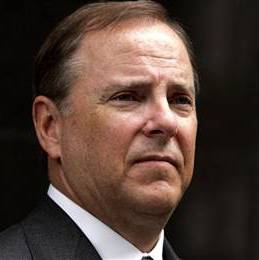
As Ashby Jones and Peter Henning noted on Friday, lawyers for Jeff Skilling filed his appellant’s brief this past Friday along with a motion requesting that the Fifth Circuit Court of Appeals waive length-of-brief rules under the special circumstances of Skilling’s appeal.
Inasmuch as the brief is a 240-page tome, my sense is that it will probably be modified slightly to include tables of contents and authorities when the final version is filed after the Fifth Circuit rules on the the length-of-brief motion
I read the entire brief while watching football over the weekend and it is brilliant. The brief is extremely well-written and organized, and eschews much of the technical legal jargon that often makes appellate briefs a chore to read. It would be extremely difficult to read this brief objectively and come to the conclusion that Jeff Skilling has not been the victim of a gross miscarriage of justice.
The first statement of the brief — the usually mundane statement advising the appellate court whether the appellant believes that oral argument would be helpful to the court — Skilling’s appellate team crafted the best such statement that I’ve ever read:
Defendant-appellant Jeffrey Skilling requests oral argument. This case is perhaps the most prominent and publicized white-collar case ever prosecuted.
But with certainty, it is the most misunderstood case, enveloped from the outset by perceptions and myths that bear little resemblance to the actual facts.
Almost everyone believes, for instance, that Skilling was indicted, tried, and convicted for causing the 2001 bankruptcy of Enron Corporation and its devastating effects on thousands of Enron employees and shareholders. As the government itself conceded, however, the case against Skilling had nothing to do with Enron’s collapse.
Profound, inherent weaknesses in the government’s case — not just gaps in its evidentiary proof, but doubts about its basic theories of criminality — motivated the government to resort to novel and incorrect legal theories, demand truncated and unfair trial procedures, and use coercive and abusive tactics.
Skilling submits that oral argument is essential to assist the Courtís understanding of the remarkable record in this case, including the multiplicity of substantial legal and procedural errors that have put Skilling in prison for 24 years not only for crimes that he did not commit, but for acts of business judgment that are not crimes at all.
Following that statement is an 11-page introduction, which — if you don’t have time to read the entire brief — is an excellent overview of the arguments presented. My favorite parts of the brief are as follows:
The Statement of the Case (pp. 15-59). This is a marvelously clear description of Enron’s business and the superficiality of the evidence that the Enron Task Force presented at trial against Skilling. In discussing Enron with hundreds of folks over the past several years, I understand how few people really understood that Enron was an innovative and successful business before its demise. Fewer still understood the shallowness of the Task Force’s case against Skilling. This section of the brief takes on those widely-held misconceptions and dispenses with them cogently.
The Change of Venue Section (pp. 122-175). Given the venomous environment in Houston regarding all things related to Enron, U.S. District Judge Sim Lake’s refusal to grant Skilling’s motion to change the venue of the trial has always struck me as odd. Skilling’s brief provides truly shocking information (heretofore not public) about the enormous bias against Skilling expressed in the answers to the juror questionairres of the jurors who ended up on Skilling’s jury! Also provided in this section is heretofore non-public information on Judge Lake’s questionable refusal to grant Skilling’s proposed multiple strikes for cause on a large number of the jurors who who had expressed clear bias against Skilling and Lay. As the brief notes, if there was ever a trial that called for a change of venue, Lay-Skilling was the one.
The Prosecutorial Misconduct Section (pp. 175-206). The subject of this section has been a common topic on this blog, but this section provides additional unknown evidence of the Task Force’s abusive tactics in prosecuting Skilling and other Enron executives. Moreover, the brief sums up brilliantly the prejudicial impact of the Task Force’s threats against witnesses who would have provided exculpatory testimony for Skilling (all record citations contained in the brief are excluded here):
At trial, the severe imbalance in witness access was obvious.
The Task Force’s case consisted mostly of cooperators from Enron’s senior management,people who worked with Skilling at Enron and who were his friends, including some of his closest friends. With plea or non-prosecution agreements with the Task Force, these witnesses were under the Task Force’s complete domination and control. They were obligated to testify, contractually bound to admit guilt and support the allegations against Skilling, and their ultimate fate rested in the “sole and exclusive discretion” of the Task Force. None of them would meet with Skilling or his counsel. At least two (Rice and Belden) — and probably all of them — were clearly ordered not to.
In contrast, most of Skilling’s key defense witnesses never took the stand. Specifically, Skilling sought to call David Duncan of Arthur Andersen and seven Enron executives: Greg Whalley, Rick Buy, Lou Pai, Jeff McMahon, Georgeanne Hodges, Janet Dietrich, and Joe Hirko. Each possessed critical exculpatory evidence, and would have directly refuted testimony given by Task Force cooperators. Yet all eight invoked the Fifth Amendment, fearing Task Force reprisals. Hoping to overcome this, Skilling asked the Task Force to immunize them, as it did for Ben Glisan (its own witness). The Task Force declined, thereby ensuring that vital exculpatory testimony never saw the light of day.
Without these (and many other) key witnesses, the defendants were forced to rely primarily on their own testimony. Roughly two-thirds of the defense case consisted of Skilling and Lay’s testimony; the remainder was a patchwork of character witnesses, experts, and others — anyone courageous enough to testify. Most could offer relatively narrow testimony on limited issues. Besides Skilling and Lay, only two senior executives testified for the defense, and neither was deeply involved in many transactions at issue.
Compounding the prejudice, the Task Force argued in closing that Skilling’s defense was not credible because it did not square with the testimony of many witnesses. By intimidating witnesses into silence and then refusing to immunize them — knowing they would give testimony favorable to the defense — it was the Task Force that prevented witnesses from corroborating Skilling. U.S. v. Golding, 168 F.3d 700, 702-05 (4th Cir. 1999) (“The government did not stop with the threat. Instead, the prosecutor further abused her power by using the very situation she had created against the defendant in closing argument.”). Skilling, meanwhile, could not explain to the jury why his best witnesses were missing, because the district court explicitly prohibited him from introducing any evidence of the Task Force’s threats and other misconduct.
The prejudice was irreparable. It obstructed Skilling’s preparations before trial, distorted the presentation of evidence at trial, and affected the outcome. Gregory, 369 F.2d at 188-89 (“A criminal trial is a quest for truth. That quest will more often be successful if both sides have an equal opportunity to interview the persons who have the information from which the truth may be determined.”).
As if on cue, even before the ink on the Skilling brief was dry, some of the more vitriolic members of the mob that lynched Skilling were already dismissing it without so much as a smidgen of analysis. But my bet is that a fair review of this brief will leave most readers shocked over the weakness of the case against Skilling and the government’s ruthless tactics in pursuing a conviction despite that weakness.
The popular myth of the mob is that Enron was a house of cards that was propped up by a conspiracy of greedy executives who told lies to trusting but unknowing investors.
The truth is that Enron was simply a highly-leveraged, trust-based business with a relatively low credit rating and a booming trading operation that got caught in a liquidity crunch. That liquidity crisis occurred when the credit and equity markets became spooked by a variety of factors in late October, 2001, including revelations about Fastow’s embezzlement of millions and the volatility in markets after the September 11, 2001 attacks on New York and Washington, D.C.
As I’ve noted many times over the years, Fastow’s embezzlement from Enron is a crime, but Enron’s unfortunate demise is not, nor should it be.
Beyond the shattered lives and families, the real tragedy here is that an angry mob convicted Jeff Skilling, trampling the rule of law and the administration of justice along the way.
In truth, none of us would be able to survive, as Thomas More reminds us, “in the winds that blow” from the exercise of the government’s overwhelming prosecutorial power in response to the demands of the mob.
I continue to hope that Jeff Skilling’s unjust conviction and sentence are reversed on appeal. Not only for his and his family’s benefit, but also for ours.

2007 Weekly local football review
AP Photo/David J. Phillip
Texans 20 Chiefs 3
Pinch yourself. The Houston Texans have won three straight regular season NFL games (previous weekly summaries are here).
The Texans (1-0) took advantage of four turnovers and a tepid Kansas City offense to win their season opening game for only the second time in franchise history. The Texans defense, which is the area of the team that clearly has the most potential, held the Chiefs to 219 yards total offense and DE Mario Williams returned one of the KC fumbles 38 yards for an early third quarter TD that put the Texans up 17-0. Meanwhile, the Texans offense was not great, but it was better than the Chiefs’ offense. QB Matt Schaub guided that unit to 315 yards total offense, including a 77 yard TD bomb to WR Andre Johnson. Schaub was 16-22 passing for 225 yards in his Texans debut, including the TD pass to Johnson and a first quarter interception in the Texans end zone. The Texans face a stiffer test on the road next Sunday against Carolina (1-0), whose back-up QB is the Texans fromer QB, David Carr.
The Horns (2-0) pulled away late in a game that was closer than the final score indicates. Texas was down 10-7 late in third quarter when the sloppy kicking game of TCU (1-1) scuttled the Horned Frogs’ dreams of a defining win and BCS bowl contention. After the Longhorns tied the game at 10, a TCU fumble on the ensuing kickoff was recovered by Texas on the Horned Frog 26 and, a few plays later, a rejuvenated Texas offense rammed the ball into the end zone for Texas’ first lead of the night. Then, on the ensuing kickoff, an illegal block penalty backed up the Frogs to their own 10 and, after a three and out, Texas’ next drive started at the TCU 44. The Horns ground out a couple of first downs and then kicked a field goal, making the score 20-10. The following offensive possession generated another three and out for TCU, and when the Horned Frogs punter dropped the snap, Texas’ Brandon Foster scooped it up and returned it for a TD and a 27-10 Longhorn lead. Game, set, match. The Longhorns go on the road next week to Orlando to help C-USA member Central Florida (1-0) christen their new stadium.
Texas Aggies 47 Fresno State 45 (3OT)
The most entertaining game of the day occurred in College Station where the Aggies (2-0) blew a 19 point lead and then held on for dear life to pull out the victory when Fresno St. missed the mandatory two-point conversion at the end of the third overtime period. As with last season, the Aggies have a good and competent team, but it appears unlikely that the Ags will be able to contend with the likes of Oklahoma and Oklahoma for the Big 12 South championship. The Aggies can control the ball and clock with their strong rushing attack, but they have no downfield passing game and — outside of RB Michael Goodson — do not have anyone with quick-strike capability against first-rate defenses. Meanwhile, the Aggie defense is just average, so the Ags will be giving up plenty of points this season. Without a high-scoring offense and with a defense that will give up some high point totals, my sense is that the Aggies are an 8-4-type team. At this point, it’s hard for me to see them at any better than 9-3. They have another sure win next Saturday at home against Louisiana-Monroe (0-2) before going on the road the following Thursday to play a very average Miami (1-1) team in the Orange Bowl.
The headline to last week’s Rice Football Newsletter story on the Owls’ loss to Nicholls State was “Could it get any worse than this?” Well yes, it could, as the Owls (0-2) found out on Saturday in Waco. The Owls gave up 531 total yards to the same Bears team that could only muster 282 yards and no points a week earlier against TCU. It’s a bit frightening to think how many yards and points that Texas Tech (2-0) might run up on the Owls next Saturday at Rice Stadium.
The Houston Cougars (0-1) were idle this week and play C-USA rival Tulane (0-1) in New Orleans next Saturday.