
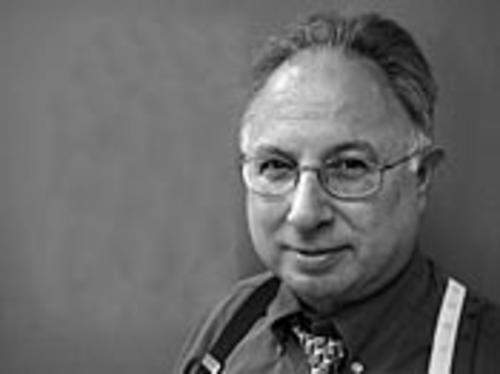
Ross M. Lence, R.I.P.

Ross Lence.jpgA grand and far too rare experience in life is learning from a great teacher.

I have been blessed in my life to have been mentored by two wonderful men who were extraordinary teachers. The first was my father, Dr. Walter M. Kirkendall, who died around this time in 1991.

The other was Dr. Ross Marlo Lence, who died on Tuesday morning, July 11, 2006 in Houston at the age of 62 after a year-long battle with pancreatic cancer (Chronicle obituary here). With Ross’ death, Houston has lost a genuine treasure.

Ross was one of Houston’s finest teachers of this generation. Over a phenomenal 30 plus-year teaching career at the University of Houston, Ross taught classic and American political philosophy to scores of eager students and citizens.

Utilizing a marvelous intellect that was refined at the Universities of Chicago, Georgetown and Indiana, Ross was a master craftsman in the art of teaching and was an unparalleled expert in the Socratic method of teaching.

Ross deployed a delightful mixture of insightful philosophy, passionate oratorical skill, and self-deprecating humor to ignite and stoke a passion for learning in his students (“Be bold in thought, precise in speech, moderate in action,” he would continually urge). When I once asked Ross to confide his primary goal as a teacher, he replied with a twinkle in his eye:

“Tom, my goals are modest. All I want is to teach my students how to think, and the difference between right and wrong.”

As a result of Ross’ outstanding talent and dedication to the University of Houston (he served on virtually every academic committee at the University over his career), a large group of his students over a decade ago raised funds to honor him by endowing a chair in his name in the political science department at the University of Houston. Accordingly, as of his death, Ross was the original holder of the Ross M. Lence Distinguished Teaching Chair at the University of Houston.

How many professors have an endowed chair funded and named in their honor during their lifetimes? Such was the excellence of Ross Lence.

Ross was also a John and Rebecca Moores University Scholar at the University of Houston, where he was continually honored with numerous awards for his teaching, including the Minnie Stevens Piper Professor Award, which annually honors the most outstanding teacher in the state of Texas, (1987), and the Henri Stegemeier Award for the Outstanding Faculty Advisor in North America (1987).

In addition to his superlative teaching talent, Ross’ selfless heart and humanism attracted students like a magnet. His office had the quintessential open door and always resembled a scene from a Robert Altman film with students and colleagues milling in and out carrying on multiple conversations with Ross and each other on the various subjects of the particular day.

Inasmuch as he dedicated his life to teaching and his students, Ross never married, yet he has the largest family of anyone that I have ever known. To enter one of Ross’ classes was literally to be drawn into Ross’ huge family of students, former students, colleagues and friends. The devotion of Ross’ family members was surpassed only by Ross’ devotion to them and his wonderful mother, Nickie, for whom he cared lovingly over the past 25 years.

What was it that made Ross’ life so fulfilling? An experience that I had several years ago with Ross provides some insight into the answer to that question.

I had the privilege of helping Ross coordinate a strategy in regard to a legal matter that had a political component, the details of which are not particularly important. Suffice it to say that it was serious and could have adversely affected much of what Ross had worked for during his professional career. Due to the nature of the problem, we had to work quickly in devising and implementing our strategy.

With but a few phone calls, we were able to put together a legal team of over a half-dozen prominent Houston attorneys, each of whom had been a student of Ross and were instantly willing to provide their services on a pro bono basis (Ross took great pleasure in reminding his university colleagues of his personal legal team, the aggregate hourly billing rate of which was in excess of $2,500).

As we devised and implemented our strategy to resolve the matter, Ross never exhibited even a moment of personal despair over the seriousness of the matter and instead relished the opportunity to engage his old students and friends in matters of legal and political intrigue.

Even when we resolved the matter favorably for Ross after a couple of weeks of intense posturing and negotiation, Ross’ main goal was to arrange the post-resolution party where he could dissect and analyze what had occurred, and revel in the success of his crack legal team.

You see, it was not the reward that he received from the successful resolution of the matter that drove Ross, although he certainly appreciated it. Rather, it was the reward of renewing and deepening the relationships with his former students and old friends — even during one of the most threatening moments of his professional life — that was most rewarding to Ross.

What a special gift it was to have my old mentor and friend remind me of the true source of happiness in his richly-rewarded life.

Ross was diagnosed in August, 2005 with pancreatic cancer, which is particularly pernicious. So, the final 11 months of his life have been draining physically for Ross, although his mother’s loving care undoubtedly extended his life by at least several months.

Consistent with his remarkable nature, Ross used the experience of dealing with terminal illness to provide a remarkable lesson on faith, which he exhibited in a series of confidence-boosting email messages to his extended family over the past 11 months. I have accumulated those email messages in chronological order here — they are an inspiring reflection of the true nature of this fine man, who was literally a conduit of God’s grace.

As regular readers of this blog know, A Man for All Seasons — the story of Sir Thomas More’s conflict with King Henry VIII — is one of my favorite movies, and it was one of Ross’ favorites, too.

Ross particularly enjoyed the scene early in the movie when Sir Thomas attempts unsuccessfully to persuade his student, Richard Rich, to eschew a desire for a political appointment and become a teacher. After rejecting Thomas’ advice, Rich takes a political appointment from Henry’s henchman Cromwell in return for agreeing to betray Thomas.

“Sir Thomas knew that Rich had a corrupt heart and would never be able to resist the temptations of politics,” Ross observed to me.

But then Ross quickly posed the following question with a wry smile.

“But is Thomas also suggesting that a corrupt heart facilitates a great teaching career?”

As I have talked and corresponded with hundreds of Ross’ friends, colleagues and former students over the past several months leading up to his death, I was reminded continually that Ross Lence’s life is proof of the truth of Sir Thomas’ advice to Rich during their exchange that Ross so enjoyed:

Sir Thomas: “Why not be a teacher? You’d be a fine teacher; perhaps a great one.”

Richard Rich: “If I was, who would know it?”

Sir Thomas More: “You; your pupils; your friends; God. Not a bad public, that.”

Yes, my dear friend Ross, “not a bad public, that.” Your job has been extraordinarily well done. Rest in peace, friend.

A visitation will be held for Ross at the the Settegast-Kopf Co. Funeral Home at 3320 Kirby Drive (77098) beginning at 5 p.m. on Thursday, July 13 to be followed by a Rosary service at 7 p.m. A funeral mass will be held for Ross at 10 a.m. on Friday, July 14 at St. Anne Catholic Church at the corner of Westheimer and Shepard. The University of Houston is planning a memorial service for Ross later this year after the beginning of the fall semester.

Update: “On Teaching” by Ross M. Lence, Ted Estess eulogizes Ross at his funeral, and the Abbeville Institute provides a moving tribute. Finally, the Chronicle’s obituary on Ross includes this online guest book that includes dozens of tributes to Ross from his students, former students, colleagues and friends.

Update II: In a fitting tribute on the final day of classes for the fall semester, the University of Houston hosted a wonderful memorial service for Professor Lence at 1:30 p.m., on Friday, December 1, 2006 in the AD Bruce Religion Center on the UH campus. A reception followed the service at the Commons of the the UH Honors College, and a joyous time was had by all as we exchanged remembrances of this special man.

Bill Monroe, Ross’ dear friend and long-time colleague on the Honors College faculty, did a masterful job of opening and closing the service. He opened the service on the right note by recalling another colleague’s experience with Ross’ often unpredictable and disorienting opinions:

“A colleague and mutual friend said that for over a decade he thought Lence was a liberal Jew from Chicago, only to discover that he was actually a libertarian Catholic from White Fish, Montana.”

The following are the tributes to Ross from his friends at the memorial service:

Bill Monroe Opening and Closing Remarks

Professor Susan Collins (colleague)

Professor Ed Willems (colleague)

Professor Andy Little (former student) presenting Dr. Lence’s essay “On Teaching

My Tribute (former student)

Orlando Sanchez (former student)

Jeff Dodd (former student)

Ted Estess (colleague)

Update III: James Patterson, another former student of Dr. Lence, wrote this fine remembrance of Ross in 2013 over at the Minding The Campus blog.

Golf 101

HCC logo.jpgLet’s see now. Suppose you are a trustee of the Houston Community College system.
You are confronted with a chronically underfunded system that is operating in a region where golf courses are overbuilt and will do most anything to attract customers.
What would you do?
Well, I don’t know about you, but I wouldn’t be approving the construction of a three-hole, par 3 golf facility to provide “a new and unique opportunity for residents of northeast Houston to learn or improve skills in the age-old sport of golf.”
The Houston Press’ Richard Connelly has the story.

Thinking About Performance-Enhancing Drugs

Mark Sisson is a Malibu-based former elite marathoner and triathlete who became well-known in athletic circles as an expert on drug testing for athletes while serving for 13 years as the anti-doping and drug-testing chairman of the International Triathlon Union and as the union’s liaison to the International Olympic Committee.

In a provocative letter to his friend Art DeVany, Sisson talks about drug-testing for athletes and makes some interesting observations:

At the risk of sounding a bit brazen, I would suggest to you and your audience that sport would be better off allowing athletes to make their own personal decisions regarding the use of so-called “banned substances” and leaving the federations and the IOC out of it entirely. (Even the term “banned substance” has a negative connotation, since most of these substances are actually drugs that were developed to enhance health in the general population). Bottom line: the whole notion of drug-testing in sports is far more complex than even the media make it out to be. [. . .]

The performance requirements set by the federations at the elite level of sport almost demand access to certain “banned substances” in order to assure the health and vitality of the athlete throughout his or her career and – more importantly – into his or her life after competition. . . . World class athletes tend to die significantly younger than you would predict from heart disease, cancer, diabetes and early-onset dementia. They also typically suffer premature joint deterioration from the years of pounding, and most endurance athletes look like hell from the years of oxidative damage that has overwhelmed their feeble antioxidant systems.

Most people don’t realize it, but training at the elite level is actually the antithesis of a healthy lifestyle. The definition of peak fitness means that you are constantly at or near a state of physical breakdown. As a peak performer on a world stage, you have done more work than anyone else, but you have paid a price.

It is again ironic that the professional leagues and the IOC — the ones who dangle that carrot of millions of dollars in salary or gold-medalist endorsements — are the same ones who actually created this overtrained, injured and beat-up army of young people. They don’t care. These organizations then deny the athletes the very same drugs and even some natural “health-enhancing” substances that the rest of society can easily receive whenever they feel the least bit uncomfortable. [. . .]

I believe that with proper supervision, athletes could be healthier and have longer careers (not to mention longer and more productive post-competition lives) using many of these “banned substances.” And perhaps the biggest assumption I will make here is that the public just doesn’t care. Professional sport has become theater. All the public wants is a good show and an occasional world record.

As I noted earlier with regard to Barry Bonds’ use of steroids, management of professional sports has not done a good job of drawing the line with regard to what should constitute illegal use of drugs, on one hand, and legal performance-enhancing substances that are beneficial to the health of the athletes, on the other.

As a result, the league rules (as well as our nation’s laws) governing which substances are legal and illegal are often arbitrary and hypocritical.

Indeed, professional sports teams (as well as their fans) often encourage their players to risk their health. Players who “play with pain” are the subject of adulation in all levels of sport, as are players who risk injury by running into walls, taking cortisone shots to be able to perform with reduced pain and undergoing risky surgeries to lessen pain in order to play in a big game (remember Curt Schilling in the 2004 World Series?).

The difference between a professional athlete taking pain-reducing drugs to get through a season and another athlete using performance-enhancing drugs in an attempt to be more productive during a season is not as wide as it may appear at first glance.

Lawrence Sager named UT Law School Dean

sagerlaw.jpgLawrence Sager, the holder of the Alice Jane Drysdale Sheffield Regents Chair at the University of Texas Law School and a noted scholar in the theory of Constitutional Law, has been named the new dean of the UT Law School.
Sager, who is 64, replaces William Powers Jr., who recruited Sager to UT four years ago and and is now president of the university. UT Law Professor Brian Leiter, who was a member of the search committee for the new dean, comments here and here.
Sager taught for more than 25 years at New York University’s law school before coming to the UT Law School. He was selected from a field of finalists that included a federal judge from California and legal scholars at the University of Virginia, Boston University, Cornell University and Yale University.

And I thought it was because of those two big guys down on the blocks

George Mason.jpgAlex Tabarrok of Marginal Revolution blog fame and colleague Peter Boettke author this Slate.com piece that places the unlikely NCAA Basketball Tournament Final Four appearance by George Mason University in the context of an overall renaissance that is occurring at the university as it copes with competition in the marketplace of ideas:

What’s remarkable is that GMU’s freewheeling basketball team and its free-market academic teams owe their successes to very similar, market-beating strategies. GMU has excelled on the court and in the classroom by daring to be different. . . .
GMU remains an underdog in both basketball and economics. But Coach Larranaga has a plan to succeed in the long term and so do GMU’s professors. Click here to read about how GMU is seeking out different new kinds of undiscovered geniuses.

Are you listening, University of Houston?

Baylor — the Notre Dame of Protestants?

notredame2.jpgBayloy Bear.gifAccording to this Baptist Standard op-ed, Baylor University in Waco has a model for what type of university it should aspire to be, but I don’t think the model is the one that Martin Luther had in mind — the University of Notre Dame:

Since former university President Robert Sloan led the school to adopt its Baylor 2012 long-range plan and open its Institute for Faith & Learning, supporters have pointed to Notre Dame as an example of a religiously affiliated school that successfully integrates faith and learning.
They maintain Notre Dame generally has accomplished what Baylor wants to achieveórecognized status as a top-tier university without surrendering to secularism. . . .
Baylor could come become the kind of national university that the best and brightest Protestant students will dream of attending, said Doug Henry, director of Baylorís Institute for Faith & Learning.
ìBaylor can have the same sort of image for Protestants that Notre Dame has for Catholics” . . . Henry said. ìIt can become the most intellectually interesting place to be, and a place where serious, smart Protestant and Baptist students will want to come. . . . Iíd say weíre about 30 years behind Notre Dame in terms of endowment, facilities, faculty and national prestige.î

Make that more like 75 years behind in terms of the football team, though.

What Starts Here Changes the World

UT Tower_beacon.jpgThe University of Texas is on quite a roll these days, and in more ways that simply its national championship-caliber football team.
UT just rolled out its innovative new advertising campaign, a series of nine 30 second commercials with the theme ìWhat Starts Here Changes the Worldî narrated by former CBS anchoman and UT alum Walter Cronkite. The ads — which were developed by UT’s Office of Public Affairs and the Center for Brand Research in concert with GSD&M Advertising — emphasize how the UT and Austin communities “together forge a dynamic, creative and diverse community that few American cities can match.” UT will use the ads primarily during televised NCAA sporting events, where the networks provide the participating universities some free air time in each such telecast.
My favorite: “Breakfast Tacos.”

Thoughts about Texas university endowments

Rice.jpgThis handy document ranks the size of the 741 largest university and college endowments in the United States. Although most of the largest endowments are held by well-known institutions, there are surprises even among the biggest endowments. Not many people realize that little Grinnell College in Grinnell, Iowa has the 34th largest endowment in the U.S. at almost $1.3 billion.
Here are some entries of interest to Houstonians:

1. Harvard University $22.1 billion
2. Yale University $12.7 billion
3. University of Texas System $10.3 billion
10. Texas A&M University System $4.375 billion
17. Rice University $3.3 billion
52. Baylor College of Medicine $972 million
56. Southern Methodist University $914.5 million
57. Texas Christian University $869 million
78. Trinity University $673 million
79. Baylor University $672 million
125. University of Houston System $402.5 million
129. Texas Tech University $392.5 million

Given the institutions’ relative contributions to the welfare and economy of the State of Texas, does it really make sense for the University of Houston to have an endowment that is only roughly 4% the size of the University of Texas endowment and only 10% of that of Texas A&M? Ah, the legacy of the Permanent University Fund. At least UH is providing some serious “bang for the buck” in furnishing a quality educational resource for the State of Texas and Houston at a fraction of the endowed capital of UT and A&M.
On the other hand, one way to ameliorate the effects of the disproportionate size of the endowments would be through merger. How about turning UH into the University of Texas at Houston (UTH) and Tech into Texas A&M University at Lubbock? Or vice versa, in that it actually might make more sense to merge UH with A&M, which is more in need of an urban presence than UT. Inasmuch as it is in the interests of Texas for UH and Tech to achieve Tier I university status, a merger into either the UT or A&M systems would give both institutions access to endowed capital that would facilitate such an effort.
By the way, don’t worry. Both UH and Tech could retain their football teams after the mergers. ;^)

Thoughts on legal education

A good time was had by all yesterday evening as I helped my old friend Randy Wilhite teach his Family Law class at the University of Houston Law Center.
Randy is one of the best family law practitioners in Texas, and he provides his students with a broad and useful curriculum of the myriad issues that they will confront in family law cases. The subject of this particular class was the impact that bankruptcy law and the risk of insolvency have on divorce cases, which is always a lively topic. Most of the students in the class had not yet taken bankruptcy law, but they caught on quickly and asked quite insightful questions regarding the interplay of insolvency and divorce law. You can download my PowerPoint presentation for the class here, which provides a basic introduction of bankruptcy law principles for Texas divorce cases.
Teaching the class yesterday reminded me to pass along a bang up new continuing education resource called Ten Minute Mentor, a free series of Web lectures that the Texas Young Lawyers Association and the Texas Bar CLE launched on March 1st with the well-thought out sales pitch of “Concise. Practical. Free.” Moreover, the program is not limited in any way and is available to lawyers and interested laypersons everywhere.
The Ten Minute Mentor is a library of short video presentations by some of the state’s best-known experts in various areas of law, firm management, and professional development. For example, longtime Houston trial lawyer Harry Reasoner describes how to structure a legal argument, while plaintiff’s lawyer extraordinaire Joe Jamail articulates his view of a lawyer’s role in society. The TYLA is actively adding to the video library, which already includes over 100 videos on various topics and can be searched by either speaker or category.
The Ten Minute Menton is another outstanding addition to the Texas Bar CLE’s continuing education program, which is becoming a model for such programs. Check it out.

Robert Dawson, RIP

Robert “Mad Dog” Dawson, who taught criminal and juvenile law to a generation of law students at the University of Texas Law School, died Saturday at his farm in Fentress at the age of 65. Although illness forced him to into a motorized scooter in the last few months of his life, Professor Dawson continued to teach his criminal law class at UT until a week and a half ago.
Professor Dawson taught at UT for 30 years and founded the school’s Criminal Defense Clinic in 1974. The clinic gives third-year law the opportunity to represent criminal defendants in court under the supervision of UT law professors. Dawson authored the state’s juvenile justice laws in 1973 and advised lawmakers on the revision of the Texas Juvenile Justice Code in 1995.
According to his obituary, Professor Dawson’s ashes will be mixed with old horse stall bedding and scattered by manure spreader on pastures at the farm. “They will make good fertilizer for the hay crop,” he wrote before his death.
Arrangements were pending with Weed-Corley-Fish Funeral Home in Austin. A memorial service is scheduled for 2 p.m. April 2 at UT’s LBJ Auditorium.