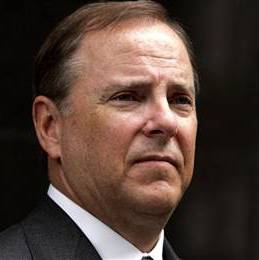
The Skilling Appeal Brief

As Ashby Jones and Peter Henning noted on Friday, lawyers for Jeff Skilling filed his appellant’s brief this past Friday along with a motion requesting that the Fifth Circuit Court of Appeals waive length-of-brief rules under the special circumstances of Skilling’s appeal.

Inasmuch as the brief is a 240-page tome, my sense is that it will probably be modified slightly to include tables of contents and authorities when the final version is filed after the Fifth Circuit rules on the the length-of-brief motion

I read the entire brief while watching football over the weekend and it is brilliant. The brief is extremely well-written and organized, and eschews much of the technical legal jargon that often makes appellate briefs a chore to read. It would be extremely difficult to read this brief objectively and come to the conclusion that Jeff Skilling has not been the victim of a gross miscarriage of justice.

The first statement of the brief — the usually mundane statement advising the appellate court whether the appellant believes that oral argument would be helpful to the court — Skilling’s appellate team crafted the best such statement that I’ve ever read:

Defendant-appellant Jeffrey Skilling requests oral argument. This case is perhaps the most prominent and publicized white-collar case ever prosecuted.

But with certainty, it is the most misunderstood case, enveloped from the outset by perceptions and myths that bear little resemblance to the actual facts.

Almost everyone believes, for instance, that Skilling was indicted, tried, and convicted for causing the 2001 bankruptcy of Enron Corporation and its devastating effects on thousands of Enron employees and shareholders. As the government itself conceded, however, the case against Skilling had nothing to do with Enron’s collapse.

Profound, inherent weaknesses in the government’s case — not just gaps in its evidentiary proof, but doubts about its basic theories of criminality — motivated the government to resort to novel and incorrect legal theories, demand truncated and unfair trial procedures, and use coercive and abusive tactics.

Skilling submits that oral argument is essential to assist the Courtís understanding of the remarkable record in this case, including the multiplicity of substantial legal and procedural errors that have put Skilling in prison for 24 years not only for crimes that he did not commit, but for acts of business judgment that are not crimes at all.

Following that statement is an 11-page introduction, which — if you don’t have time to read the entire brief — is an excellent overview of the arguments presented. My favorite parts of the brief are as follows:

The Statement of the Case (pp. 15-59). This is a marvelously clear description of Enron’s business and the superficiality of the evidence that the Enron Task Force presented at trial against Skilling. In discussing Enron with hundreds of folks over the past several years, I understand how few people really understood that Enron was an innovative and successful business before its demise. Fewer still understood the shallowness of the Task Force’s case against Skilling. This section of the brief takes on those widely-held misconceptions and dispenses with them cogently.

The Change of Venue Section (pp. 122-175). Given the venomous environment in Houston regarding all things related to Enron, U.S. District Judge Sim Lake’s refusal to grant Skilling’s motion to change the venue of the trial has always struck me as odd. Skilling’s brief provides truly shocking information (heretofore not public) about the enormous bias against Skilling expressed in the answers to the juror questionairres of the jurors who ended up on Skilling’s jury! Also provided in this section is heretofore non-public information on Judge Lake’s questionable refusal to grant Skilling’s proposed multiple strikes for cause on a large number of the jurors who who had expressed clear bias against Skilling and Lay. As the brief notes, if there was ever a trial that called for a change of venue, Lay-Skilling was the one.

The Prosecutorial Misconduct Section (pp. 175-206). The subject of this section has been a common topic on this blog, but this section provides additional unknown evidence of the Task Force’s abusive tactics in prosecuting Skilling and other Enron executives. Moreover, the brief sums up brilliantly the prejudicial impact of the Task Force’s threats against witnesses who would have provided exculpatory testimony for Skilling (all record citations contained in the brief are excluded here):

At trial, the severe imbalance in witness access was obvious.

The Task Force’s case consisted mostly of cooperators from Enron’s senior management,people who worked with Skilling at Enron and who were his friends, including some of his closest friends. With plea or non-prosecution agreements with the Task Force, these witnesses were under the Task Force’s complete domination and control. They were obligated to testify, contractually bound to admit guilt and support the allegations against Skilling, and their ultimate fate rested in the “sole and exclusive discretion” of the Task Force. None of them would meet with Skilling or his counsel. At least two (Rice and Belden) — and probably all of them — were clearly ordered not to.

In contrast, most of Skilling’s key defense witnesses never took the stand. Specifically, Skilling sought to call David Duncan of Arthur Andersen and seven Enron executives: Greg Whalley, Rick Buy, Lou Pai, Jeff McMahon, Georgeanne Hodges, Janet Dietrich, and Joe Hirko. Each possessed critical exculpatory evidence, and would have directly refuted testimony given by Task Force cooperators. Yet all eight invoked the Fifth Amendment, fearing Task Force reprisals. Hoping to overcome this, Skilling asked the Task Force to immunize them, as it did for Ben Glisan (its own witness). The Task Force declined, thereby ensuring that vital exculpatory testimony never saw the light of day.

Without these (and many other) key witnesses, the defendants were forced to rely primarily on their own testimony. Roughly two-thirds of the defense case consisted of Skilling and Lay’s testimony; the remainder was a patchwork of character witnesses, experts, and others — anyone courageous enough to testify. Most could offer relatively narrow testimony on limited issues. Besides Skilling and Lay, only two senior executives testified for the defense, and neither was deeply involved in many transactions at issue.

Compounding the prejudice, the Task Force argued in closing that Skilling’s defense was not credible because it did not square with the testimony of many witnesses. By intimidating witnesses into silence and then refusing to immunize them — knowing they would give testimony favorable to the defense — it was the Task Force that prevented witnesses from corroborating Skilling. U.S. v. Golding, 168 F.3d 700, 702-05 (4th Cir. 1999) (“The government did not stop with the threat. Instead, the prosecutor further abused her power by using the very situation she had created against the defendant in closing argument.”). Skilling, meanwhile, could not explain to the jury why his best witnesses were missing, because the district court explicitly prohibited him from introducing any evidence of the Task Force’s threats and other misconduct.

The prejudice was irreparable. It obstructed Skilling’s preparations before trial, distorted the presentation of evidence at trial, and affected the outcome. Gregory, 369 F.2d at 188-89 (“A criminal trial is a quest for truth. That quest will more often be successful if both sides have an equal opportunity to interview the persons who have the information from which the truth may be determined.”).

As if on cue, even before the ink on the Skilling brief was dry, some of the more vitriolic members of the mob that lynched Skilling were already dismissing it without so much as a smidgen of analysis. But my bet is that a fair review of this brief will leave most readers shocked over the weakness of the case against Skilling and the government’s ruthless tactics in pursuing a conviction despite that weakness.

The popular myth of the mob is that Enron was a house of cards that was propped up by a conspiracy of greedy executives who told lies to trusting but unknowing investors.

The truth is that Enron was simply a highly-leveraged, trust-based business with a relatively low credit rating and a booming trading operation that got caught in a liquidity crunch. That liquidity crisis occurred when the credit and equity markets became spooked by a variety of factors in late October, 2001, including revelations about Fastow’s embezzlement of millions and the volatility in markets after the September 11, 2001 attacks on New York and Washington, D.C.

As I’ve noted many times over the years, Fastow’s embezzlement from Enron is a crime, but Enron’s unfortunate demise is not, nor should it be.

Beyond the shattered lives and families, the real tragedy here is that an angry mob convicted Jeff Skilling, trampling the rule of law and the administration of justice along the way.

In truth, none of us would be able to survive, as Thomas More reminds us, “in the winds that blow” from the exercise of the government’s overwhelming prosecutorial power in response to the demands of the mob.

I continue to hope that Jeff Skilling’s unjust conviction and sentence are reversed on appeal. Not only for his and his family’s benefit, but also for ours.

2007 Weekly local football review

Andre%20Johnson.jpgAP Photo/David J. Phillip
Texans 20 Chiefs 3

Pinch yourself. The Houston Texans have won three straight regular season NFL games (previous weekly summaries are here).
The Texans (1-0) took advantage of four turnovers and a tepid Kansas City offense to win their season opening game for only the second time in franchise history. The Texans defense, which is the area of the team that clearly has the most potential, held the Chiefs to 219 yards total offense and DE Mario Williams returned one of the KC fumbles 38 yards for an early third quarter TD that put the Texans up 17-0. Meanwhile, the Texans offense was not great, but it was better than the Chiefs’ offense. QB Matt Schaub guided that unit to 315 yards total offense, including a 77 yard TD bomb to WR Andre Johnson. Schaub was 16-22 passing for 225 yards in his Texans debut, including the TD pass to Johnson and a first quarter interception in the Texans end zone. The Texans face a stiffer test on the road next Sunday against Carolina (1-0), whose back-up QB is the Texans fromer QB, David Carr.

Texas Longhorns 34 TCU 13

The Horns (2-0) pulled away late in a game that was closer than the final score indicates. Texas was down 10-7 late in third quarter when the sloppy kicking game of TCU (1-1) scuttled the Horned Frogs’ dreams of a defining win and BCS bowl contention. After the Longhorns tied the game at 10, a TCU fumble on the ensuing kickoff was recovered by Texas on the Horned Frog 26 and, a few plays later, a rejuvenated Texas offense rammed the ball into the end zone for Texas’ first lead of the night. Then, on the ensuing kickoff, an illegal block penalty backed up the Frogs to their own 10 and, after a three and out, Texas’ next drive started at the TCU 44. The Horns ground out a couple of first downs and then kicked a field goal, making the score 20-10. The following offensive possession generated another three and out for TCU, and when the Horned Frogs punter dropped the snap, Texas’ Brandon Foster scooped it up and returned it for a TD and a 27-10 Longhorn lead. Game, set, match. The Longhorns go on the road next week to Orlando to help C-USA member Central Florida (1-0) christen their new stadium.

Texas Aggies 47 Fresno State 45 (3OT)

The most entertaining game of the day occurred in College Station where the Aggies (2-0) blew a 19 point lead and then held on for dear life to pull out the victory when Fresno St. missed the mandatory two-point conversion at the end of the third overtime period. As with last season, the Aggies have a good and competent team, but it appears unlikely that the Ags will be able to contend with the likes of Oklahoma and Oklahoma for the Big 12 South championship. The Aggies can control the ball and clock with their strong rushing attack, but they have no downfield passing game and — outside of RB Michael Goodson — do not have anyone with quick-strike capability against first-rate defenses. Meanwhile, the Aggie defense is just average, so the Ags will be giving up plenty of points this season. Without a high-scoring offense and with a defense that will give up some high point totals, my sense is that the Aggies are an 8-4-type team. At this point, it’s hard for me to see them at any better than 9-3. They have another sure win next Saturday at home against Louisiana-Monroe (0-2) before going on the road the following Thursday to play a very average Miami (1-1) team in the Orange Bowl.

Baylor 42 Rice 17

The headline to last week’s Rice Football Newsletter story on the Owls’ loss to Nicholls State was “Could it get any worse than this?” Well yes, it could, as the Owls (0-2) found out on Saturday in Waco. The Owls gave up 531 total yards to the same Bears team that could only muster 282 yards and no points a week earlier against TCU. It’s a bit frightening to think how many yards and points that Texas Tech (2-0) might run up on the Owls next Saturday at Rice Stadium.

The Houston Cougars (0-1) were idle this week and play C-USA rival Tulane (0-1) in New Orleans next Saturday.

What to do with the Dome?

ReliantStadium%20and%20the%20Astrodome%20091007.jpgThere has been an interesting disparity in media reports about the Astrodome over the past couple of weeks. First, this one from Channel 13 investigative reporter, Wayne Dolcefino:

The county judge warns the aging Houston Astrodome may soon become too dangerous for people to even go inside.
What do you do about an important piece of Houston history? Do you tear it down? The Eighth Wonder of the World has now become a legacy of how not to pay for a sports stadium. Long after the Oilers left and seven seasons after the Astros stopped playing here it sits.
When we went to the dome this week, it was warm inside and didn’t smell too pretty. It’s home to a few offices but the floor of the Dome floor is now just concrete.
“The dome is old and it’s falling apart,” said Harris County Judge Ed Emmett. “It’s time as they say to fish or cut bait.”
“Now we’ve got a situation where we have what was the Eighth Wonder of the World sitting there effectively unoccupied,” said Harris Co Tax Assessor-Collector Paul Bettencourt.
And you are still paying. They are numbers many public officials probably had a hard time figuring out themselves. You still owe $38 million on the Astrodome. It’s property tax money and every year it’s costing millions just to keep it operating. In the last five years it cost $18 million. The tax assessor calls it a money hole.
“We’ve got to decide what to do with the domed stadium,” said Emmett. “It’s time to put up or shut up frankly.”
Hurricanes have nearly doubled insurance on the dome. The bill has been $894,000 just this year. And you think your utility bills are high? Look at this. The bill was $1.1 million. Operating expenses this year alone were $2.75 million.
The biggest money maker at the Dome is The Hideout. That’s the bar the Rodeo operates on the floor of the Dome. We get no money for that. The rest of the year the Dome was used just 13 days, making just $100,000.
“Frankly we can’t let people use it much longer, it will become a dangerous place,” Emmett said.
“The question we have to decide is if we can’t find something for the Dome to become, then they have to think seriously about tearing it down,” said Bettencourt.

Then, this one on the interminable Astrodome hotel redevelopment project:

Entrepreneurs looking to turn the iconic Astrodome into an upscale convention hotel have scrapped a “best of historic Texas” theme for a more modern, streamlined look.
A faux Texas courthouse and other features that played on the state’s past are out. Plans now call for including a section of the Dome’s seats, part of the diamond and an overall contemporary design that plays up the building’s cutting-edge nature when it opened in 1965.
“We’re going to have rides. There could be air rides that take you off the ground and make you say, ‘Wow,’ ” said Scott Hanson, president of Astrodome Redevelopment Co., the firm hoping to transform the Dome. “We’re going to have a few of those. They would be easy-going rides that would show off the venue.”
Astrodome Redevelopment still has hurdles to clear before it begins work. Willie Loston, director of the Harris County Sports and Convention Corp., which oversees Reliant Park, will update the Commissioners Court on the company’s progress in executive session Tuesday.
The court’s approval is needed before work could begin. And Astrodome Redevelopment needs to work out revenue sharing and parking deals with the Houston Texans and the Houston Livestock Show and Rodeo, the major tenants of Reliant Park.
But Hanson and Astrodome Redevelopment’s chief executive, John Clanton, said the company is making progress and hopes to begin work on the interior as early as next April.
Hanson previously said the company had obtained financing for the $450 million project. But he and Clanton publicly announced the lender, Deutsche Bank, for the first time Thursday.

The article goes on to claim that the “entreprenuers” of the project have a new Atlanta-based partner who will supposedly add equity to the deal and make it more viable.
Frankly, this silly notion that entreprenuers can arrange private financing for the conversion of the Astrodome into a hotel has been going on for three years. Now, the Chronicle would have us believe Deutsche Bank has approved a $450 million financing commitment on a highly-speculative covention hotel project in during the tightest credit market in years? I’m willing to bet that any such commitment has more outs than the Stros lineup this season.
All of this imagery about the proposed Astrodome hotel would be all fun and games except that it is costing the County real money to maintain the Dome, probably around $10 million just since the dome hotel project was first floated. Given that we are three years into this and the entreprenuers are not even at the stage of cutting deals with the Texans and the Rodeo over use of the Reliant Park property during times of mixed use, just how long is the County going to dawdle over the Dome before moving on to more realistic uses of the property?

Fighting Irish bashing

Notre%20Dame%20mascot.gifIt has not been a good year so far for Notre Dame.
After getting hammered 41-14 by LSU in the Sugar Bowl, Fighting Irish head coach Charlie Weis got poured out in the trial of his medical malpractice lawsuit against the surgeons who performed a gastric bypass operation on him. Then, the Irish were pummelled in their first two games of the season, 33-3 at home by Georgia Tech and 31-10 yesterday by Penn State. A wounded but talented Michigan team looms next week.
Thus, it’s probably no surprise to anyone that more than a few of Notre Dame’s opponents are enjoying the current troubles of the Fighting Irish. One of those passed along the flow chart below:
Notre%20Dame%20chartB.gif

Stros 2007 Season Review, Part Seven

Pence%20and%20Lee.jpegGosh, it’s amazing how fast 20 games go by for the Stros (62-79) when the club’s General Manager and manager are fired in the interim (previous periodic reviews are here). The reactions to the firing were varied (see here and here), and they prompted some dire warnings about the direction of the club. However, as the club started to wind down the 2007 season over the past 20 games, I saw enough to like that I’m cautiously optimistic about the direction of the club.
The past 20 games was really no different from the way the club has played all season. The Stros went 8-12 in this seventh 20-game segment of the season, including ugly 14-2 and 11-3 losses to the Brewers and the Mets over the past two games. The hitting continues to be slightly below-National League average (-9 RCAA), although Lance Berkman (31 RCAA;/.388 OBA/.506 SLG/.894), Hunter Pence (25/.368/.558./926), Carlos Lee (15/.354/.522/.876) and Luke Scott (14/.358/.510/.869) are providing a nice nucleus of solid hitters to build around. The Stros overall hitting places them ninth among the 16 National League clubs.
Nevertheless, the Stros overall pitching has remained atrocious. To put this in perspective, Stros pitchers saved 78 more runs last season than an average National League staff would have saved in the same number of innings (RSAA), which was the best performance by a pitching staff in the National League last season. This season, the Stros pitchers have already given up 83 more runs than an average National League staff would have given up in the same number of innings, which is dead last in the National League.
Thus, with 21 more games to go in the season, the Stros pitching staff is an incredible 161 runs worse than the club’s pitching staff from last season. Frankly, with that size of decline in the club’s pitching performance, it’s amazing that the club’s won-loss record is only 7 or so games worse than the club’s record was last season at this point in the season. If the Stros win half of their remaining 21 games, the club will end up finishing (72-90) a full 10 games worse than last season’s club (82-80).
Despite that somewhat bleak landscape, the reason for my optimism is that Stros’ management has embraced many of my earlier recommendations regarding preserving the club’s assets during the remainder of this lost season. The Stros are not overpitching their best pitching assets (Oswalt, Qualls, Lidge, the rehabbing Backe and Sampson) or there most promising younger pitchers (Patton, Guitierrez, Paulino, etc). They went ahead and had Jennings get his elbow surgery over with so that he might be a viable option for the 2008 season. They are giving younger players such as catcher J.R. Towles some playing time to measure when they might be able to contribute at the MLB level. Although Drayton McLane is interviewing several of the typical hacks who always seem to get their foot in the door on MLB general manager interviews, he is also interviewing some of the younger GM prospects who understand the importance of statistical analysis in evaluating players and who know that re-energizing the Stros’ floundering farm system is the key to turning around the club’s fortunes in the long run.

Continue reading

Houston Texans, Year Six

Matt%20Schaub%20090707.jpgRejoice! The seemingly unending National League Football pre-season is over!
It’s Year Six for the Houston Texans and the fourth annual preview of the Texans since this blog began back in 2004 (previous previews are here). Thankfully, this past off-season for the Texans was not as eventful as the off-season after Year Four:

After unexpectedly finishing the 2006 season with a couple of wins, the Texans are riding a wave of optimism into the 2007 season. Unfortunately, most of those optimists forget that the team looked deader than a doornail in the game before those final two wins;
After changing the management model of the football team during the off-season after the 2005 season, Texans owner Bob McNair and second-year coach Gary Kubiak changed the marquee player of the franchise, which was followed by the typical potshots that occur after such changes;
Does the Michael Vick affair provide some hope for the Texans’ draft strategy?; and
Texans owner Bob McNair — one of the truly good guys among NFL owners — was rated much more highly than his team.

So, is the optimism for the 2007 Texans justified? Well, in addressing that question, it’s helpful to review briefly the Texans’ tumultuous first five seasons. As noted in the pre-season review before last season, the Texans were the toast of the town for their first three seasons of existence in which the team and the local media trumpeted the party line that the organization was building a playoff contender “the right way” — i.e., through prudent drafting and development of young players while eschewing the temptation of short-term rewards provided by over-priced veterans who were on the downside of their careers. The progressively better won-loss records in the first three seasons (4-12, 5-11, and 7-9) — plus the drafting of young stars such as WR Andre Johnson, RB Dominack Davis and CB Dunta Robinson — seemed to indicate that the Texans’ plan was working.
Reliant%20Stadium%20at%20night%20090707.jpgUnfortunately, those progessively better won-loss records during the first three seasons camouflaged some big problems, such as the fact that the Texans entered each of their first four seasons with the same two core problems — the Texans’ offensive line could not protect the quarterback and the Texans’ defensive front could not apply adequate pressure on the opposing team’s QB. Although former Texans GM Charlie Casserly tried (remember the Texans’ flirtation with LT’s Tony Boselli and then Orlando Pace?), the Texans were never able to address those problem areas effectively. Ultimately, both Casserly and original Texans head coach Dom Capers were fired after the disastrous Year Four for their failure to solve those two core problems.

Continue reading

Loren Steffy’s Enron Myopia

Houston Chronicle business columnist Loren Steffy is a particularly vitriolic critic of former Enron executives Jeff Skilling and the late Ken Lay.

Steffy convinced himself early on that Skilling and Lay had lied to investors about Enron, so he made a good part of his living for the past several years appealing to resentment and scapegoating rather than fair-minded analysis in covering Enron’s demise.

Even the fact that the criminal cases against both Skilling and Lay turned out to be rather weak made no difference to Steffy. He rarely, if ever, gave Skilling or Lay any credit for the enormous wealth that was created from their legacy of beneficial risk-taking.

Stoking anger toward wealthy business executives is much easier than nuanced analysis of often complex markets and business transactions. Probably sells more newspapers, too.

So, against that backdrop, imagine my surprise when I came across this recent Steffy column in which he defends embattled securities fraud plaintiff’s lawyer, Bill Lerach.

Lerach is in the cross-hairs of a federal criminal indictment for lying to federal judges and his firm’s class clients about payments that his firm allegedly made to class representatives in certain of the cases that Lerach’s firm and his former firm (Milberg Weiss) handled. Despite these allegations, Steffy sees the good in Lerach’s work:

Lerach and his lawyers have held countless executives accountable over the years. They’ve recovered billions for fraud victims, both individuals and, more recently, pension funds and institutions.

All of this, of course, has made Lerach wealthy, which fuels the criticism against him. [. . .]

Past mistakes may have caught up with him, and if they have, he must pay the price.
But for . . . thousands of other shareholders, those mistakes may tarnish Lerach’s reputation, but his legacy remains unblemished.

As noted several times over the past year (most recently here), I also have doubts about the anticipated criminal case against Lerach, although not for the same reasons as Steffy.

My radar system for abuse of prosecutorial power is always activated whenever the government’s case is based on witnesses whose testimony has been bought and paid for.

But here’s what gets me. Steffy balances Lerach’s alleged lying to judges and his investor class-clients against the economic benefit of the recoveries his firm made on behalf of those investor-clients (many of those recoveries actually reduced the value of the companies that Lerach’s clients owned, but that’s another issue).

However, Steffy excoriates Skilling and Lay for their alleged lying to investors despite the fact that the two former Enron executives created enormous wealth that dwarfs any economic benefit that Lerach’s firm ever generated.

Thus, to Steffy, Lerach is Robin Hood who deserves some slack, while Skilling and Lay are greedy shysters who got what was coming to them. But in reality, what happened to Skilling, Lay and Lerach is far more complicated than that.

Too bad that Steffy prefers his simple morality plays to analytical clarity that might actually lead his readers to understand that encouraging the type of risk-taking that Lay and Skilling promoted at Enron facilitates productive markets, employment growth and wealth creation.

Considering Giuliani

giulianiSweats.jpgDaniel Drezner has an interesting recent observation about Rudy Giuliani’s presidential bid:

Take this for what you will:
Over the past month, I’ve had at least two dozen conversations with various people about Rudy Giuliani’s presidential campaign. A lot of these people are Democrats, but there were a healthy number of Republicans and independents as well. These are all smart observers of politics who generally do not make knee-jerk assessments. The one common denominator was that, at some point, all of these people had lived in the New York City area while Rudy was mayor.
What is astonishing is that, despite the fact that this collection of individuals would likely disagree about pretty much everything, there was an airtight conensus about one and only one point:

A Giuliani presidency would be an unmitigated disaster for the United States.
That is all.

UPDATE: Commenters have reasonably asked the “why?” question. For some answers from New Yorkers, click here and here.

Here is my contribution on why Giuliani should not be elected president.

This should make Stros fans feel a bit better

carlos%20zambrano.jpgIt’s been a bad season for the Stros, so fans of the local ballclub have to look for solace anywhere they can get it.
A couple of weeks ago, the Cubs inked ace starting pitcher Carlos Zambrano to a 5 year $91.5 million deal ($18.3/year) to keep him off the free agent market this coming off-season. The deal makes Zambrano the highest-paid pitcher in Major League Baseball.
As if on cue, over his last six starts, Zambrano’s record is 0-5 with an 8.29 ERA. On Monday night, he was the starter for the Cubs in an 11-3 loss to the Dodgers, prompting desperate Cubs fans to boo Zambrano as he left the field for the day. For the season, he has saved only seven more runs than an average National League pitcher would have saved in pitching the same number of innings (RSAA, defined here). Zambrano’s ERA is a rather pedestrian — at least for a $91 million pitcher — 4.35.
Zambrano is only 26 years old and has already thrown almost 1200 big league innings. The Cubs have a legacy of overworking young pitchers (think Kerry Wood and Mark Prior), so Zambrano’s downturn this season is a definite warning sign that something may not be right physically with him. Even if he is not battling an injury, Zambrano is a high injury risk given his workload over the past five seasons. If he is sidelined for any significant period during the term of his contract, then the Cubs investment in him will make the Stros’ recent bad deals seem tepid in comparison.
See, feel better? ;^)

The Wyatt Oil-for-Food Trial

Oscar%20Wyatt%20090507.gif83-year old legendary Houston oilman Oscar Wyatt will be fighting to live the remainder of his life as a free man beginning today in a U.S. District Courtroom in New York City. Wyatt is being tried on criminal charges that he bribed Iraqi officials in a scheme to acquire Iraqi oil in violation of the United Nations’ oil-for-food program (previous posts here, here, here and here). The Houston Chronicle ran major stories here and here on the trial over this past weekend, and the NY Times story on the beginning of the trial is here.
The Wyatt trial has the potential to be particularly noteworthy because of a part of the defense strategy — to paint the prosecution as political payback by two of Wyatt’s old oil field rivals, U.S. President George W. Bush and his father, George H.W. Bush, the former president.
Wyatt is charged with conspiracy, wire fraud and trading with a country that supports terrorism. The indictment essentially alleges that he arranged for about $4 million in secret payments to Iraqi officials funneled through shell foreign companies and Swiss intermediaries to the Iraqi government from 2000 through 2002. In response, Wyatt contends that the U.S. government has targeted him for prosecution because he has been an outspoken critic of the two Bush administrations, particularly over the two wars in Iraq. Wyatt is the most prominent U.S. businessman indicted in the affair, althought eight other individuals have been convicted or pleaded guilty to similar charges to those against Wyatt. Likewise, charges are pending against five others.
A 2005 report from a commission led by former U.S. Federal Reserve Chairman Paul Volcker alleged widespread corruption in the $64 billion oil-for-food program, which was created to allow Iraq sell oil and use the proceeds to buy humanitarian goods to offset sanctions imposed after the Desert Storm War in 1991. Mr. Hussein’s 1990 invasion of Kuwait. The Volcker commission’s report accused 2,200 companies from 40 countries of conspiring with Saddam Hussein’s regime to divert $1.8 billion from the supposedly humanitarian campaign.
Jury selection is scheduled to begin today and the trial is expected to last four to six weeks. Wyatt and his defense attorney — noted New York criminal defense attorney Gerald Shargel, who previously represented the late reputed mobster, John Gotti — have not yet decided whether Wyatt will take the stand in his own defense. This one looks to be worth the price of admission, so stay tuned.