
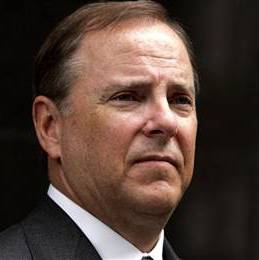
More rumblings in the Skilling appeal

This post from last week noted some interesting docket entries in former Enron CEO Jeff Skilling’s Fifth Circuit appeal of his conviction on criminal charges in connection with the demise of Enron.

Now, it looks as if the mainstream media is picking up on the issue. The Houston Chronicle’s Kristen Hays, who is one of the only mainstream media reporters continuing to follow-up on the Enron-related criminal cases, reports here on a couple of the pleadings referenced in the docket entries from last week that apparently were not placed under seal when filed.

Although a copy of the pleadings that Hays was able to review are not included in the article, it appears clear that the government is scrambling in an attempt to contain public disclosure of exculpatory evidence that is contained in the interview notes of former Enron CFO and chief Skilling accuser, Andrew Fastow:

[Skilling attorney Daniel] Petrocelli and his team have since examined the notes. They want to file an additional brief arguing that the notes contain much information that is favorable to Skilling, and prosecutors and Lake wrongly denied him access to the notes before the trial.He said the notes reveal evidence that is “a sledgehammer that destroys Fastow’s testimony” against Skilling, “infecting virtually every facet” of the government’s case.Petrocelli also asked the 5th Circuit to accept his new brief as a public document, which he said quotes liberally from the Fastow notes.

The controversy regarding what Fastow told prosecutors and FBI agents who were investigating Enron became a big issue in the Lay-Skilling prosecution when the prosecution took the unusual step of providing the Lay-Skilling defense team a “composite summary” of the Form 302 (“302’s”) interview reports that federal agents prepared in connection with their interviews of Fastow. Those composites claimed that the Fastow interviews provided no exculpatory information for the Lay-Skilling defense, even though Fastow’s later testimony at trial indicated all sorts of inconsistencies.

However, I have spoken with several former federal prosecutors about this issue and all believe that the government has a big problem in the Skilling case on the way in which the information from the Fastow interviews was provided to the Lay-Skilling defense team. None of these former prosecutors ever prepared a composite 302 in one of their cases or ever used such a composite in one of their cases. The process of taking all the Fastow interview notes or draft 302’s and creating a composite is offensive in that it allowed the prosecution to mask inconsistencies and changing stories that Fastow told investigators as he negotiated a better plea deal from the prosecutors.

Similarly, the Enron Task Force’s apparent destruction of all drafts of the individual 302s of the Fastow interviews in connection with preparing the final composite is equally troubling. Traditionally, federal agents maintain their rough notes and destroy draft 302s. However, in regard to the Fastow interviews, my sense is that the draft 302s were not drafts in the traditional sense. They were probably finished 302’s that were deemed “drafts” when the Enron Task Force decided to prepare a composite summary of the 302’s.

Update: Larry Ribstein comments on the implications that criminalizing the actions of Skilling and Lay has on their prosecutors in light of their actions.

The Spitzer Lesson

The mainstream media and the blogosphere have been buzzing over the past 24 hours regarding the fall from grace of New York’s governor and former Lord of Regulation, Eliot Spitzer.

As noted in this previous post, there is an under-appreciated human element in such dubious criminal problems as Spitzer fell into.

So, I have a great deal of compassion for the members of Spitzer’s family, although Spitzer’s many victims would certainly attest that he showed none for them. Larry Ribstein has related and typically insightful thoughts regarding why the revelers in Spitzer’s fate should be concerned about the way in which he was brought down.

But I hope that the most important lesson that Spitzer’s political career teaches us is not lost amidst the glare of a tawdry sex scandal.

As with Rudy Giuliani before him, Spitzer rose to political power through the misuse of the state’s overwhelming prosecutorial power to regulate business interests. In so doing, Spitzer manipulated an all-too-accommodating mainstream media, which never misses an opportunity to take down an easy target such as a wealthy businessperson. Spitzer is now learning that the same media dynamic applies to powerful politicians, as well.

However, as noted earlier here, where was the mainstream media’s scrutiny when Spitzer was destroying wealth, jobs and careers while threatening to go Arthur Andersen on American Insurance Group and other companies?

Where was the healthy skepticism of the unrestrained use of the state’s prosecutorial power to regulate business where business had no available regulatory procedure with which to contest Spitzer’s actions?

As Dealbreaker’s John Carney noted at the time of that earlier post:

Why didn’t [the mainstream media covering Spitzer’s investigation of Grasso] reveal the slimy tactics of the Spitzer squad?

We suspect part of the problem was the fear of being “cut off” of access. Reporters compete for scoops, and often those scoops depend on sources who will leak information to them. In the NYSE case, reporters assigned to the story were largely at the mercy of the investigators, who could cut-off uncooperative reporters, leaving them without copy to bring to their editors while their competitors filed stories with the newest dirt. They probably felt—not unrealistically—that their very jobs were on the line.

This reveals an unfortunate state of affairs. Playing bugle boy while government officials call the tunes from behind a veil of anonymity is not investigative journalism—it’s hardly journalism at all. It’s closer to propaganda. It would have been far better had the journalists turned their backs on the Spitzer squad, or even revealed these tactics to the public. Sure they may have lost some “good” stories but they could have painted a truer picture of what was going on. But that’s probably too much to hope for.

And, as noted here, the same prosecution manipulation of the mainstream media contributed to the utter lack of balance in the media’s reporting on the Enron criminal prosecutions.

Alas, change does not come easily to the mainstream media.

Late last week, this post reported on developments that could well expose an egregious abuse of prosecutorial power in connection with the prosecution for former Enron CEO, Jeff Skilling. Why has no mainstream media outlet intervened in that case and demanded that the information about potentially serious governmental misconduct be made public?

The Spitzer lesson is not easily embraced.

Update: Following on the theme of this post, the W$J’s Kimberly Strassel reviews the mainstream media’s complicity in portraying Spitzer as something that he is not, and Charlie Gasporino — who wrote the book about Spitzer that foreshadowed these issues — comments along the same lines here.

What’s Up in the Skilling appeal?

First, thank you to all of the many readers who have communicated their concerns and prayers for the family crisis that is precluding me from daily blogging for now. Your kind thoughts and words are comforting and much appreciated.

But now for a quick blog post. While working this week, I was checking the docket of an appeal in which I am involved at the Fifth Circuit Court of Appeals. While there, I ambled over to the docket of the appeal of former Enron CEO Jeff Skilling just to see if there was anything interesting happening. Check out the following recent entries:

3/4/08 Motion filed by Appellant Jeffrey K Skilling to file supplemental briefs. [5976818-1] Supplemental brief included? (Y/N): Y, to unseal A’s suppl. brief brief [5976818-2] Date of COS: 3/3/08 Sufficient [Y/N]: Y [06-20885] (jmw)

3/5/08 Motion filed by Appellant Jeffrey K Skilling [5976825-1] to place supplemental brief under seal. Date of COS: 3/4/08 Sufficient [Y/N]: Y [06-20885] (jmw) 3/5/08 Response/opposition filed by Appellee USA to motion to file supplemental briefs [5976818-1] by Appellant Jeffrey K Skilling. Reply to Resp/Opp due on 3/14/08. Date of COS: 3/4/08 Sufficient [Y/N]: y [5976831-1] [06-20885] (jmw)

3/7/08 Reply filed by Appellant Jeffrey K Skilling to response/opposition [5976831-1], motion to file supplemental briefs [5976818-1] Reply to Resp/Opp due ddl satisfied., motion to unseal brief [5976818-2] Sufficient [Y/N]: Y [5978302-1] [06-20885] (jmw)


Translated, the foregoing means that Skilling’s appellate team filed a motion on Tuesday requesting that the Fifth Circuit grant permission to the parties to file supplemental briefs and, because of confidentiality concerns, requested that the supplemental brief be filed under seal (in other words, not for public consumption).

The government must have been expecting the Skilling motion because they filed a response in opposition to it the following day (Wednesday). Not to be outdone in terms of alacrity, the Skilling team filed their response today to the government’s opposition and, for good measure, requested that the Fifth Circuit unseal the Skilling supplemental brief and make if available for public review.

Anyone want to bet that these developments might have something to do with this (see also earlier posts here and here)?

Looks to me like a good opportunity for a mainstream media outlet to intervene and demand that the Fifth Circuit order the supplemental briefs be made available for public review, don’t you think?

A change in blogging seasons

blogosphere network map-1 When I started this little blog a bit over four years ago, the blogosphere was a different place. The pioneers of blogs were well-established and had created a viable vehicle to enhance communication of information and ideas, but the blogosphere was a much smaller place. My initial goal was simply to communicate more effectively with an eclectic email group that I had maintained for about five years that was comprised of about 100 friends and family members, mostly businesspeople, clients and former clients, academicians, lawyers, and doctors.

I initially informed no one about the blog other than the members of that email list and figured that, at best, most of them would take a look at it every week or two. Much to my surprise, hundreds and then thousands more began reading it almost immediately. As one sage regular reader apprised me, "Kirk, the success of your blog is conclusive proof that a large number of people don’t have enough to do."

As anyone reading this blog knows, the blogsophere has exploded over the past four years into a key information source and communication device that even few of the blog pioneers predicted. Specialized blogs in such diverse areas as law, business, economics, medicine, education and politics (among others) have fundamentally enhanced the distribution of information and the communication of ideas. As I mentioned in a presentation that I gave on blogs last year at the State Bar of Texas Bankruptcy Seminar, if a lawyer today is not at least periodically reading the specialized blawgs that are addressing the key issues, developments and ideas that are related to the matters on which he or she is providing service to clients, then that lawyer almost certainly is not providing the best quality of service to the clients that is currently available in the marketplace of legal services.

As with many things in life, my blogging over time fell into a rhythm of about 15-17 posts per week, usually three a day on weekdays and a single post on the weekend days. Inasmuch as I also maintain an active family life and a busy law practice, that output was sometimes challenging to maintain, but the benefits of doing so far outweighed the cost in time expended — I have made dozens of new friends through blogging and gained a far richer understanding of many issues and ideas through the blogospheric discussion of them.

Now, however, the time has come for my blogging season to change. Over the past couple of days, my family and I have had to confront a most difficult crisis in our lives. Please don’t be alarmed — the crisis does not involve my health, which continues to be blessedly excellent. Moreover, I am blessed with a wonderful wife, great children and a loving, supportive family who make dealing with these inevitable occurrences in life much easier and more manageable. My family and I will come through this chapter of our lives just fine.

But in the end, my time is finite and the two most important customers for that time are my family and my clients. My family needs more of that time now, and my clients don’t deserve any less, so I am gladly cutting down the time I previously used for blogging to accommodate my family. That’s not a tough call.

I won’t be leaving the blogosphere completely, though. I will continue to post on the topics that I have addressed over the past four years when I have the time and note an issue or idea that particularly stimulates my interest. My posts just won’t be as frequent as they have been. Thank you for making this blog such a fulfilling experience for me and please continue to check in on my little corner of the blogosphere sandbox when you have a moment. Hopefully, there will always be room in your life for a little clear thinking.

Landry’s is worth more because of what?

Landry's logo 012908Did I read right what Steve Scheinthal, general counsel of Houston-based Landry’s Restaurants, Inc., said in this Chronicle article?:

Landry’s is .   .  . facing a handful of shareholder suits seeking class-action status in the wake of CEO Tilman Fertitta’s bid to take the company private.

Fertitta made an offer on Jan. 27 to buy out the company at $23.50 for each unowned share. The $1.3 billion deal, including debt, is being reviewed by a special committee of the Landry’s board. [.  .  .]

Scheinthal dismissed the shareholder suits as standard in a going-private transaction.

"Absent Mr. Fertitta’s offer, the likelihood is that the company’s stock would be trading well below the current market price," he said.

Landry’s stock closed Friday at $17.73 a share, down 38 cents.

Fertitta’s offer for Landry’s was made without a financing commitment in a tough credit market. Yet, the company’s general counsel is claiming publicly that such a speculative offer is all that is propping up the company’s stock price?

I wonder what the boys over at Long or Short Capital will think about that?

Sanctionable softball parents

softball%20players.jpgRobert Loblaw explains why parents of high school softball players who are upset with their daughters’ coach should not vent their criticism in a federal civil rights lawsuit. At least not in the Seventh Circuit.
Meanwhile, lest you think that women’s athletics is not serious business, take a moment to watch the video below (H/T Jay Christensen) University of Michigan women’s basketball coach Kevin Borseth have a post-game meltdown after his team blew an 18-point lead Thursday night and lost to Wisconsin, 69-67.

The "leadership" of Bill White

mayorwhite 022908 Let me see if I’ve got this straight.

On one hand, private businessmen invest millions in buying a run-down property and following the city’s existing laws and regulations in preparing to build the Ashby high-rise, a large-scale residential redevelopment similar to dozens of others that dot Houston’s landscape. When neighbors of the development object to the scale of the development relative to the surrounding neighborhood, Mayor White orders one of the city’s approvals relating to traffic ingress and egress to be revised to delay or undermine the development altogether.

On the other hand, Mayor White proposes that the city spend at least $15-20 million to buy six blocks of downtown Chinatown property at a premium price for a soccer stadium that will block more east-west thoroughfares in a part of downtown where Minute Maid Park, the George R. Brown Convention Center and the Toyota Center already block a large number of such thoroughfares. Moreover, Mayor White is pushing this deal through City Council even though the city already owns six blocks nearby that is a better location for the soccer stadium (it wouldn’t block any additional east-west thoroughfares and wouldn’t require a major modification to another boondoggle). Meanwhile, the city has no financial commitment from the local soccer team even to build the stadium.

This is making the Harris County Commissioners’ dithering over the Astrodome hotel project look downright prudent in comparison.


They just don’t make football players like that anymore

The Johnny Carson interview below of former Baltimore Colts defensive tackle Art Donovan had my late father and me (as well as Carson himself) in stitches when we first saw it together back in 1990. Donovan’s description of his on-the-field spat with Norm Van Brocklin is a classic.

Indexed

Indexed 022908 Jessica Hagy has had a smart blog for awhile. Now, she has a smart book. Barry Ritholtz provides a taste of her work. She is a very insightful lady. Enjoy

I’m shocked, shocked! There is academic cheating in big-time college football!

claude rains in casablanca145 The entertaining hypocrisy of big-time college athletics continues at Florida State University. (H/T Jay Christensen). Just like Rick’s Cafe, everybody knows what’s going on, too.

So, what level of embarrassment in regard to "academic integrity" is it going to take to prompt university presidents to reorganize big-time college football into the professional minor league business that is its true nature?

This imbroglio reminds me of an insight into academia that my late mentor, Ross Lence, passed along to me years ago. As regular readers of this blog know, A Man for All Seasons — the story of Sir Thomas More’s conflict with King Henry VIII — is one of my favorite movies and it was one of Ross’ favorites, too. Ross particularly enjoyed the scene early in the movie when Sir Thomas attempts unsuccessfully to persuade his student, Richard Rich, to eschew a political appointment for a teaching career. After rejecting Sir Thomas’ advice, Rich takes a political appointment from Henry’s henchman, Thomas Cromwell, in return for agreeing to betray Sir Thomas.

"Sir Thomas knew that Rich had a corrupt heart and would never be able to resist the corrupt temptations of politics," Ross observed to me once with a chuckle. "So he recommended that Rich become a teacher." Then, with a twinkle in his eye, Ross posited the question for discussion:

"But was Sir Thomas suggesting that a corrupt heart is not a problem for an academic?"