River Oaks Country Club

It’s been awhile since I’ve passed along another in my series of posts on the best of Houston’s many fine golf courses (see the side panel to the right for the other courses reviewed to date), so what better way to start the week than to take a look at one of Houston’s most venerable tracts, River Oaks Country Club.

A couple of months ago, my old friend Ty Sponsel, Jr. invited me for a golf outing at River Oaks, which is Houston’s premier golf course among the relatively few Houston tracts that were designed prior to World War II. Even with the Houston area currently experiencing its worst drought in a century, River Oaks was in fine shape for our outing.

Designed by legendary Donald Ross, and updated in the 1950’s by Joe Finger and in the 1990’s by Rees Jones, River Oaks is a Houston treasure. Built along the bluffs overlooking Buffalo Bayou just a few miles from downtown, River Oaks is a freak of nature – a course with substantial elevation changes despite being situated squarely within the flat coastal plain of southeast Texas.

Jack Burke, Sr., Claude Harmon and Claude’s son, Dick Harmon, were all former head professionals at River Oaks. Moreover, Jimmy Demaret used to wade across Buffalo Bayou to play the course before convincing Burke to hire him as an assistant pro at the club. Consequently, River Oaks is without question one of the clubs that established the strong Texas thread in the fabric of golf in the United States.

My favorite holes at River Oaks tend to be the ones with elevation changes, such as the 2nd — a downhill par 4; the 3rd – a downhill par 3 on the banks of the bayou; the 5th – a wonderful downhill and then uphill par 4; the 13th – a careening par 4 along the bluffs of the bayou; and the 17th – a sharp dogleg to an elevated green with water left making the tee shot one of the most perilous on the course.

At just over 7,000 yards from the championship tees, and a pleasant 6,800 from the men’s tees, River Oaks is a refreshing throwback to the golf course designs that place a premium on precision and shot-making. It is a reminder that the timeless golf courses are those that take advantage of the native terrain to test the golfer. It is an outstanding test that needs to be on the “must play” list of any Houston golfer.

Below is a slideshow of the course accompanied by the Mavericks’ rendition of “Dream River.” 

Enjoy!


Bubble Monuments

boondoggle-logo2Well, Houston has its share of boondoggles, such as the Metro Light Rail, the $100 million Bayport Cruise Ship Terminal (which has never docked a cruise ship since its completion in 2008) and the continuing dither over what to do with the obsolescent Astrodome.

But I have to admit, in terms of sheer number and scope, Houston’s boondoggles don’t come close to matching those of Las Vegas (H/T Calculated Risk). Check out the photos.

I wonder if a bus tour of these mothballed projects has been put together yet?

Obama’s criminalization of business?

Business crime cropped2David Henderson thinks the Republicans can make political headway against President Obama by campaigning against his administration’s criminalization of business.

That strategy might be viable if the Republicans hadn’t just gotten through criminalizing business for the better part of a decade.

The federal government’s criminalization of business policy obscures the true nature of business risk and fuels the myth that investment loss results predominantly from criminal misconduct. In turn, that myth is one of the underlying causes of the the criminalization of business lottery, which undermines the rule of law.

Thus, Henderson is right that the criminalization of business policy is terribly counterproductive. He is simply wrong about it’s political basis.

The criminalization of business policy is perfectly bi-partisan. 

Project Ecclesia

EcclesiaEcclesia is a creative and community-centered inner-city church on Taft Street just outside of downtown Houston. As noted in this earlier post, Ecclesia’s heart is in the right place.

Ecclesia has outgrown its current location, so the church has acquired the old Houston Fire Department warehouse just outside downtown, where the church will move once renovations are substantially completed. Ecclesia’s members are handling a good part of the renovations and raising money to cover the repairs that need to be performed by specialists.

As the video below delightfully notes, Ecclesia is currently in the phase of refinishing the warehouse’s floors. Making a contribution to help Ecclesia renovate its new home would be a wonderful way to give something valuable back to downtown Houston.


The tutor of McIlroy’s U.S. Open touch

rory_43703t22 year-old Rory McIlroy’s dominating performance in winning the U.S. Open at Congressional last weekend was plenty impressive.

However, even more remarkable is the depth that McIlroy exhibited earlier this year when he lost the Master’s by shooting an 80 during the tournament’s final round.

After accepting that demoralizing defeat as a true sportsman and gentleman, McIlroy immediately sought out Dave Stockton, who is one of golf’s most knowledgeable instructors of putting technique.

Although a few of McIlroy’s wayward drives received most of the media attention, it was actually his indecisive putting stroke on the front nine of Augusta National’s perilous greens that triggered his demise during that fateful final round.

A  couple of months of working on Stockton’s tips paid huge dividends for McIlroy during the U.S. Open. Although his ball-striking was superlative (he hit 62 out of 72 greens in regulation), McIlroy’s putting was arguably even better – he three-putted only once in 72 holes, and that three-putt came on the 71st hole after he already had the championship in the bag. Even on the unusually moist Congressional greens (at least by U.S. Open standards), that is an amazing accomplishment.

In the video below and also in this Golf Digest video, Stockton explains his basic approach and technique. And as the precocious McIlroy recognized after the disappointment of The Master’s, in golf “you drive for dough, but you putt for dough.”

The Rule of Law

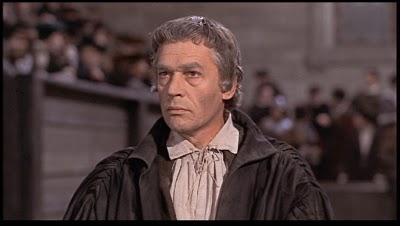
A Man for All Seasons Paul Scofield.jpgIn an insightful scene from the Academy Award-winning movie A Man for All Seasons, one of Sir Thomas More’s apprentices — Richard Rich — confronts Thomas while he is chatting with his wife, daughter, and his daughter’s fiancee, Will Roper, who is an aspiring lawyer.

Rich proceeds to beg Sir Thomas for a political appointment, which Thomas refuses. Sir Thomas knows that Rich is tempted by corruption and would never be able to resist the bribes that he would be offered in such an appointment. During an earlier scene in the movie, Sir Thomas attempts to persuade Rich to pursue a career as a teacher, where he could avoid such temptations and potentially achieve true fulfillment.

An embittered Rich proceeds to leave Sir Thomas and his family to take a political job with Thomas Cromwell, who King Henry VIII has ordered to pressure Thomas to take the King’s oath forsaking Catholicism and the Pope. It is obvious to everyone in the room that the resentful Rich will ultimately betray Sir Thomas, which indeed he does later in the story.

When Sir Thomas’ wife and daughter, as well as Roper, demand that Sir Thomas arrest Rich because of what he will probably do (i.e., betray Thomas), those demands lead to the following exchange in which Sir Thomas lucidly explains the importance of maintaining the rule of law and not trumping up charges even in regard to an unsavory man who will betray him:

Starting a little early, don’t you think?

PhotographerThe NFL’s lockout of players isn’t even resolved yet and the Chronicle’s head Texans cheerleader — Richard Justice — is already trotting out a pre-season puff piece on the Texans’ latest savior, new defensive coordinator Wade Phillips. As noted many times before, Justice has a propensity for such blather.

Phillips is the equivalent of NFL coaching royalty, the son of revered former Oilers coach, Bum Phillips. However, as noted here years ago, Wade is not a chip off the old block, at least in terms of being a successful NFL head coach.

But to sycophants such as Justice, Phillips’ failures as a head coach don’t make any difference because he remains a successful defensive coordinator.

The problem with that theory is that it’s not balanced. As this Mac Engel post notes, the bottom-line performance of teams that included Phillips-coached defenses has not been all that impressive, either.

Moreover, as noted by Alan Burge – who runs rings around the likes of Justice in providing objective analysis of the Texans – it’s not as if the Texans have an easy early schedule for Phillips to ease the Texans’ defensive personnel into his new 3-4 scheme.

And, by the way, remember what happened the last time the Texans converted from a 4-3 defensive scheme to a 3-4?

Phillips is the first experienced defensive coordinator that Texans head coach Gary Kubiak has hired, so perhaps that background will help in developing the Texans’ young defensive talent into an effective unit.

But Justice ignores the substantial evidence that the Texans have again elevated form over substance in relying on Phillips to turn around one of the worst expansion franchises in NFL history.

A special father

Walter KirkendallI am blessed on this special day for fathers ‚Äì and every other day ‚Äì by my remembrances of a special father.

Resolved: America Should Legalize Drugs

Cato_InstituteJeffrey Miron and Robert DuPont, M.D. debate at the Cato Institute whether the governmental policy of drug prohibition should be continued or ended.