When I moved to Houston 40 years ago, one of the first clubs I visited was Anderson Fair.
Anderson Fair, Houston
Reply

When I moved to Houston 40 years ago, one of the first clubs I visited was Anderson Fair.
 As regular readers of this blog know, I don’t think that Roger Clemens should have ever stood trial for allegedly perjuring himself in connection with Congress’ investigation into use of performance enhancing drugs in professional sports.
Nevertheless, the government refused to exercise prosecutorial discretion and insisted upon pursuing the case against Clemens.
But to make matters worse than that dubious decision, the prosecution was either so cocky or negligent with regard to prosecuting its case against Clemens that prosecutors violated an order of U.S. District Judge Reggie Walton not to disclose certain information the the jury.
Whether arrogance or negligence, the result was dire for the prosecution – Judge Walton declared a mistrial on the second day of the trial.
So, now the threshold question is whether Clemens can be prosecuted again for the same offense without violating principles of double jeopardy that protect citizens from the government prosecuting an individual multiple times for the same offense.
As Scott Greenfield relates, that issue essentially comes down to the prosecution’s mens rea in exposing the jury in Clemens’ first trial to the forbidden evidence.
If the prosecution did so intentionally in an attempt to get away with violating the judge’s order in an attempt to influence the jury, then the judge ought to dismiss the indictment against Clemens.
On the other hand, if the prosecution falls on its sword and persuades the judge that the prosecutors are such imbeciles that the presentation of the forbidden evidence to the jury was the result of an unintentional mistake, then the judge will probably allow the prosecution to tee up another prosecution of Clemens.
Just out of curiosity – does anyone other than some prosecutors and a few paternalistic judges really believe that the prosecutors in a case under this level of public scrutiny would unintentionally present forbidden evidence to the jury?
It is high time for this case to go away.
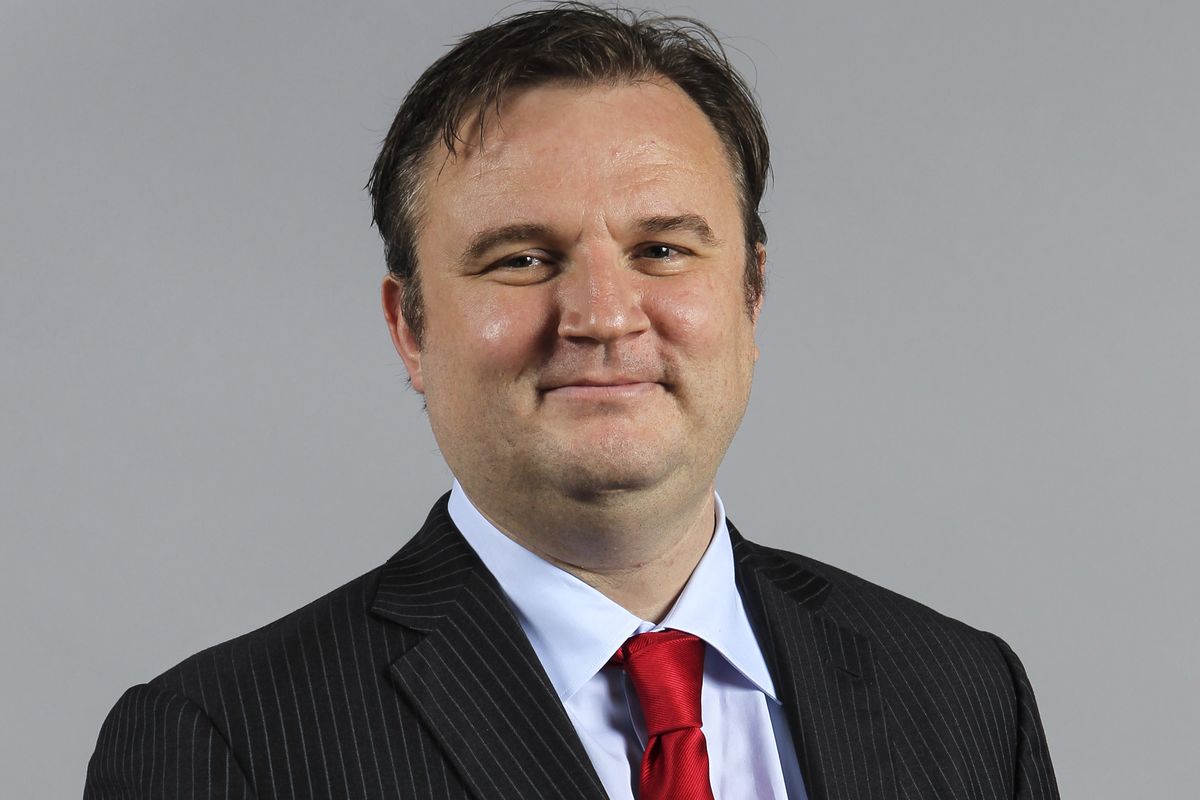 The Houston Rockets have been the third best team in Texas for most of the past decade.
In May of 2007, Daryl Morey succeeded Carroll Dawson as the general manager of the Rockets. Over the past five seasons, the Rockets have won about 60% of their games and appeared in the playoffs twice, winning one series (the only playoff series that the team has won over the past 15 seasons).
As this Wages of Wins post and related chart reflects, the Rockets have accomplished the foregoing without having a player ranked in the top 60 of NBA players in terms of productivity over the past five seasons.
And, although all of them are complementary players, the current roster of Rockets players is as deep in terms of raw talent as any Rockets team that I can recall in my 40 years in Houston.
So, on one hand, a case can be made that Morey has done a reasonably good job under the circumstances.
Inheriting a team that was based on brittle superstars Tracy McGrady and Yao Ming, Morey cobbled together a unit that remained competitive despite the loss of both McGrady and Yao.
Sure, Morey made some mistakes (remember Joey Dorsey?), but maintaining a winning culture and building a strong roster of complementary and developing players under the circumstances is no small accomplishment.
On the other hand . . .
Morey has had five seasons to turn the Rockets ship around and he clearly has not done so.
He has not been able to swing a deal in trade or on the free agent market to land the superstar player that would elevate the Rockets’ cast of complementary players to a legitimate NBA championship contender.
And not having at least one player in the top 60 most productive players in the NBA over the past five seasons does not reflect well on Morey’s talent evaluation skills.
The bottom line is that he inherited a team that was the third best NBA team in Texas and the team remains the third best team after failing to make the playoffs for the second straight season.
So, which appraisal of Morey is right?
I lean toward the former because I don’t believe that Morey can be faulted for having to deal with the consequences of the ill-advised McGrady and Yao commitments. Now that the Rockets are finally cleared of those commitments, let’s see what Morey can do.
Yet, professional sports is a notoriously bottom-line business and the Rockets continue to be mediocre. Although he may have an eye for developing talent, does Morey lack the skill set to attract the dynamic superstar or stars that are a typical component of an NBA championship-caliber team?
What say you?
 This Reed Albergotti/Cameron McWhirter/WSJ article provides an absolutely devastating account of the way in which Hamilton County, Ohio political leaders pledged an enormous portion of the county’s resources to pay most of the cost of a new stadium for the NFL’s Cincinnati Bengals:
At its completion in 2000, Paul Brown Stadium had soared over its $280 million budget–and the fiscal finger-pointing had already begun.
The county says the final cost was $454 million. . . .
But according to research by Judith Grant Long, a Harvard University professor who studies stadium finance, the cost to the public was closer to $555 million once other expenditures, such as special elevated parking structures, are factored in. No other NFL stadium had ever received that much public financing. [. . .]
On top of paying for the stadium, Hamilton County granted the Bengals generous lease terms. It agreed to pick up nearly all operating and capital improvement costs–and to foot the bill for high-tech bells and whistles that have yet to be invented, like a "holographic replay machine." No team had snared such concessions in addition to huge sums of public money, Journal research shows.
To help finance its stadiums, Hamilton County assumed more than $1 billion in debt by issuing its own bonds without any help from the surrounding counties or the state. As debt service ratchets up, officials expect debt payments to create a $30 million budget deficit by 2012.
"The Cincinnati deal combined taking on a gargantuan responsibility with setting new records for optimistic forecasting," says Roger Noll, a professor of economics at Stanford University who has written about the deal. "It takes both to put you in a deep hole, and that’s a pretty deep hole."
The stadium’s annual tab continues to escalate, according to the county’s website. In 2008, the Bengals’ stadium cost to taxpayers was $29.9 million, an amount equivalent to 11% of the county’s general fund.
Last year, it rose to $34.6 million–a sum equal to 16.4% of the county budget. That’s a huge multiple compared to other football stadiums of the era that similarly relied on county bonds for financing. Those facilities have cost-to-budget ratios of less than 2%. [. . .]
The Bengals had said that with a new stadium, the team’s revenue would increase, allowing it to sign better players, win more games and attract more fans to the area. In 2000, the new stadium’s first year, the Bengals had the same record they’d had the previous year, 4-12. Since then, the team has managed just two winning seasons in the new facility. Its attendance levels have actually dropped.
Houstonians might be tempted to shake their collective heads at how badly Bengals management took Hamilton County to the cleaners in the stadium financing negotiations. But then we are forced to confront that Houston has more than its share of similar boondoggles, such as the financial black hole known as Metro Light Rail, the $100 million Bayport Cruise Ship Terminal (which has never docked a cruise ship since its completion in 2008), the continuing dither over what to do with the obsolescent Astrodome, the Harris County Sports Authority’s problems servicing the junk debt it issued in connection with financing the construction of Reliant Stadium for the Texans, and – most recently – the City of Houston and Harris County’s dubious decision to throw about $50 million or so into the construction of a minor-league soccer stadium.
The expenditure of a billion or two of public money on building a lightly-used light rail system and stadiums for privately-owned businesses has real consequences, such as leaving inadequate funds available to make the improvements to Houston’s flood control system, road infrastructure and other improvements that actually improve the safety and welfare of Houstonians.
As I’ve pointed out before, the relatively small interest groups that benefit from urban boondoggles have a vested interest in preventing citizens from ever examining those threshold issues. The primary economic benefit of such public projects is highly concentrated in a few interest groups, such as representatives of minority communities who tout the political accomplishment of shiny toy rail lines while ignoring their constituents need for more effective mass transit; environmental groups striving for political influence; engineering and construction-related firms that profit from the huge expenditure of public funds; and real-estate developers who profit from the value enhancement provided to their property from the public expenditures.
As Peter Gordon has wryly-noted: "It adds up to a winning coalition."
Unfortunately, once such coalitions are successful in establishing a governmental policy subsidizing such urban boondoggles, it is virtually impossible to end the public subsidy of the boondoggle and re-deploy the resources for more beneficial projects.
How do these interest groups get away with this? The costs of such boondoggles are widely dispersed among the local population of an area such as Houston, so the many who stand to lose will lose only a little while the few who stand to gain will gain a lot. As a result, these small interes
t groups recognize that it is usually not worth the relatively small cost per taxpayer for most citizens to spend any substantial amount of time or money lobbying or simply taking the time to vote against such boondoggles.
But would citizens react differently if their leaders advised them that their lack of action in the face of an urban boondoggle might prevent the funding of much more beneficial projects?
No one knows for sure. But I’d sure like to see local political leaders engage in some truth-in-advertising before the financing of such boondoggles is placed before the voters.
We all might just be surprised.
 As noted in earlier posts here, here and here — as well as in connection with the final years of Dr. Michael DeBakey — one of the thorniest issues confronting effective reform of the U.S. health care and health care finance systems is the extraordinary allocation of health care resources to end-of-life care under the current systems.
My interest in this issue prompted me to note this insightful NY Times op-ed from over the weekend.
The author of the piece — Dudley Clendinen – is a former national correspondent and editorial writer for The Times. He is terminally ill with amyotrophic lateral sclerosis (ALS., more commonly known as Lou Gehrig’s disease) and is preparing to die in the most peaceful and efficient manner possible:
There is no meaningful treatment. No cure. There is one medication, Rilutek, which might make a few months’ difference. It retails for about $14,000 a year. That doesn’t seem worthwhile to me. If I let this run the whole course, with all the human, medical, technological and loving support I will start to need just months from now, it will leave me, in 5 or 8 or 12 or more years, a conscious but motionless, mute, withered, incontinent mummy of my former self. Maintained by feeding and waste tubes, breathing and suctioning machines.
No, thank you. I hate being a drag. I don’t think I’ll stick around for the back half of Lou.
I think it’s important to say that. We obsess in this country about how to eat and dress and drink, about finding a job and a mate. About having sex and children. About how to live. But we don’t talk about how to die. We act as if facing death weren’t one of life’s greatest, most absorbing thrills and challenges. Believe me, it is. This is not dull. But we have to be able to see doctors and machines, medical and insurance systems, family and friends and religions as informative — not governing — in order to be free.
And that’s the point. This is not about one particular disease or even about Death. It’s about Life, when you know there’s not much left. That is the weird blessing of Lou. There is no escape, and nothing much to do. It’s liberating. [. . .]
I’d rather die. I respect the wishes of people who want to live as long as they can. But I would like the same respect for those of us who decide — rationally — not to. . . .
After World War II, the U.S. health care system was a leader in the medical world in embracing the optimistic view of therapeutic intervention in medicine, which was a fundamental change from the sense of therapeutic powerlessness that was widely taught to doctors by pre-WWII professors.
Isn’t it ironic that this remarkable health care system has not yet figured out a way to allow elderly patients to die in a peaceful, dignified and non-wasteful manner?
With the U.S. Women’s Soccer team’s inspirational World Cup victory yesterday over Brazil, what better way to start the week than to watch a remarkable soccer commercial? Yet another in our continuing series of creative commercials.
Richard Gillot performs an absolutely spot-on imitation of Colin Montgomery.