This is a compromise on the Wright Amendment?

wright amendment4.jpgThese previous posts have examined the hopelessly obsolescent Wright Amendment, which protects DFW Airport and its main airline — American — from competition that is beneficial to consumers by restricting Southwest Airlines and other discount carriers from flying passengers from Dallas’ more consumer-convenient Love Field to most states. Despite the absurdly anti-competive and anti-consumer nature of the Wright Amendment, American has done a good job of lining up powerful politicians on both sides of the aisle to oppose repeal of the outmoded law. As this Ft. Worth Star-Telegram article reports, American’s lobbying efforts appear to have paid off.
Rather than an outright repeal — or at least a reasonable phase-out — of the Wright Amendment, politicians and airline officials met Friday at DFW to talk about a “compromise” that would delay long-haul flights into Love Field for at least eight more years. This proposal flies in the face of the latest positive news from the exemption of a state from the Wright Amendment — since Missouri was exempted from the Amendment in November and Southwest started flying directly from Love Field to St. Louis and Kansas City, airfares have decreased dramatically and passenger traffic to those cities increased by almost 45% percent in the first two months. But rather than passing along this obvious benefit to citizens wanting to travel to other locales, our politicians are talking about forcing consumers to wait until almost 2015 to enjoy this benefit of competition.
I can hardly wait to hear the rationalizations for that one. One benefit of publicity over the Wright Amendment is that it provides a clear view regarding the leadership qualities of Texas politicians. Although American has bought support of the Wright Amendment from both sides of the political aisle, it is interesting that most of the Amendment’s supporters are Republicans, which is supposedly the pro-business and pro-competition party. So much for such myths.
Update: Mitch Schnurman has further analysis on the the skinny on the compromise, including Southwest’s conclusion that GOP Rep. Joe Barton would have bottled up an outright repeal of the Wright Amendment.

The Lord of Regulation flunks geography

spitzernew16.jpgAccording to this NY Times article, Eliot Spitzer needs to bone up a bit on his western New York geography.

Skilling Talks

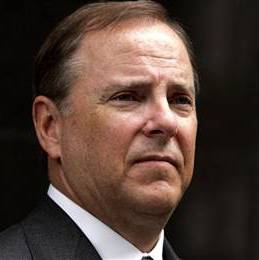
In his first meaningful public comment since being convicted on 19 criminal charges, former Enron CEO Jeff Skilling agreed to this Wall Street Journal ($)/John Emshwiller interview in which he concedes, among other things, that his decision to testify before the SEC in the aftermath of Enron’s collapse into bankruptcy provided prosecutors with the information (particularly Photofete) that they were able to use to undermine his credibility with the jury during his trial.

Inasmuch as Skilling made his decision to testify in front of the SEC and Congress against the advice of his counsel, one of the many legal ramifications of Lay-Skilling trial is that any future corporate executive confronted with a criminal investigation into his company’s business will almost certainly assert the Fifth Amendment privilege in connection with any investigation and decline to provide the executive’s perspective about what happened at the company.

Thus, the prosecution’s use of Skilling’s faulty memory about Photofete and his attempted Sept. 6, 2001 Enron stock sale reinforced a perverse incentive for business executives — if an executive declines to assist in determining what really caused the business failure of the executive’s company, then the chance of the executive being successful in what Larry Ribstein calls the lottery of corporate criminal trials improves.

Some public policy, eh?

Meanwhile, WaPo’s Carrie Johnson reports on Skilling’s attempt to use a portion of the $60 million or so that the prosecution has frozen in connection with the criminal charges against him to pay his defense firm.

By my estimate, the Lay-Skilling defense teams have now incurred a total of over $100 million in defending the charges against the two former executives. In the great waste of criminalizing corporate agency costs, the price of asserting innocence continues to increase.

By the way, Skilling and Lay’s sentencing hearing has been postponed for six weeks to October 23.

The exclusionary rule takes a serious hit

exclusionary rule.gifIn one of first concrete signs of the erosion of limits on governmental misconduct toward U.S. citizens, this NY Times article reports on yesterday’s controversial 5-4 U.S. Supreme Court decision in the Michigan “knock-and-announce” case, which raises troubling new issues about whether the “exclusionary rule” will survive the Roberts Court for constitutional violations by police, including Fourth Amendment violations of searching citizens’ homes and seizing their property. A copy of the decision is here, and the SCOTUS blog has a good analysis of the Supreme Court’s opinion here.
Make no mistake about it, the Supreme Court’s decision is a full-blown attack on the traditional remedies for ensuring civil liberties in America. The decision clearly indicates that that Justice Scalia is intending a significant revision or casting aside of the exclusionary rule as a remedy for illegal governmental police conduct, perhaps best reflected by the opinion’s naive trust placed in police officers to ensure Constitutional protections. Particularly troubling to me is Justice Scalia’s dismissive attitude toward the “knock-and-announce” rule, not the least of which are the understandable terror and fear involved in having one’s door beaten down in the middle of the night by armed and masked men, the disturbing predicament that a homeowner confronts in deciding whether the intruders are criminals or police and the fact that the high emotion of such a situation can lead police to make horrifying misinterpretations of harmless gestures, which often result in tragic consequences. Justice Scalia gallingly ignores those valid reasons for the knock-and-announce rule by contending that the reasoning behind the rule is simply “the right not to be intruded upon in one’s nightclothes.”
Yeah, right. Orin Kerr places the positive face on the decision here, while Cato’s Mark Moller and Grits for Breakfast’s Scott Henson echo my more ominous view of the decision.

Rumblings at Dell

dell_logo2.jpgThings are not looking all that rosy these days at Austin-based computer powerhouse, Dell, Inc. While competitor Hewlett-Packard, Inc. is undergoing a revival of sorts, Dell’s revenue growth has slowed considerably and profits have fallen. Not surprisingly, Dell’s share price has steadily declined to around $25, a loss of about 40% in less than a year. Long gone are the heady days of the company’s $60 share price in 2000.
Noting these problems, this NY Times article provides a good overview of Dell CEO Kevin B. Rollins‘ plan to reverse the downward trend at Dell. The seriousness of Dell’s problems is perhaps best reflected by the fact that the company is questioning virtually everything in its business model, including the possibility of breaking its longtime exclusive alliance with major chip supplier, Intel. As the story notes, it’s far from clear whether even Rollins’ plan will revive Dell’s dominance in the notoriously competitive PC manufacturing industry, so stay tuned.

Checking in on the MARS platform

mars platform3.jpgOne of the enduring images of the catastrophic damage that last summer’s hurricanes inflicted on Gulf Coast oil and gas production facilities was the picture to the left of Royal Dutch Shell PLC’s MARS floating production platform (previous posts here and here), which was badly damaged by Hurricane Katrina. As this Washington Post article reports, Shell has finished repairing the huge platform, just in time for this year’s hurricane season. The article goes on to provide a handy overview of the importance of the Gulf Coast oil and gas infrastructure for meeting the nation’s energy needs and the efforts to bolster the ability of that infrastructure to weather the severe storms of hurricane season.
Mars_Tension-repaired.jpgDespite the massive repairs, the main improvement in the MARS platform to protect it from another severe storm is decidedly low-tech — stronger and twice as many clamps to hold the drilling rig to the platform. Those clamps work against vertical and horizontal forces and, during Katrina’s category 4-5 winds (the storm hit shore as a strong cat 3 storm), three inch steel bolts holding the previous clamps were sheared straight through. Although the old clamps had survived many storms, Shell engineers believe that the new ones will work even better.

The talented Mr. Graham

Wayne Graham.jpgAs noted earlier here, Houston has become the amateur baseball hotbed of America over the past decade, and no person is more responsible for that development than the coach of Rice University’s fine baseball program, the remarkable Wayne Graham.
Coach Graham was already a local coaching legend in local circles when he took over the Rice program 15 years ago. Already an accomplished high school and junior college baseball coach (he developed such players as Roger Clemens and Andy Pettitte at San Jacinto Junior College amidst the petrochemical plants on Houston’s southeast side), Coach Graham was 55 when he took the Rice coaching position, which was his dream job. Under Graham, Rice has won 11 conference championships in a row, gone to 12 NCAA regional tournaments and six Super Regional tournaments, and — with this year’s team — have five appearances in the College World Series. Rice’s 2003 NCAA National Championship in baseball was the school’s first team national championship in any sport, an achievement made all the more incredible given Rice’s high academic requirements and relatively small enrollment (less than 3,000 undergraduates).
Graham is now 70, but his real age is closer to 50 because of a rigorous workout regimen and a healthy diet. Thus, he has no intention of slowing down and, as this excellent David Barron/Houston Chronicle profile reports, don’t be surprised if Graham is still coaching the Owls at the age of 80. Although Barron’s profile captures the special nature of Graham well, this related Barron article passes along my favorite anecdote about Graham, which involves happy-go-lucky Stros star, Lance Berkman, who played for the notoriously no-nonsense Graham at Rice during the mid-1990’s:

Continue reading

Has that been proof read?

surprised.jpgI’ve been meaning to pass along the Securities and Exchange Commission’s slick new full text search engine for regulatory filings. It’s a very helpful resource.
On the other hand, as Paul Kedrosky notes, one of the unintended consequences of the new search engine is that management of publicly-owned companies may want to consider upgrading the proof-reading department.

Prepping for the U.S. Open

2006OpenHeaderBanner3.jpg
The 2006 U.S. Open Golf Tournament begins today at New York’s venerable Winged Foot Golf Club, so the following will provide you with some interesting reading while you enjoy this year’s edition of golf’s most challenging tournament:

This NY Times article describes how Phil Mickelson’s recent success in major golf tournaments is largely the result of his team of advisors refining Mickelson’s preparation for major golf tournaments;
A family of golf pros with strong connections to both Winged Foot and Houston provide helpful hints on surviving Winged Foot;
Nike is going to try and make us cry on Father’s Day, which Jim Corrigan finds appalling;
Speaking of Tiger Woods, this NY Post article reports on Tiger’s yacht, which he is using this week in lieu of a hotel while playing at Winged Foot, and includes Tiger’s morning greeting to the gawking reporters (“It’s a little early to be taking pictures out there, isn’t it? Have a nice f- – -ing day.”);
By the way, PGATOUR.com writers Joe Wojciechowski, Dave Shedloski and Brett Avery are following Tiger during his U.S. Open rounds and blogging about it here;
The Guardian’s Lawrence Donegan reviews the brutal conditions at Winged Foot and includes this quote from Mickelson:

Phil Mickelson went as far to suggest the course was “on steroids”. “I’m going to make a prediction,” he added. “Someone will hit the wrong ball out of the rough this week. There are not hundreds of members’ balls out there, but thousands, and you just can’t see them even when you are standing over them. It is thicker and denser than any rough I have ever seen.”

John Hawkins reports that some of the pros are not thrilled with the condition of Winged Foot’s greens;
And, although not U.S. Open-related, don’t miss this video of Fuzzy Zoeller’s incredible hole-in-one a couple of weeks ago during a Champions Tour event in Des Moines.

The art of free throw shooting

shaq.jpgAlmost lost amidst Dwayne Wade‘s heroics during the final six minutes of Miami’s nailbiting win over Dallas in the third game of the NBA Finals the other night was Miami center Shaquille O’Neals making two free throws down the stretch to help his team’s comeback. For the free-throw challenged O’Neal, those free throws were nothing short of remarkable — to that point in the series, he had made only four of 20 free throws.
Of course, poor free-throw shooting is nothing new for O’Neal. Although he is one of five best centers ever to play professional basketball (Russell, Chamberlain, Abdul-Jabbar, and Olajuwon are the other four), O’Neal would inarguably be the best of the bunch if he could shoot free throws close to as well as Abdul-Jabbar and Olajuwon did. Only Chamberlain among the greatest centers has a worse free throw shooting percentage than Shaq, and O’Neal (52.8%) may even go below Chamberlain’s desultory 51.1% career free-throw shooting percentage before his career is over.
The art of free-throw shooting has always interested me, and I could probably go out and hit six or seven out of ten free throws today even though I have not shot one in several years. So, when I came across this latest article about the Miami coaching staff’s attempts to help O’Neal with his free-throw shooting, it reminded me of a conversation that I had years ago about free-throw shooting early one morning on the driving range of Sweetwater Country Club in Sugar Land. The only other person on the range that morning happened to be a very good free-throw shooter, former Houston Rockets guard, Mike Newlin (87% career percentage).
Newlin had a solid 11-year NBA career, mostly with the Rockets and then with the Nets and Knicks for his last three seasons. He had impeccable fundamentals as a basketball player, and his free throw shooting style was close to perfect. At the time we found ourselves on the same driving range, I had never met Newlin, but I felt a connection to him because we had both come to Houston in 1972, my late father and I had watched him play many games in the early years of the Rockets in Houston and we had a number of mutual friends in the business community. So, before leaving the range to find my golfing partners and head for the first tee, I approached Newlin and introduced myself. He was extremely cordial and we spent several minutes chatting about our mutual friends and the early years of the Rockets in Houston.
During our chat, I observed to Newlin that he exhibited the best fundamentals in shooting free throws of any player that I had ever seen. Newlin, who is quite bright, had obviously had similar thoughts, but did not agree with me:

“Nope. I had the second-best fundamentals,” he replied.
“Who had the best?” I inquired.
“Rick Barry.”

Perhaps Shaq should listen.