New York’s regulation premium

Grasso.jpgThis Landon Thomas/NY Sunday Times article is the definitive report to date on the status of New York aspiring governor Eliot Spitzer’s lawsuit against former New York Stock Exchange chairman and CEO Richard Grasso (prior posts here) over Grasso’s $140 million pension from the NYSE. In short, the NYSE board was quite involved in Grasso’s compensation arrangements, although there is some question over how well the details of those arrangements were disclosed to the entire board. However, at the end of the day, the board members knew what they were doing, debated the merits of the package extensively and approved it. If this case were to be determined in accordance with the corporate case of the decade, then it would not even appear to be a close call — Grasso and the NYSE board wins.
So, you ask, what’s driving the lawsuit? Well, apart from the propaganda for Spitzer’s political campaign, Thomas reports that the NYSE has already incurred in excess of $40 million in legal fees and costs in defending Grasso and the other board members in the lawsuit. Inasmuch as the cost of defending the lawsuit will likely increase substantially by the time the case is resolved through either trial or settlement, the defense cost will likely be at least half again as large as Grasso’s pension itself. That cost is really just the regulation premium that firms should expect to pay if its board decisions on big ticket items do not pass muster with the Lord of Regulation. Can you imagine how high those regulation premiums will go when the Lord of Regulation is elevated to governor?

Thinking About Performance-Enhancing Drugs

Mark Sisson is a Malibu-based former elite marathoner and triathlete who became well-known in athletic circles as an expert on drug testing for athletes while serving for 13 years as the anti-doping and drug-testing chairman of the International Triathlon Union and as the union’s liaison to the International Olympic Committee.

In a provocative letter to his friend Art DeVany, Sisson talks about drug-testing for athletes and makes some interesting observations:

At the risk of sounding a bit brazen, I would suggest to you and your audience that sport would be better off allowing athletes to make their own personal decisions regarding the use of so-called “banned substances” and leaving the federations and the IOC out of it entirely. (Even the term “banned substance” has a negative connotation, since most of these substances are actually drugs that were developed to enhance health in the general population). Bottom line: the whole notion of drug-testing in sports is far more complex than even the media make it out to be. [. . .]

The performance requirements set by the federations at the elite level of sport almost demand access to certain “banned substances” in order to assure the health and vitality of the athlete throughout his or her career and – more importantly – into his or her life after competition. . . . World class athletes tend to die significantly younger than you would predict from heart disease, cancer, diabetes and early-onset dementia. They also typically suffer premature joint deterioration from the years of pounding, and most endurance athletes look like hell from the years of oxidative damage that has overwhelmed their feeble antioxidant systems.

Most people don’t realize it, but training at the elite level is actually the antithesis of a healthy lifestyle. The definition of peak fitness means that you are constantly at or near a state of physical breakdown. As a peak performer on a world stage, you have done more work than anyone else, but you have paid a price.

It is again ironic that the professional leagues and the IOC — the ones who dangle that carrot of millions of dollars in salary or gold-medalist endorsements — are the same ones who actually created this overtrained, injured and beat-up army of young people. They don’t care. These organizations then deny the athletes the very same drugs and even some natural “health-enhancing” substances that the rest of society can easily receive whenever they feel the least bit uncomfortable. [. . .]

I believe that with proper supervision, athletes could be healthier and have longer careers (not to mention longer and more productive post-competition lives) using many of these “banned substances.” And perhaps the biggest assumption I will make here is that the public just doesn’t care. Professional sport has become theater. All the public wants is a good show and an occasional world record.

As I noted earlier with regard to Barry Bonds’ use of steroids, management of professional sports has not done a good job of drawing the line with regard to what should constitute illegal use of drugs, on one hand, and legal performance-enhancing substances that are beneficial to the health of the athletes, on the other.

As a result, the league rules (as well as our nation’s laws) governing which substances are legal and illegal are often arbitrary and hypocritical.

Indeed, professional sports teams (as well as their fans) often encourage their players to risk their health. Players who “play with pain” are the subject of adulation in all levels of sport, as are players who risk injury by running into walls, taking cortisone shots to be able to perform with reduced pain and undergoing risky surgeries to lessen pain in order to play in a big game (remember Curt Schilling in the 2004 World Series?).

The difference between a professional athlete taking pain-reducing drugs to get through a season and another athlete using performance-enhancing drugs in an attempt to be more productive during a season is not as wide as it may appear at first glance.

Regulating the regulation

nbr_logo.gifHouston-based — er, . . I mean Bermuda-based, or is that Barbados-based? . . . — Nabors Industries, Inc. is one of the world’s largest drilling contractors. The company has nearly 600 land drilling rigs and more than 900 land workover and well-servicing rigs, and operates across the U.S. and in Africa, Canada, Central and South America, and the Middle East. Nabors’ offshore equipment includes platform rigs, jack-ups, barge drilling rigs, and marine support vessels, and the company provides oil field hauling, maintenance, well logging, engineering and construction services. In short, Nabors is the type of oil field service company that exploration and production companies want to have competing for the business of drilling or providing other services for an oil or gas well at the lowest possible price.
One of the reasons that Nabors has been one of the most profitable oil field service companies over the past 20 years or so is that its management team is constantly searching for ways to make the company more profitable and valuable to its shareholders. So, in 2001, Nabors moved its tax headquarters to Bermuda and its legal headquarters to Barbados to lessen its American income taxes. The move has paid dividends for Nabors shareholders as the company paid only $6 million in U.S. income taxes last year on almost $430 million in profits, which would have generated over $80 million more in taxes if Nabors were based in the U.S. Several other big companies have done the same thing as Nabors.
So, given the competitive advantage that Nabors and other tax haven-based companies have over their American-based competitors, you would think that Congress might get the message and simply reduce the tax regulation that prompted such moves. But that would be too easy. Rather than addressing the cause, a fierce debate developed in Congress with demagogues from both parties promising voters to crack down on “Benedict Arnold companies” such as Nabors that move to tax havens to avoid paying U.S. income taxes.

Continue reading

Anadarko’s big deal

Anadarko_Corp_logo.jpgThe Woodlands, Texas-based Anadarko Petroleum Corp. announced this morning (NY Times story here) that it has agreed to buy Kerr-McGee Corp. and Western Gas Resources Inc. in separate all-cash deals totaling $21.1 billion, plus the assumption of $2.2 billion in debt, in a deal that will create America’s largest independent exploration and production company. The boards of each company have already approved the transaction, although Kerr-McGee shareholders and regulators must still approve the deals, which are expected to close by the end of the third quarter. Previous posts on Anadarko are here.
Gee, that’s pretty big news in the old hometown.
Anadarko will pay about $16.4 billion, or $70.50 a share, in an all-cash deal for Kerr-McGee and assume debt and other liabilities estimated at $1.6 billion, which works out to pay a premium of about 40% to Kerr-McGee shareholders over Thursday’s closing price of $50.30. Anadarko will also pay about $4.7 billion, or $61 a share, and assume about $560 million in debt for Western Gas, which translates to a premium of about 49% for Western shareholders over Western’s closing price on Thursday of $40.91. The Kerr-McGee deal includes a right to match competing offers and a break-up fee of $493 million while Anadarko’s agreement with Western Gas includes a right to match competing offers and a break-up fee of $154 million.
Anadarko will fund the entire deal with a $24 billion line of credit from UBS, Credit Suisse and Citigroup, and reasons that it expects to recover 3.8 billion barrels of oil equivalent from the acquired properties at less than $12 per barrel. Oil has traded near $70 per barrel for the past couple of months and Anadarko announced that will hedge 75% of the acquired production through late 2008.
Anadarko’s bold play follows other huge acquisitions in the oil patch, such as last year’s Chevron Corp. acquisition of Unocal Corp. for about $18 billion and ConocoPhillips’ purchase of Burlington Resources for $36.5 billion while more conservative industry players such as Exxon Mobil Corp. have held tight and plowed their huge profits over the past couple of years into share buybacks.
Never a dull moment in the oil and gas business, eh?

How much did you say you wanted, honey?

michael strahan.jpgFormer Texas Southern and current New York Giants star defensive lineman Michael Strahan is discovering that they play for keeps in the divorce courts of New York City:

Michael Strahan’s nasty divorce trial hit a new low yesterday – as his estranged wife suggested the Giants sack king and handsome married TV doctor Ian Smith are more than just friends.
After the couple’s marriage collapsed, “Michael moved into Ian’s one-bedroom apartment,” Jean Strahan told reporters after another bruising day in divorce court.
“And you can say an alternative lifestyle sprouted,” she added, though her lawyer stopped her before she could elaborate. [. . .]
Michael Strahan himself hinted at some controversy when he said in court that he wasn’t sure whether one of his love letters was addressed to “Jean” or “John.”
“I’ve been accused …” Strahan, 34, quipped on the witness stand before cutting himself off in midsentence and flashing his gap-toothed smile.
Strahan’s lawyer rejected any hint that there’s anything more than a friendship between his client and Smith.

That’s not all.

The sad case of Andrea Yates

andrea yates.jpgWhile on the subject of Houston-based cases that are not reflecting well on the U.S. criminal justice system, the jury in the retrial of Andrea Yates — the suburban Houston mother and housewife who drowned her five young children in a bathtub in 2001 — was seated yesterday and opening arguments are scheduled to begin on Monday.
The Yates case is not Texas at its finest. Despite overwhelming medical evidence that Yates was severely mentally ill, suffering from post-partum depression and had been taken off the only medication that had ever helped her when she killed her children, the State of Texas still wants to put Yates in prison instead of a mental health facility for the rest of her life. Not surprisingly, prosecutors have never been able to offer any motive — much less a reasonable explanation — for why an otherwise attentive and loving mother would suddenly go nuclear on her young children and kill them.
But it gets worse. The state is retrying this case despite the fact that Yates’ first trial ended in a conviction that was subsequently overturned because the lead prosecution expert witness made the dubious link between Yates and an episode of the television show Law and Order in which a mother drowns her child. Now, it’s bad enough that State District Judge Belinda Hill ever allowed the jury to hear an expert make such a questionable reference to in the first place, but what’s worse is that the episode that the expert referred to was never even broadcast!
Moreover, it’s not as if this trial of Yates even involves the issue of incarceration versus freedom — even if successful, Yates’ insanity defense would result in her assignment to a secured psychiatric hospital, probably for the remainder of her life. And, from the looks of it, the prosecution and Judge Hill do not appear to be acting any more responsibly in the second Yates trial than they did in the first one. Last week, Judge Hill granted an inhumane prosecution request that Yates be incarcerated in prison during the retrial rather than in a mental health facility.
In short, despite the fact that there is no meaningful dispute regarding the nature and depth of Yates’ mental illness, the State insists upon punishing this feeble and tormented woman by imprisoning her for the rest of her life. Such a lack of prosecutorial discretion leaves a serious black mark on the Harris County District Attorney’s Office and the State of Texas criminal justice system, and it is not one that is easily erased.

The Clock Ticks on the NatWest Three

As noted in several earlier posts, the Enron Task Force’s prosecution of three former National Westminster Bank PLC bankers has raised a political firestorm in the United Kingdom.

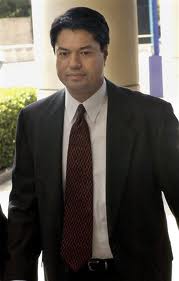
The Task Force is attempting to use the 2003 Extradition Treaty signed with the US in the wake of the 9/11 attacks on New York and Washington, D.C. as the basis of extraditing the three former bankers to Houston to stand trial for allegedly bilking their former employer of $7.3 million in one of the schemes allegedly engineered by former Enron CFO Andrew Fastow and his right hand man, Michael Kopper.

According to this article from the Independent, the House of Lords refused on Wednesday to hear the NatWest Three’s challenge to the UK’s extradition treaty with the US, leaving the former bankers with only six days in which to appeal to the European Court of Human Rights in an attempt to avoid extradition to Houston.

If extradited to Houston, the NatWest Three could face incarceration in the Federal Detention Center pending a trial in an unfriendly environment that could send each of them to prison for over 20 years.

As noted in the prior posts, the NatWest Three are contending that the treaty that is the basis for the proposed extradition is unfairly slanted because the U.S. has not yet ratified the treaty while it is already being implemented in the U.K. Under the treaty, the U.S. government is no longer required to present a prima facie case against the former bankers and the Department of Justice may continue to challenge the evidence put forward in extradition requests while U.K. citizens who are subject to U.S. extradition requests have have no such parallel right.

Moreover, the NatWest Three point out that U.K. authorities have already investigated the matter and declined to pursue charges against the former bankers, and that the U.S. culture regarding Enron almost assures a conviction while, at worst, the three would be be facing either fines and light prison sentences if the case were prosecuted in the U.K.

However, the most damaging aspect of the NatWest Three case is the portrayal of the U.S. justice system in the U.K. and internationally as a wild frontier with no respect for due process of law. That portrayal is a natural byproduct of the criminalization of business mindset that elevates propaganda campaigns and prosecutorial misconduct over proof of criminal charges in a court of law.

Little wonder that the already high price of asserting innocence of business crimes in the U.S. justice system continues to rise.

The remarkable Mr. Ogilvy

Oglivy.jpgSomewhat lost amidst Phil Mickelson, Colin Montgomerie and Jim Furyk’s train-wrecks at the final hole of last weekend’s U.S. Open is the fact that Geoff Ogilvy, the winner of the tournament, is a quite interesting fellow and one of the rising stars on the PGA Tour.
As John Huggan observes in this excellent interview of the 29 year-old Austrailian, “Ogilvy has the potential to be just the sort of wise, high-profile spokesman the professional game needs if it is to rescue itself from the technological black hole into which it is currently headed.” For example, Huggan provides the following analysis from Ogilvy on the state of the modern game:

Two important aspects of golf have gone in completely the wrong direction. Most things are fine. Greens are generally better, for example. But the whole point of golf has been lost. Ben Hogan said it best. His thing was that you don’t measure a good drive by how far it goes; you analyse its quality by its position relative to the next target. That doesn’t exist in golf any more.
The biggest problem today is tournament organisers trying to create a winning score. When did low scores become bad? At what point did the quality of your course become dependent on its difficulty? That was when golf lost the plot. The winning score should be dictated by the weather.
The other thing is course set up. Especially in America there is too much rough and greens are way too soft. Then, when low scores become commonplace, they think how to make courses harder. So they grow even more long grass.
But that misses the point. There is no real defence against a soft green. Today’s players with today’s wedges can stop the ball from anywhere. The angle of attack and the shape of the shot mean nothing. It doesn’t matter where you hit it as long as it is between the out of bounds stakes or between the trees. And so the game becomes a one-dimensional test of execution, time after time after time.

And, as usual in matters pertaining to golf, there is a Houston connection to Ogilvy’s win at the U.S. Open. As you can see from the picture of Ogilvy’s swing above, Ogilvy has what is referred to in golf swing circles as a “one-plane swing,” while each of his main competitors in the U.S. Open — Mickelson, Montgomerie and Furyk — all use “two-plane swings” (Furyk’s idiosyncratic swing might be more like six planes). As noted in this earlier post, long-time Houston golf teaching pro Jim Hardy authored a ground-breaking golf swing instructional book last year that differentiated the one plane and two plane swings and explained that key principles of the two swings are much different. Although Hardy teaches both types of swing in his book, he prefers the one-plane swing for better players because it has fewer moving parts than the two-plane swing and, thus, is less dependent on timing and more consistent under the intense pressure of tournament golf. No better example of that observation could have been provided than the final hole of last weekend’s U.S. Open, where Ogilvy’s swing held up brilliantly while both Mickelson and Montgomerie’s swings broke down under the intense pressure of the moment.
Finally, you know that Ogilvy has finally arrived when he is the subject of David Letterman’s Top Ten List “Top Ten Things That Went Through Geoff Ogilvy’s Mind After Winning The U.S. Open.” My favorite is no. 10: “This is one of those things you never forget, like seeing John Daly in the locker room naked.”

Owls hit a bump in the road

rice logo2.gifThe Rice Owls quest for a second NCAA baseball championship took a detour Wednesday night as the Oregon State Beavers used a career-performance from young starter Daniel Turpen — who had only started one prior game all season — to defeat the Owls 5-0 and set up another game with the Owls this evening to determine which team will face North Carolina in the best-of-three championship series that begins on Saturday night in Omaha.
As noted earlier here, winning the College World Series is usually all about pitching depth, and so Wednesday’s loss provides a clear advantage to North Carolina in the championship series. Regardless of whether Carolina faces Rice or Oregon State, the Tarheels will have the better-rested pitching staff for the championship series. On the other hand, both Rice and Oregon State will use their aces in tonight’s elimination game (television by ESPN2) — Rice’s Eddie Degerman and Oregon State’s Dallas Buck — which will effectively limit their availability in the championship series.
One concern for Rice coach Wayne Graham is that the Owls’ bats have suddenly gone quiet in Omaha. One of the best hitting teams in college baseball, the Owls have now gone 14 straight innings without a run. If that trend doesn’t change, the Owls will likely submit to the old baseball adage “when you don’t hit, you sit.”
Update: Baseball can be such a cruel game. After mashing the ball for virtually the entire season, the Owls’ bats remain asleep as they lose the elimination game to OSU, 2-0.

Olis Resentencing Hearing Finally Scheduled

Red Redding, Morgan Freeman’s character in The Shawshank Redemption, commented that “prison time is slow time” and that “prison life consists of routine, and then more routine.” Those observations are certainly true in regard to the resentencing of Jamie Olis.

The Fifth Circuit Court of Appeals set aside Olis’ original 24+ year sentence on October 31, 2005.

Since that time, Olis has spent most of his time in a small prison cell in the Federal Detention Center in downtown Houston waiting to be resentenced as the prosecution engaged in a series of delaying tactics over most of the past year relating to its new expert report on the key issue in Olis’ resentencing — the alleged market loss attributable to the criminal acts for which Olis was convicted.

Finally, yesterday afternoon, U.S. District Judge Sim Lake scheduled Olis’ resentencing hearing for September 12, 2006, almost 11 full months after the Fifth Circuit ordered it.

Although the Olis court docket indicates that the prosecution has still not filed its new expert report on the market loss issue, my sense is that some form of it has been provided to the Olis defense team because Judge Lake ordered Olis to respond to the prosecution’s report by August 18 and for the prosecution to file any reply by September 1.

Meanwhile, the sad case of Jamie Olis remains a stark reminder of the injustice that is inevitable when the state is allowed to use its overwhelming prosecutorial power to regulate corporate agency costs.