Houston’s ambassador of learning

lienhard.gifOne of the many people that make Houston such a remarkable place is John Lienhard, the longtime University of Houston engineering professor who is the author and voice of the popular KUHF radio series — Engines of our Ingenuity — which is carried across the nation by more than 40 National Public Radio affiliates. As Professor Lienhard describes it, Engines is “a mix of history, engineering and science. The programs describe the machines that make civilization run, and the people who devise them.”
Lienhard recently completed his 2,000th segment of Engines, so the Chronicle’s science writer Eric Berger used the occasion to interview Professor Lienhard. A part of the interview is here, and Eric’s podcast of the entire 30-minute interview is here. The following is Professor Lienhard’s response to Eric’s inquiry as to what he considers the greatest invention:

I don’t like to identify “greatest inventions.” I think inventions flow and swirl and intertwine with one another. There was a wonderful piece by Salman Rushdie where he described stories as flowing like different colors in a great sea, and what you do is dip in and pull out one of those stories. But they’re intermixed and intertwined with other stories. There’s the constant flow and ebb of stories, and the same is true of invention. And there’s another reason. In the book I finally say we’re in trouble when we talk about inventions. The airplane was not an invention. It was something else. I give it a word, multigenium. … They are these accrued inventions that we finally point out and say this is the final thing, like Wright Brothers’ airplane, or Morse’s telegraph, which followed something like 70 years of working with electric telegraphy. We call that thing in a finished form the invention, but it’s not an invention.

El Paso’s rebound

elpaso.bmpJust a year of so ago, Houston-based El Paso Corp. looked as if it was a prime candidate to be the city’s next big corporate reorganization.
That’s not the case anymore. Earlier this week, El Paso announced that it had earned a $141 million profit in the second quarter on revenue of $1.21 billion. The natural gas pipeline company had a net loss of $246 million (38 cents a share) on $1.17 in revenues during the second quarter last year.
Good job, El Paso.

The WSJ gets it right on the BetOnSports case

david-carruthers.jpgAfter being oddly slow in objecting to the prosecutorial abuses of businesspeople that have resulted in this, this and this (among many others), the Wall Street Journal ($) editorial page finally gets it right in this editorial on the outrageous conduct of the Justice Department in arresting BetOnSports executive David Carruthers while he changed planes in Dallas. Read the entire piece, but the conclusion sums up the outrage well:

. . . BetOnSports and Mr. Carruthers are not charged with dishonest behavior toward their customers. They are being told that a business they believed was legal was a criminal enterprise even if it was being run in the open. That suggests that prosecutors believe they have the right to enforce compliance with even ambiguous U.S. laws on any business, wherever based, solely because some of the people accessing their site happen to be Americans. As a legal theory, this is a stretch. But as an excuse to incarcerate a foreign national just passing through, it smacks of a politically opportunistic prosecution.

You just knew this was coming

Magnolia2.jpgFollowing on posts here and here from last year regarding the City of Houston’s ill-advised investment in several downtown hotel properties, this Matt Stiles/Chronicle article reports that the City had decided to “restructure” (translated: Can you please pay us something?) $15 million in second lien loans on the Magnolia and the Crown Plaza hotels in downtown Houston rather than attempting to foreclose on the properties and deal with the messy business of attempting to eke out a profit from the two highly-leveraged properties in an overbuilt downtown hotel market.
As noted in this previous post, the Magnolia and Crowne Plaza are poster projects for why local governments should rarely get involved in financing projects that private financing sources will not support. In reality, the City is nothing more than a preferred equity investor in these highly-leveraged properties and, thus, its entire $15 million investment is at serious risk of being lost. That type of loss is not going to break the City of Houston finances, but the quality of the City’s investment decision should give one pause when considering the amount of money the City is throwing around in regard to these equally dubious investments.

The first salvo in the Bagwell disability claim lawsuit

Bagwell waving.jpgConnecticut General Insurance Co. — the lead insurer on the Stros’ disability insurance policy on the best player in the history of the Houston Astros Baseball Club, Jeff Bagwell — has fired the first salvo in the Stros’ lawsuit against the insurer for its failure to pay the Stros’ claim under the policy resulting from Bagwell’s injured right shoulder. Previous posts on the issues relating to the disability insurance policy on Bagwell are here.
In this motion, Connecticut General requests that U.S. District Judge Keith Ellison sever the two extra-contractual claims from the Stros’ contractual claim that the Stros have asserted against the insurer in the lawsuit and abate the extra-contractual claims pending the disposition of the lawsuit over the contractual claim. The insurer points out that Bagwell’s play late last season during the Stros’ playoff drive and in the post-season raises a legitimate question as to whether Bagwell is totally disabled. Accordingly, Connecticut General argues that the Stros’ extra-contractual claims (which are a basis for greater damages against the insurer than breach of contract damages, which are fixed by the insurance policy) likely have no merit and that, even if those claims survive the breach of contract lawsuit, the insurer should not have to defend against those claims until after the dispassionate breach of contract claim is sorted out.
As one would expect, the Stros’ response (download link here) suggests that the circumstances surrounding Connecticut General’s denial of the club’s claim under the Bagwell disability insurance policy indicate a reasonable basis for the extra-contractual claims and, thus, that Judge Ellison should exercise his discretion to have a jury consider all of the claims in one efficient trial. Even if the Stros are successful in opposing Connecticut General’s motion to sever and abate the extra-contractual claims, this is likely not the last that the club will hear on this issue before trial. The insurer will probably request a summary judgment dismissing the entire lawsuit before trial, but almost certainly will request a partial summary judgment attempting to knock out the extra-contractual claims before trial. If Connecticut General is successful on that move, then the insurer would limit its risk of taking the case to trial to the contractual damages, which is a flyer that Connecticut General might just be willing to take.

More Food Fifth Circuit News in the Nigerian Barge Case

James Brown — the only former Merrill Lynch executive who remains in prison after last week’s Fifth Circuit decision reversing and vacating the convictions of the four former Merrill Lynch executives in the Nigerian Barge case — appears to be on the verge of being released from prison pending further disposition of his appeal.

In a motion filed with the Fifth Circuit, Brown’s attorneys argue persuasively that the year that Brown has already served in prison in regard to his conviction on perjury and obstruction of justice charges — combined with the fact that substantial issues remain as to whether Brown’s conviction on those charges should stand (read Judge DeMoss’ dissent from the Fifth Circuit decision on that issue) — is more than enough to justify Brown’s release from prison pending further disposition of his appeal.

In a pleasant surprise, the Justice Department filed a short response to Brown’s motion not opposing Brown’s release. Inasmuch as it would be highly unusual for the Fifth Circuit not to grant such an unopposed motion under the circumstances, Brown should be released from prison shortly, perhaps as early as today.

Does the Justice Department’s response signal something?

After last week’s decision in the case, Ellen Podgor, among others, speculated that the DOJ might request that the Fifth Circuit conduct an en banc review of the panel’s decision. That’s certainly possible, but the DOJ should be careful what it asks for — my sense is that a good number of other Fifth Circuit judges would view the case much as DeMoss did.

If the DOJ is concerned that the panel’s decision is going to be dished up to them in virtually every deprivation of honest services case, then just think how often the DOJ would have to confront an en banc decision that adopts Judge DeMoss’ dissent as the majority view. As a result, although the DOJ may still request it, I would not be surprised if the DOJ passes on en banc review in this case.

Update: The Fifth Circuit has now issued an order directing Brown’s release. What a wonderful surprise for the Brown Family and hopefully the beginning of the end to a long nightmare and travesty of justice.

Another Longhorn winner

steinhauer203.jpgThe University of Texas has a storied golf program, and another chapter was written in that story yesterday as Sherri Steinhauer won the Women’s British Open yesterday at Royal Lytham. It was Steinhauer’s third Women’s British Open victory, but the first since 2001 when the tournament became a major on the LPGA circuit.
Steinhauer is a native of Wisconsin who attended the University of Texas, where she was an All-American in 1985. She was the MVP of the UT women’s golf team in 1983 and ’85.

Who exactly is Judge Kaplan?

lewis-kaplan-2-sm.jpgThis Paul Davies/Wall Street Journal Weekend ($) article provides a profile of U.S. District Judge Lewis Kaplan, the judge who is at the center of the KPMG tax shelter case.
Judge Kaplan is quite a character, as reflected by his following response to one of the banes of federal judges — the wrong-number caller to the in-court conference speaker phone that is used by out-of-town attorneys to participate in hearings that do not necessitate their in-person appearance in court:

During one hearing, an outside caller was mistakenly connected to the courtroom telephone.

“Hello?” the caller said over the speaker phone.
Judge Kaplan deadpanned: “Punch one if you want to enter your credit card number.”

Perpetuating the Enron Myth

As noted in this prior post on the death of former Enron chairman Ken Lay, the myth of Enron is now so fully embraced within American society that otherwise intelligent people reject any notion of ambiguity in addressing facts and issues that call the Enron morality play into question.

One of the poster boys for the myth of Enron is Chronicle business columnist Loren Steffy, who has made a good part of his living for the past several years appealing to resentment and scapegoating rather than fair-minded analysis in covering the aftermath of Enron’s demise.

Steffy’s latest effort in that regard is this column on the Fifth Circuit’s recent ruling eviscerating most of the Enron Task Force’s dubious Nigerian Barge prosecution of four former Merrill Lynch executives.

Steffy dismisses the ruling as “a quagmire” and “thick mumbo jumbo” that “only a lawyer could love,” and suggests that none of the three judges on the Fifth Circuit panel who wrote the decision “completely agreed with each other.” Compare Steffy’s treatment of the case with this analysis from a year ago, which foreshadowed much of the Fifth Circuit’s decision.

But the best indication that Steffy’s appeal to resentment trumps sound analysis or good judgment is his statement that none of three Fifth Circuit judges involved in Fifth Circuit’s decision “completely agreed with each other.”

That’s simply false, as each of the Fifth Circuit judges agreed with each other that the conviction of Merrill Lynch executive William Fuhs should not only be vacated, but reversed and rendered (i.e., the case cannot be re-tried).

In so doing, each of the judges agreed that the Enron Task Force had produced insufficient evidence during its case-in-chief against Fuhs for a jury to find him guilty beyond a reasonable doubt of any crime. The ruling is a strong rebuke of the Task Force’s decision to prosecute Fuhs in the first place.

Inasmuch as that part of the Fifth Circuit’s decision does not fit neatly into the myth of Enron, Steffy ignores and misrepresents it. The human tragedy of a young man with a wife and two young children being unjustly imprisoned for almost a year and having his professional career shattered by a wrongful prosecution does not even register on Steffy’s morality radar screen.

That it does not reflects the shallow nature of Steffy’s analysis well. As Larry Ribstein has observed in his ongoing series of posts regarding the disingenuousness of NY Times business columnist Gretchen Morgenson:

The last thing the journalists want is the sort of analytical clarity that we need for useful public policymaking. Rather, they want to obfuscate differences to enlarge the apparent, though not actual, size of the story.

Say what?

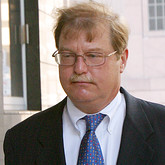
dutton.jpgAccording to this Chronicle article, State Representative Harold Dutton chose the keynote address at the summer commencement ceremonies of Texas Southern University to declare who is truly responsible for the recent scandal involving former TSU president, Priscilla Slade:

Along with the usual advice and good wishes for graduates, State Rep. Harold Dutton delivered some pointed criticism of Texas Southern University’s Board of Regents during his keynote address at the school’s summer commencement ceremony Saturday.
“You (regents) are directly responsible for the unsuccessful management and government of TSU,” Dutton said in his speech, with the regents arrayed on the platform behind him.
In an interview later, Dutton, D-Houston, said he was referring to the “dark clouds” looming over TSU because of the regents’ handling of the investigation, dismissal and subsequent indictment of former university president Priscilla Slade and their current dispute with the school’s radio station. [. . .]
Dutton, an alumnus of the university, said that although the controversy centered on Slade, he felt that the regents were just as much to blame because it is the board’s responsibility to oversee TSU’s fiscal management. He said the regents acted so poorly he considered them “co-conspirators.”
“I don’t think you just look to Priscilla Slade for the reason why, I think you have to look at all the board members,” he said. “She may be in the spotlight, but I don’t think she’s the only one responsible for the mess we’re in.”

H’mm, let’s see here. The TSU regents hire Slade, who by all accounts did a good job as TSU president, except for that little problem with managing her expense accounts, which is hardly something that regents of a university should be using their time to oversee. Yes, TSU has chronic financial and related management problems, but this and this has a lot more to do with those problems than the efforts of regents who donate their time to deal with the mess.
In short, Representative Duncan, you and the parochial nature of Texas education politics are much more responsible for TSU’s problems than the TSU regents or even Ms. Slade.