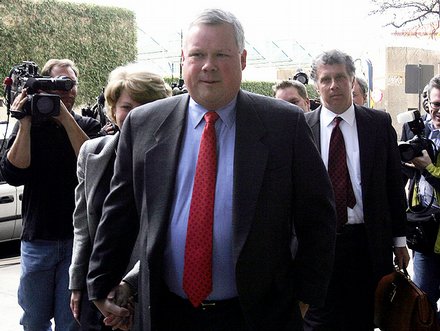
David Lat of AbovetheLaw.com does a good job here of analyzing the various candidates for the two “Texas” Fifth Circuit Court of Appeals judgeships that will be opening soon with Judges Patrick Higginbotham and Harold DeMoss taking senior status. Houston judges George C. Hanks, Jr. (First Court of Appeals), Jennifer W. Elrod (190th District Court), Jane Bland (First Court of Appeals) and U.S. District Judge Lee Rosenthal are on the short list, as is former Houstonian, Texas Supreme Court Chief Justice Wallace Jefferson. This should be quite a competition, so stay tuned.
It’s all Flutie’s fault?
Geez, and I thought Texas Aggie fans were taking their team’s losses hard. But Aggie angst is nothing compared to what boiled over in Longhorn land after Texas’ upset loss to Kansas State last Saturday night that doomed the Horns’ BCS championship hopes:
An unhinged Texas Longhorn fan who blames Doug Flutieís televised analysis for the teamís upset Saturday threatened the former football star and his family in an electronic mail message, police said.
The threat, which was not detailed by police, was sent to the Doug Flutie Jr. Foundation for Autism early Sunday, police Lt. Paul Shastany said.
ìWe have intentions of finding this person and speaking to this person,î said Shastany. ìAs threats go, itís a pretty serious incident.î
A Sonic boom fizzles in Seattle
I read this NY Times article over the weekend and found it rather refreshing:
Empowered by a wave of venture capital, a hiring boom and pride in its homegrown billionaires, this city has decided it no longer needs a mediocre professional basketball team to feel good about itself.
On Election Day, residents rebuffed their once-beloved Seattle SuperSonics, voting overwhelmingly for a ballot measure ending public subsidies for professional sports teams. [. . .]
The vote last week guarantees that the Sonics will leave their current home, KeyArena, in 2010, he said. The team may move to the Seattle suburbs and plans to talk to the State Legislature about that in coming weeks, but most people here think [the Sonics’ owners] will move the team to Oklahoma City.
In short, the cost of subsidizing an NBA team has finally exceeded the benefits that most Seattle residents believe they derive from having an NBA team. The same thing has already occurred in Los Angeles with regard to the NFL. As professional sports franchises test the upper limit of what consumers are willing to pay for their product, several other cities will likely follow LA and Seattle’s lead. That’s not a bad development. Warren Meyer agrees.
The super-heated free agent market
Dodgers rightfielder J.D. Drew opted out of the final three years of his $11 million per year contract last week, passing up the remaining three years and $33 million on his deal to test what he could draw on the free agent market. The conventional wisdom is that Drew made a mistake.
However, based on the first week or so of free agent transactions this off-season, not only did Drew not make a mistake, it looks to me as if his decision to opt-out was a no-brainer. Drew (28 RCAA/.393 OBA/.498 SLG/.891 OPS for 2006; 146/.393/.512/.904 career) is probably the best outfielder in this year’s free agent pool and maybe even the position player overall. With the upper end of of this year’s market looking like 5 years and $80 million or so for a player of his caliber, the 31 year-old Drew will probably earn an additional $20-30 million of guaranteed money and almost certainly do much better than $33 million over 3 years. Yeah, he’s not the most popular guy in the clubhouse and he has had injury problems, but he’s coming off a solid season in which he played a career-high 146 games. Some team needing solid production from the left side of the plate (which team doesn’t) will probably pay him the premium over his prior contract that prompted the opt-out.
Drew’s opt-out reflects the reason why the Stros probably won’t be much of a factor on the free agent market this off-season. Drew is good, but he’s not as good as the Stros’ Lance Berkman, who is entering the third season of his six year deal that pays him about $14 million a year. There is no way the Stros are going to pay someone like Drew more than Berkman, even though Drew probably will end up making more than Berkman from some other team.
That’s why retooling a Major League Baseball club on the free agent market is really not a practical approach except for a few big-market clubs — it’s prohibitively expensive. Better to maintain the farm (and fiscal sanity) with good prospects and then tap the free agent market only when it is likely to produce a player who will propel the club into playoff contention.
Causey Exposes Another Dirty Secret of the Enron Task Force
Former Enron chief accountant Richard Causey will be sentenced tomorrow by U.S. District Judge Sim Lake, and Causey’s sentencing hearing highlights another of the Enron Task Force’s dirty secrets that the mainstream media has largely ignored in favor of demonizing former Enron executives.
When Causey entered into his plea deal on the eve of the Lay-Skilling trial, most folks figured that the Task Force would use him as a key witness against his former co-defendant Skilling. The Task Force needed Causey to corroborate former Enron CFO Andrew Fastow’s testimony regarding the Global Galactic agreement, the alleged secret handwritten agreement between Fastow and Causey under which Causey supposedly provided Enron’s assurance — allegedly with Skilling’s blessing — that Fastow’s various special purpose entities would receive a guaranteed rate of return for investing in Enron assets.
Inasmuch as those SPE transactions removed a substantial amount of debt and underperforming assets from Enron’s balance sheet, a key contention in the Task Force’s charges against Skilling and Lay was that Global Galactic proved that Enron’s SPE transactions were shams that helped Skilling and Lay illegally disguise the company’s deteriorating financial condition. So, Global Galactic was a pretty important element in the Task Force’s case against Skilling and Lay.
During his Lay-Skilling testimony, Fastow sang like a canary about the Global Galactic agreement, although the existence of the agreement became more suspect the more Fastow talked about it.
Meanwhile, the Task Force never called Causey to testify during the Lay-Skilling trial, probably because Causey would not corroborate Fastow’s likely false testimony regarding Global Galactic.
Thus, Fastow — who stole millions and then lied to help convict Skilling and Lay — is doing a six-year sentence and will be out in about five.
On the other hand, Causey — who didn’t steal a dime and refused to corroborate Fastow’s lies — will probably serve more time in prison than Fastow.
Is this how we want to go about learning the truth about what really happened at Enron? Ellen Podgor has more here.
Update: Judge Lake sentenced Causey to five and a half years in prison.
The indiscriminate Hammer
Ben Witherington is a noted New Testament scholar at Asbury Theological Institute in Wilmore, Kentucky near Lexington, which is not the typical place that former House Majority Leader Tom DeLay would normally have been trolling for money during his heyday in Congress. In this post explaining the danger for Evangelical Christians in aligning themselves with either major political party, Dr. Witherington passes along the following anecdote about DeLay:
Several years ago I was contacted by Tom DeLay. He figured since I was a well known white Evangelical I must be on his side on a host of things. I was invited to the White House, and I was named Kentucky Business Man of the Year. I have the plaque sitting in my office framed to prove it. Now, I am no businessman. Just ask my wife. For five years I ran a little coffee shop in Wilmore for our Christian students as a ministry to them– its called Solomon’s Porch, and its still up and running, employing and feeding students and helping them work their way through college and seminary. Its a good ministry, but its not a business that made money. In fact I lost $40,000 helping those students during that time. I was definitely not a Kentucky Businessman of the Year! There were many who did better than I, and I could talk at length about the plight of small businesses which are taxed right out of existence. Several previous restaurants in that spot had not lasted more than about six months. Wilmore is only a town of some 5,000 souls.
It’s lonely being a Texans fan in Austin
The Houston Texans recent improved play is not being noticed yet in Austin, at least according to this letter from a local Austin television programing director to Texans fan Brian over at Longhorn Law:
The last Texans game we aired (last Sunday) was tuned-in by just 21,000 households in Austin (a city with 589,000 households). By comparison, the Titans game we aired on Oct 8th (after Vince Young became quarterback) was watched by over 53,000 households (152% more football fanís homes). At one point during that game there were as many as 68,000 households tuned in. It was the most-watched ìearlyî game weíve aired all season. Actually, that game was watched by more Austin fans than any Texans game weíve aired going all the way back to October of last season – with two notable exceptions. The first is when the Texans played the Cowboys on October 15th (which you could expect to be highly watched) and the other, honestly, was when the Texans played the Titans on October 29th. [. . .]
Gearing up already for the 2008 Ryder Cup
Paul Azinger was the choice earlier in the month to be the captain of the U.S. Ryder Cup team for the 2008 matches at Valhalla in Louisville, and Golf World’s John Hawkins thinks it’s a great choice:
In his prime as a player, Azinger was fiery but focused, a natural leader with the talent and disposition to excel in the Ryder Cupís high-intensity atmosphere. In his second life as a TV analyst, the 1993 PGA champion has proven to be an independent thinker whose insights and observations are accentuated with a touch of redneck bravado. Azinger has long been one of my go-to guys in my years covering the PGA Tour. He speaks from the heart, doesnít compromise his thoughts, and he shares anecdotes. Heís a fabulous source.
But Hawkins doesn’t think choosing Azinger will make much of a difference in the outcome:
Youíd have thought the í04 rout at Oakland Hills would have brought the í06 squad together, motivating them to perform at a level close to their potential. And with Lehman in charge, there was unity and camaraderie. There just wasnít any chemistryóitís a component that canít be manufactured. I hope Iím wrong, but things are likely to get worse before they get better. European squads have gotten younger and deeper, and passion has become their most valuable weapon. Azinger is the perfect man to lead the Yanks, which leads me to wonder: Are certain groups, for whatever reasons, averse to being led?
Meanwhile, on the other side of the pond, it’s good to see that the Scotsman’s John Huggan is already getting the juices flowing:
Over the course of four Ryder Cups, the 46-year-old [Azinger] all but covered the playing and behavioural spectrum, from sublime to distasteful. Indeed, Azinger’s whole career has been regularly blighted by doubts over his character amid accusations that his adherence to golf’s rule-book is sometimes less than exemplary.
Hoo boy! Read the entire article. Then get ready to rumble.
Speaking of remarkable feats under intense pressure, Craig Kanada chipped in on each of the final two holes yesterday to win the Nationwide Championship held at the Houstonian Golf Club in the far southwest part of the Houston area and, in so doing, earning his PGA Tour card for 2007. Melanie Hauser provides this interesting story on Kanada’s long quest to regain his Tour card.
The Blind Side of Big-Time College Football
Last week, the resignation of my friend, Iowa State head football coach Dan McCarney, prompted this post reflecting on how the pressures of big-time college football prompted a resignation that is quite likely contrary to the long term ability of Iowa State to remain competitive in big-time college football.
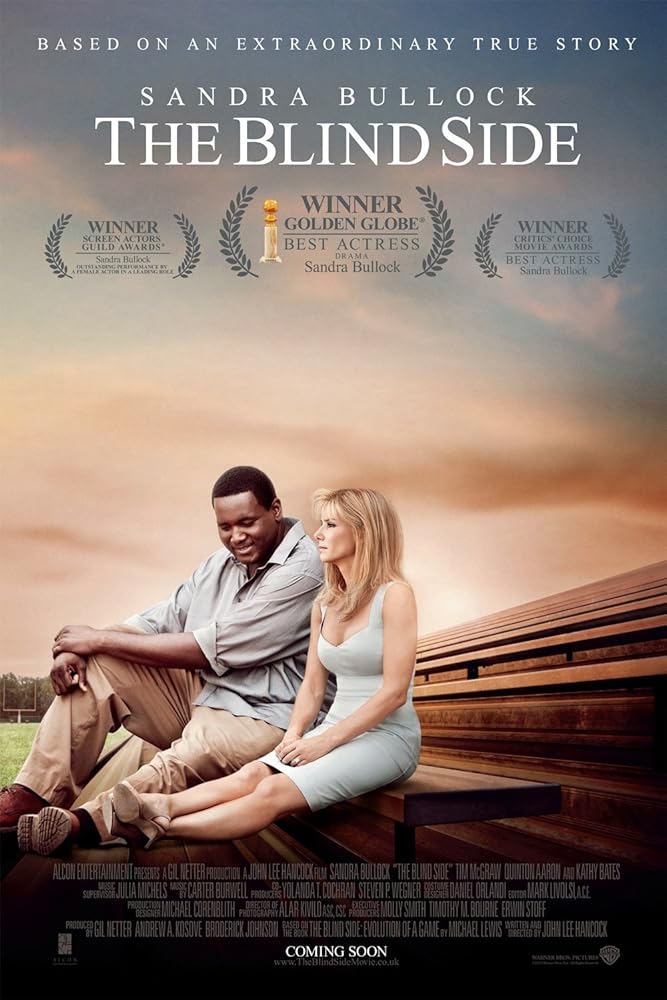
As if on cue, George Will, in this NY Times book review, provides his view on the new book by Michael Lewis of Moneyball fame, The Blind Side: Evolution of a Game.
In Moneyball, Lewis explored how the small-market Oakland Athletics were able to remain competitive against far richer clubs in Major League Baseball by emphasizing objective evaluation of players and, in so doing, introduced sabremetric statistical analysis to the general public.
As Will notes, Lewis “is advancing a new genre of journalism that shows how market forces and economic reasoning shape the evolution of sports.” Lewis’ latest book involves big-time college football, which — as noted earlier here — has long been a means by which universities in the U.S. have compromised academic integrity to rent athletically-gifted young men to serve as cash cows for the institutions.
As noted in this earlier post, the National Football League reaps the fruits (as if those teams really needed it) of an effectively free farm system that college football provides, while the vast majority of the universities — including Iowa State — either lose money or barely eke out a profit in their football programs.
Moreover, Lewis examines how the winds of change ripple down from the NFL to big-time college football and dictate the course of the college game. One case in point is Lawrence Taylor, who singlehandedly changed the nature of professional football by becoming the prototype of the huge, athletic and extraordinarily fast outside linebacker who could increase the pressure on the quarterback.
At about the same time as Taylor was wreaking havoc on QB’s, Bill Walsh‘s West Coast offense was spreading the field, which made it even more important for teams to find agile offensive linemen to block the likes of Taylor. Most important was to protect the QB’s blind side, so the position of left offensive tackle increased in importance and, as a result, the position’s economic value skyrocketed.
As demand increased in the NFL for the colleges to produce another kind of freak of nature to play what had been an obscure position but now was now one of the most important positions on the field, Lewis explains that the colleges were more than willing to compromise any notion of academic integrity to admit athletes who project to have the physical stature and talent to play the demanding left tackle position.
In short, it’s not just the star QB or running back who gets the royal treatment from the institutions in this day and age — potential left tackles are now included, too. Lewis’ book describes one of those freaks of nature, a freshman tackle at the University of Mississippi with an I.Q. of 80 who bounced from foster home to foster home as a youth.
Just as we should not be surprised that many folks enjoy betting illegally on college football, neither should we be shocked with the corruption in college football that Lewis examines in his book.
One of my uncles who played SEC football during the late 1920’s used to tell me how much money he was paid under the table even in those days. Moreover, there is no question that big-time college football — even as corrupt as it is — is a pretty darn entertaining form of corruption.
As noted in my earlier post, there is a model that would likely minimize the corrupt elements while not affecting the entertainment value of college football much. But it’s going to take leadership and courage from the top of the educational institutions to promote and implement such reform.
Unfortunately, those considerations were not on the minds of the Iowa State administrators last week as they began figuring out how to replace a very good football coach who had just left one of the most difficult jobs in his profession.
Similarly, my sense is University of Miami president Donna Shalala will not be contemplating those matters when she begins her search to replace Larry Coker later this month as head coach of one of the most storied programs in all of big-time college football.
That seems to be the tunnel vision that is generated from the sponsorship of minor league professional football by U.S. academic institutions.

2006 Weekly local football review
If I didn’t know better, I’d think that the Texans (3-6) have the Jaguars’ (5-4) number.
In a game that stands for the proposition that you don’t have to play great offensively to win when the other team’s QB plays poorly, the Texans took advantage of four Jaguar QB David Garrard interceptions and a stout defensive effort to win their third game of the season, two of which have been over the Jags. The win was the Texans’ first road in almost two years and ended an NFL-leading 12 game losing streak in road games, The Texans mostly stunk offensively (306 yds total offense) , but they were at least well-balanced (148 yds rushing/158 yds passing) and most importantly, protected the football. Texans QB David Carr was knocked out with a sprained shoulder in the 4th quarter, but it did not look like a serious injury. The Texans now actually have a chance of stringing some wins together as their next four games are at home against the Bills (3-6), at the Jets (5-4) and Raiders (2-7), and at home against the Titans (2-7).
By the way, Chronicle sportswriter Richard Justice — who is presumably paid to notice such things — is just noticing that Texans kicker Kris Brown is not very good:
“K Kris Brown is becoming something of a concern. His miss of a 32-yard field goal late in the first half was his third miss in four games. He missed a more difficult kick, a 52-yarder, later in the game.”
Uh, Earth to Richard, Earth to Richard — Brown has been a concern for the past several seasons!