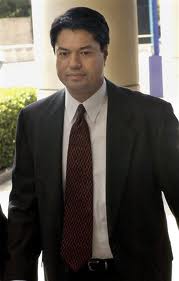
Update on the case of Dr. Pou

Anna%20M%20Pou020507.jpgSpeaking of prosecutorial excess, the case of Dr. Anna Pou — the former University of Texas Health Science Center professor and physician who was arrested last year in Louisiana on wrongful death charges for her actions in attempting to save lives during the chaotic aftermath of Hurricane Katrina — was back in the news last week. The New Orleans coronor announced that he had not found evidence that would show that the cases were homicides, although he noted that he was continuing to gather evidence and had reached no final conclusion.
Dr. Pou’s case was transferred to Orleans Parish after Louisiana Attorney General Charles Foti had labeled her and two nurses who were assisting her during the chaos as murderers. Just to make sure he got the most publicity possible for his lack of prosecutorial discretion, Foti repeated those charges on 60 Minutes several months ago. Ultimately, the decision on whether to prosecute will come down to Eddie Jordan, the District Attorney of New Orleans, who is still planning on presenting evidence to a grand jury. With the the coronerís current classification, what on earth is there to present to a grand jury?

“Mike Nifong would approve?”

fifth%20circuit.jpgIn criminal law appellate circles, the Fifth Circuit Court of Appeals is known as a black hole into which appeals of convictions go and reversals rarely occur.
However, about a year ago, the Fifth Circuit vacated a criminal conviction of one Humberto Cuellar, who had been convicted of international money laundering after he was found with $83,000 hidden in his VW Beetle as he headed to Mexico via Del Rio, Texas. The prosecution needed to show that Cuellarís transportation of the money was designed to conceal its source and that Cuellar knew of the concealment. Inasmuch as the prosecution focused solely on the fact that the money was hidden in Cuellarís car to establish these elements, a Fifth Circuit panel concluded that the evidence was insufficient to support conviction and that money laundering requires some showing that the defendant tried to pass off the money as legitimate. In short, simply attempting to smuggle the money to Mexico does not equate with money laundering.
But not so fast. The Fifth Circuit decided to rehear the appeal en banc and, in this decision, reverses the panel decision and affirms the original conviction by a 13-3 vote. In a stinging dissent, Judge Jerry Smith of Houston notes that the majority’s decision facilitates prosecutorial misconduct by allowing the government to charge Cuellar with the crime of money laundering — which carries a sentence of up to 20 years — rather than his true crime of currency smuggling, which has a sentence of only up to five years. In arguing that the prosecution didn’t come close to making a money laundering case, Judge Smith observes that “this is a case of a prosecution run amok” and that Mike Nifong — the disgraced former prosecutor in the Duke lacrosse team case — “most surely would approve.” Ouch!
Hat tip to Robert Loblaw.

Remembering Chocolate Thunder

Darryl%20Dawkins.jpgGiven the Rockets mediocrity over the last decade or so, it’s hard to get too enthusiastic about professional basketball in Houston. This season’s Rockets team is not bad, but it hasn’t had all of its working parts playing at the same time yet and, even with all those components working, probably isn’t as good as the NBA Western Conference powers Dallas, Phoenix and San Antonio. By the way, the best way to keep up with the Rockets is through Jonathan Feigen’s blog, which is excellent.
About 30 years ago, the Rockets also had a pretty good team, but they were beaten in the Eastern Conference playoffs by the Philadelphia 76ers, who were led by Julius Erving and. one of the true characters of NBA history, 20 year-old center Darryl Dawkins, he of the “Chocolate Thunder-flying, Robinzine-crying, teeth-shaking, glass-breaking, rump-roasting, bun-toasting, wham-bam I am jam.” The NY Times checks in with the always entertaining Chocolate Thunder, who, among other things, used to claim to be an alien from planet Lovetron where he spent off-season practicing “interplanetary funkmanship” with his girlfriend Juicy Lucy.

The brains behind the Bears’ previous Super Bowl team

Buddy%20Ryan.jpegWith the Chicago Bears playing in Super Bowl XLI, it was only a matter of time before the NY Times caught up with Buddy Ryan, the architect of the suffocating Bears defense that dominated the game the last time the Bears played in the Super Bowl (1985).
Ryan holds a special place in the hearts of Houston football fans. During the 1993 season, while passing through Houston as the defensive coordinator for a pretty good Oilers team, Ryan hauled off and slugged fellow Oilers assistant coach, Kevin Gilbride, on the sidelines during a nationally televised game. The reason for the outburst was Ryan’s frustration over Gilbride’s dubious coordination of the Oilers’ mercurial Run ‘n Shoot offense in that particular game. Local sports wags still shake their heads over that incident.
Although volatile, Ryan was a superb defensive football coach and certainly one of the best in NFL history. He was most well-known for that fine defense on the 1985 Bears Super Bowl championship team, but he may have done an even better job in coordinating the defense on the 1969 New York Jets team that upset the mighty Baltimore Colts in Super Bowl III. Most people remember Joe Namath’s famous prediction from that game, but the the Jetsí offense only scored 16 points. On the other hand, Ryan’s Jets defense held the high-powered Baltimore offense to 7 points after Vince Lombardi’s Packers had put up 35 and 33 points in the first two Super Bowls. Most folks before Super Bowl III thought that the AFL teams were chronically overmatched in playing against the established NFL powers, but the Jets and the Kansas City Chiefs in Super Bowl IV changed that perception forever.
Ryan’s genius was the unmitigated aggressiveness with which his defenses played. Focusing on sacking the QB (“We’re trying to find out the identity of the opposition’s second team QB,” Ryan would quip with a wink), forcing turnovers and and stopping the offense on third-down, Ryan ushered in the era of bringing zone blitzes from everywhere on the field to disrupt the offense. Interestingly, the underdog Bears’ chances of winning today are largely dependent on whether the Bears’ defense can effectively pressure Colts QB Peyton Manning. Ron Rivera, who played for Ryan on the 1985 Bears championship team, is the Bears’ defensive coordinator trying to figure out how to do that.
As with many top notch coordinators in football, Ryan was not a particularly effective head coach. He was fired from NFL head coaching jobs at Philly and Arizona before retiring to his Kentucky horse farm in 1995 after 34 years of coaching in the NFL. He continues to raise horses there while caring for his Alzheimerís-ridden wife of 36 years and following the careers of his two sons, both of whom followed him into coaching.

Will Dell Be Saved by the Apple Rule?

It’s been anything but a smooth ride for Austin-based Dell, Inc. since founder Micheal Dell announced that he was stepping aside as CEO almost three years ago.

The saga came full circle this week as the company announced that Dell was replacing his replacement as CEO, Kevin Rollins.

Unfortunately for Dell investors, it’s far from clear that Mr. Dell’s return as CEO will have the same effect on Dell as the return of Steve Jobs had on Apple, Inc. Dell has several serious systemic problems with its business model that will be difficult and expensive to overhaul. Was Jobs prophetic last January?

Meanwhile, a class action shareholder’s lawsuit this week hammered Dell, Mr. Dell and others with allegations of potential criminal wrongdoing. The lawsuit alleges that Dell’s profits were inflated by hundreds of millions of dollars in quarterly rebates from Intel that Dell did not properly account for and disclose (sound familiar?).

The lawsuit contends that Dell was receiving as much as $1 billion a year in what are characterized as “secret and likely illegal” kickbacks by Intel to ensure that Dell would use no other chip supplier.

Of course, as these stories go, all of this was supposedly going on as Dell executives sold billions of dollars in Dell shares. Dell has already disclosed that the U.S. Attorney’s office in New York has undertaken an investigation of its financial reporting, as has the SEC.

Intel paid these “e-Cap payments” — standing for “exception to corporate average pricing” — to induce Dell not to do business with Intel competitor, AMD. Dell spread out the approximately $1 billion a year received in such payments over the four quarters to reduce the company’s cost of goods sold.

The lawsuit alleges that Dell became so dependent upon these payments — knowledge of which was apparently limited to about 15 senior people at Dell — that Intel made the payments near the end of the Dell’s quarters so that the funds would have a “direct, material impact” on Dell’s reported operating and profit margins.

And, oh yes, the company’s stock, which was trading in late 2005 at more than $40 a share, has fallen to $23.52 as of the close of Nasdaq Stock Market trading yesterday.

Gosh, haven’t we seen this syndrome before? Can Dell avoid it’s own Enronesque experience by offering up a few sacrificial lambs?

And will those sacrificial lambs include Mr. Dell? Or will he be exempted from criminal liability by what Larry Ribstein has characterized as “the Apple Rule,” which was not around to save another Texas business visionary who created wealth and jobs on par with Mr. Dell?

Stay tuned.

Update: Don’t miss Larry Ribstein’s comparison of the Apple Rule with the Enron Rule.

Make sure they serve coffee

lawschool.jpgNorm Pattis over at Crime & Federalism isn’t impressed with the following offering by the University of Connecticut School of Law this semester:

Seminar: Therapeutic Jurisprudence 692
Professor: Robert G. Madden, LCSW, JD
Course Description: Therapeutic Jurisprudence is an interdisciplinary approach to law that focuses on the impact of legal rules, processes and institutions on people’s emotional lives and psychological well-being. Using this perspective, the course examines recent developments in several areas, including collaborative divorce law; creative problem solving; the establishment of drug treatment, domestic violence, mental health and other specialized courts; preventive law; procedural and restorative justice; and alternative dispute resolution. Readings include materials from psychology, criminology, social work, and other disciplines. The course is designed to emphasize how therapeutic jurisprudence may enrich the practice of law through the integration of interdisciplinary, non-adversarial, nontraditional, creative, collaborative, and psychologically-beneficial legal experiences.

Imagine the implications for courtroom exchanges during courtroom testimony:

“Objection, your honor.”
“What’s your objection?”
“Contrary to sound social policy.”

Expensive target practice

targetstand.jpgLast July, Shiraz Syed Qazi — a 29 year-old Pakistani national attending Houston Community College on a student visa — went camping for a couple of days with a couple of friends in Willis north of Houston. While camping, Qazi engaged in some target practice with an Armalite M-15, .223 caliber semi-automatic rifle and his friends took some photographs of him doing so. A good time was apparently had by all.
In late November, Qazi was indicted and arrested in Houston on federal charges of unlawfully possessing a firearm as a non-immigrant student visa holder. Qazi was denied bail and so he has stewed in jail ever since his arrest. Earlier this week, Qazi was convicted of the crime after a bench trial and now awaits a May 17th sentencing hearing in which he faces a maximum 10-year prison sentence and a $250,000 fine. Qazi remains in jail pending his sentencing hearing.
Remarkably, from the only meaningful pleadings filed by Qazi’s public defender and the prosecution in the case (see here and here), it is undisputed that Qazi did not know that he was committing a crime by engaging in a little target practice during his camping trip. But that hasn’t stopped the feds from putting him away for a couple of months already and threatening him with a ten year prison sentence.
Welcome to the USA, 2007.

The DOJ exodus

justice.jpgRadley Balko examines the reasons why the Department of Justice demanded the resignations of seven U.S. Attorneys across the last month. He concludes that it’s all about priorities and questions the Bush Administration’s emphasis on enforcing new forms of prohibition. And he doesn’t even mention the extraordinary abuses of prosecutorial power (see also here and here) that have occurred during the Bush Administration Justice Department’s campaign against business interests. Check Balko’s piece out.

Romanticizing boondoggles

metrocar020107.jpgThis recent NY Times article caught my attention because it extols the virtues of Portland, Oregon’s pretty new Aerial Tram mass transit project despite the fact that it’s quite expensive relative to the number of folks who will regularly use it. These fatuous media reports that ignore the dubious underlying economics of such projects are a consistent element of urban boondoggles.
Turns out that some other folks noticed the Times story, too. Wendell Cox wrote the following letter to the NY Times editor about the article:

Re: City that Loves Mass Transit Looks to the Sky for More (January 28)
Now The New York Times has been taken in by the Portland transit hype. The ìcity that loves mass transitî shows it by not using riding very much. Today, the share of workers using transit to get to work is less than before the first light rail line was built. Today, little more than two percent of travel in the Portland area is on transit and 98 percent of motorized travel is by car. That is really not much different than automobile champion Kansas City, where the figure is above 99.5 percent. The kind of cheerleading in this article may warm the hearts of urban elites, but only serves to muddle and mislead.

Meanwhile, Houston’s own urban policy wonk — Tory Gattis — provides a balanced analysis of the Portland mass transit system in this post about a recent lecture that he attended by a fellow who was instrumental in the planning of the Portland system. The NY Times report on the Portland system reads like an advertisement in comparison to Tory’s post.

Has the BOP Forgotten Jamie Olis?

Earlier this week, Michael Kopper, one of the few true crooks in the Enron affair, traipsed off to a federal prison in west Texas to begin serving the 37 month sentence that he received in return for his testimony that helped place four ex-Merrill Lynch executives in prison for a year in connection with the sordid Nigerian Barge case.

Meanwhile, former Dynegy executive Jamie Olis — whose only “crime” may have been some faulty judgment in doing what his bosses told him to do in attempting to bolster Dynegy’s finances — continues to sit in a dank, cramped jail cell in downtown Houston’s Federal Detention Center awaiting reassignment to a federal prison.

It’s now been over four months since Olis had his absurd original 24-year sentence reduced to a still egregious six years, which is the same length of sentence that Kopper’s boss, Andrew Fastow, is serving.

Olis has now been in the Federal Detention Center — essentially a holding tank for federal prisoners — for going on 14 months since the Fifth Circuit tossed out his 24-year sentence. Olis has now served over 40% of the time that he has been in prison in a jail facility not meant or equipped to hold prisoners serving lengthy sentences.

The Chronicle’s Tom Fowler follows up with this story about Olis’ ordeal, in which a governmental official observes that Olis’ reassignment has been “slowed because of the holidays and the recent spate of bad weather.”

Uh, Olis was re-sentenced over two months before the holidays. And I don’t recall the weather being all that bad over that period.

It’s understandable if Olis and his family are reluctant to request that the federal court examine what on earth is going on at the Bureau of Prisons that it can’t manage to assign Olis to an appropriate federal prison. Hell, the way this ordeal is going, the BOP in response to such a request might just throw away the keys to Olis’ cramped cell.

But the delay in reassigning Olis has now moved well beyond the realm of reason and is beginning to resemble the brutal nature of his original sentence.

Is the BOP simply impervious to such matters?