Thinking about GM

gm7.gifThese posts over the past year have chronicled General Motors’ Enronesque slide toward what is increasingly appearing to be an inevitable reorganization case under chapter 11 of the U.S. Bankruptcy Code. That probable fate was reinforced this past week when GM announced a band-aid restructuring plan that is akin to rearranging the deck chairs on the Titanic.
The newest GM plan really is pitiful under the circumstances. GM lost a staggering $8.6 billion last year, and that doesn’t even count another $12 billion of bankrupt Delphi (a part of GM until 1999) losses that GM might have to make up. In the face of this flood of red ink, GM announced that it will cut dividends by $565 million and cut another $900 million in costs through reducing executive salaries and health benefits. The biggest news was that GM CEO Rick Wagoner will take a 50% pay cut to $1.1 million, but there was precious little word on how the company is planning on bridging the rest of its $6 billion or so in losses. Conan O’Brien characterized the plan pretty well when he commented in a monologue that, since General Motors is cutting the salaries of its top executives, the executives will now be earning so little they will be forced to drive GM cars.
Moreover, it’s not as if GM has been a sterling investment over the years. As this Floyd Norris/NY Times article and accompanying chart notes, an investor who bought a share of GM stock at its price of $40.13 at the end of 1960 would have received $127.58 in dividends and received four distributions of stock worth $20.62 at the time those dividends were issued. If all of that had been reinvested in GM stock, then the investor would now own 11.6 shares, which is worth a bit more than $500. That amounts to a return of less than 6 percent compounded for those 45 years, which would be even less once brokerage fees and taxes are included in calculating a true net return.

Continue reading

Dick Harmon, R.I.P.

DickHarmon_web.jpgThe Houston and U.S. golfing communities are in shock this morning with the news that Dick Harmon — one of the four brothers who are among the best golf instructors in the United States — died unexpectedly on Friday morning from complications of pneumonia at Eisenhower Hospital in Palm Desert, California after he had been rushed to the hospital early Friday morning. Dick, who was 58 years old at the time of his death, was in Palm Springs working with current PGA Tour player, Lucas Glover.
Dick Harmon’s name is synonomous with golf in Houston. His late father, Claude, was a famous teaching pro at New York’s Winged Foot Golf Club and Florida’s Seminole Golf Club, and Claude was the last teaching pro to win the Master’s Golf Tournament (in 1948). My golf club in Houston — Lochinvar Golf Club — has always had a close relationship with the Harmon family and, in the final ten years of Claude’s life, he was the pro emeritus at Lochinvar. Claude’s green jacket from his Master’s victory still hangs in a special display case in the Lochinvar clubhouse.
After Claude’s death in 1991, Lochinvar attempted to hire Dick away from his longtime position at Houston’s River Oaks Country Club, but when Dick declined, he recommended that the club hire his older brother, Butch Harmon. Lochinvar did so and, seemingly overnight, Butch was using the Lochinvar facilities to teach such phenomenal golfing talents as Tiger Woods (while he was still at Stanford), Greg Norman, Phil Mickelson and many other top professional golfers. Before moving west several years ago to establish a golf school at a Lake Las Vegas resort, Butch parleyed his position at Lochinvar to become Golf Digest’s top-ranked golf instructor in the United States.
However, as good an instructor as Butch is, many golfing enthusiasts in Houston and elsewhere considered Dick Harmon to be an even better golf teacher. Dick was the revered golf pro at River Oaks for nearly a quarter-century before leaving in 2001 to establish his own golf school at Houston’s Redstone Golf Club. During that time, he tutored such extraordinary talents as Fred Couples, Steve Elkington, Lanny Wadkins, Craig Stadler, Blaine McCallister, Billy Ray Brown and current PGA up-and-comer, Glover, to name just a few. For years, Dick’s pro-member golf tournament at River Oaks — held on the Monday after the Shell Houston Open — would often attract more prominent professional golfers than the Houston Open.
As noted above, Dick and Butch are two of four Harmon brothers who are among the best golf teachers in the United States. Craig Harmon is the long-time head pro at Oak Hill Country Club in Rochester, N.Y., site of the 1956, 1968 and 1989 U.S. Opens, the 1995 Ryder Cub matches, and the 2003 PGA Championship. Moreover, youngest Harmon brother, Bill, is Director of Golf at Toscana Country Club in Palm Desert, California and the noted tutor of ageless PGA Tour veteran, Jay Haas.
A personal anecdote about Dick will give you a glimpse into his wonderful nature. About ten years ago, while Dick was still at River Oaks, a client of mine who was a River Oaks member asked Dick to fit me for a set of irons as an expression of gratitude for my work on a case. Not only did Dick fit me for the clubs personally, he had one of his assistant pros videotape my swing during the fitting process. Afterward, Dick pulled me into his office and analyzed my swing as we watched the video, and I still haven’t recovered from the humiliation of watching my swing on video while Dick superimposed Elkington’s perfect swing over mine.
But after the video-analysis, knowing that I am a big fan of the author Dan Jenkins, Dick proceeded to show me a videotape of a hilarious dinner roast of Jenkins in which a number of prominent Tour pros such as Ben Crenshaw, Tom Kite, and Peter Jacobsen provided salutations to Jenkins around the theme that “everything really was better in golf back when Hogan was playing.” The highlight was Jenkins getting up and giving it right back to the pros by excoriating them for their sponsorship of golf courses built into housing subdivisions or, as Jenkins put it derisively, “those damn dirt deals.” Dick and I were doubled over like a couple of school boys watching the video of Jenkins and the pros go at each other. From that time on, whenever Dick and I would see each other, we’d chuckle and inquire of each other whether there were any new “dirt deals” in the area.
Thus, Dick Harmon — who leaves his beloved wife Nancy, four children and two grandchildren — was truly a special man. Utilizing a gentle nature, dry wit and keen insight, his contributions to the Houston community were considerable. Nevertheless, he always felt as if his contributions were merely a small token of his appreciation for the tremendous opportunites that Houston provided to his family and him. Dick Harmon was the type of person that makes Houston such a special place. He will be sorely missed.
2 Feb. 2006 Update: The schedule for the visitation and funeral is here.

The trade deficit ruse

trade deficit.jpgThis WSJ ($) article reports ominously that the U.S. trade deficit widened by over $100 billion last year to $726 billion from $618 billion in 2004.
In this TCS Central article, Don Boudreaux lucidly explains why we shouldn’t worry much about it.
A far greater problem than the trade deficit is the widespread misunderstanding of it that often results in demagogic appeals for counterproductive protectionist policies.

End of the line for the talented Mr. Munitz

munitz8.jpgFollowing on earlier posts here, here and here addressed the mercurial career and current troubles of former University of Houston president and current Getty Trust president Barry J. Munitz, this NY Times article (LA Times article here) reports that Munitz resigned under pressure yesterday amid growing questions about his personal use of the trust’s money and resources.
As a part of his resignation deal with the trust, Munitz will not receive a severance package and he will be required to repay the trust $250,000, which is a ballpark estimate of the amount that the trust believes that Munitz improperly charged charged the trust for personal expenses during his eight-year tenure. However, Munitz’s resignation has no direct impact on the California attorney general’s investigation, which apparently is focusing on several instances in which Mr. Munitz used the trust’s money without proper authorization on pet projects that had nothing to do with the trust’s mission.
No word on whether Munitz will keep the lease on the Porsche Cayenne.

Third time a charm?

forbes.gifThe criminal case against former Cendant Corp. Chairman Walter Forbes has now lasted eight years. Yesterday, the second trial against Forbes on charges of securities fraud, conspiracy and two counts of lying to the Securities and Exchange Commission ended in a mistrial (NY Times article here) with the jury deadlocked after 27 days of deliberations. The first trial of Forbes in 2004 also ended in a deadlocked jury.
After running a company that merged with another to form Cendant in 1997, Forbes became Cendant’s chairman and heir apparent for the CEO position. But the accounting fraud came to light in 1998 and Cendant’s market cap plummeted by $14 billion in one day, which prompted the indictment against Forbes. Mounting a similar defense to that of former HealthSouth CEO Richard Scrushy, Forbes contended that subordinates betrayed him and then concealed the scheme. One of Forbes’ underlings — Cosmo Corigliano, the chief financial officer of Forbes’ company that was used to form Cendant — copped a plea on conspiracy and fraud charges and was the main government witness against Forbes during the trial.

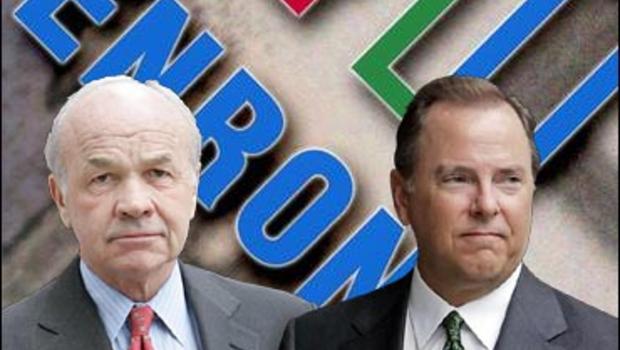
Lay-Skilling, Week Two

At the outset of the criminal trial of former key Enron executives Ken Lay and Jeff Skilling, the Enron Task Force prosecutors estimated that it would take nine weeks to put on its case-in-chief against the defendants.

Inasmuch as that prediction assumed four days of trial time each week and that the defense would use the same amount of time on cross-examination of each witness as the prosecution used on direct, the prosecution’s prediction effectively meant that the Task Force believed that it could put on its entire case against Lay and Skilling in eighteen days of testimony.

Well, the Task Force’s prediction has pretty well gone by the wayside with its first witness, former Enron investor relations chief, Mark Koenig.

After the Task Force took two-and-a-half days on Koenig’s direct examination, the defense has used the past three-and-a-half days for cross-examination, and it now looks as if Koenig’s testimony will continue for at least another day-and-a-half, which means that the prosecution will not be in a position to present its second witness — former Enron Broadband co-CEO Ken Rice — until next Tuesday afternoon at the earliest.

Next Tuesday marks the beginning of the third week of the trial.

Moreover, when Koenig is finally through testifying, the prosecution will have used over three days of its original 36-day prediction (over 16% of its case-in-chief) on examination of Koenig.

There is no way that the testimony of Koenig — who is primarily a background witness who was not involved in the mechanics of how Enron’s earnings and finances were evaluated — represents over 16% of the prosecution’s case-in-chief.

This is shaping up to be one very long slog.

Mark Cuban’s bucket boy

PhilJackson.jpgcuban.jpgDon’t you love it when wealthy, grown men get upset with each other over basketball?
In this corner, Dallas Mavericks owner Mark Cuban. And in the other corner, L.A. Lakers’ coach, Phil Jackson.
I think Jackson needs to start his own blog. ;^)

Omnicon’s nuclear waste dump

omnicominc.gifIn addition to maintaining the Wall Street Journal’s essential Law Blog, Peter Lattman continues to contribute interesting news articles for the WSJ, including this one from yesterday that he co-authored with Jesse Eisinger about something that is close to the heart of the Enron scandal — a company’s alleged use of special purpose entities to dump low-performing assets that would otherwise depress earnings if the company were to hold on to them (thus, the characterization of an SPE as a “nuclear waste dump”).
Public revelations of former Enron CFO Andy Fastow’s shenanigans with certain of Enron’s SPE’s in October, 2001 triggered the collapse of Enron into bankruptcy, and the same thing almost happened to Omnicon — the world’s largest ad holding company — back in June 2002. At that time, the WSJ reported that an Omnicon SPE called Seneca Investments appeared to have been used by Omnicom to avoid an earnings charge of about $90 million in connection with its reporting of $246 million of earnings for the first half of 2001. Given the nearness of similar disclosures relating to Enron and Enron’s subsequent December, 2001 bankruptcy, Omnicom’s stock price dropped like a rock before stabilizing at about half of its pre-SPE disclosure price. Nevertheless, the company was able to stem an Enronesque collapse into bankruptcy.

Continue reading

Investigation ordered into the David Boies Copy Club

David Boies3.jpgDavid Boies — who champions himself as an advocate of honest corporate governance and disclosure — was the Tyco board’s outside counsel in connection with investigating corporate fraud. Consequently, during the trial of former Tyco executives Dennis Kozlowski and Mark Swartz last year, Boies was one of the prosecution’s main witnesses in contending that the Tyco executives had failed to disclose their compensation adequately to the Tyco board.
Meanwhile, however, Boies resigned last year as special chapter 11 counsel at the request of his client, Adelphia Communications, for failing to disclose to the Adelphia Bankruptcy Court and creditors that members of the Boies family indirectly own a substantial interest in a document management services company that did between $5 and $10 million of business with Adelphia. Apparently, other clients of Mr. Boies’ firm also have paid substantial sums to the document management company without knowing of the company’s affiliation with the Boies law firm.
Now, after a hearing earlier this week, this Wall Street Journal ($) article reports that the Bankruptcy Judge in the Adelphia case has ordered an ethics investigation into whether Boies and his firm should have disclosed the firm’s partners’ ties to the company that Adelphia used for document management.
In the meantime, final Bankruptcy Court approval of the Boies firm’s almost $30 million fee (most of which has already been paid) for doing legal work for Adelphia hangs in the balance. If any significant portion of that fee is disallowed, then that could prove to be one expensive non-disclosure for the champion of good corporate governance and disclosure.

The second Lay-Skilling prosecution witness

ken rice9.jpgThe NY Times Alexei Barrionuevo, who is writing some of the best background pieces in connection with the criminal trial of former key Enron executives Ken Lay and Jeff Skilling, profiles former Enron Broadband CEO Ken Rice today, who is expected to be the prosecution’s second witness in the trial if the parties ever get done with the first witness, former Enron investor relations chief, Mark Koenig.
In addition to noting Rice’s disastrous testimony in the Enron Broadband trial last year, Barrionuevo’s piece points out the little-reported fact (mentioned earlier here) that Rice copped his plea deal after prosecutors discovered circumstantial evidence that strongly indicated that Rice engaged in insider trading shortly before Skilling’s resignation in August, 2001:

More than $9 million of [Rice’s $40.3 million in profits from Enron stock trades] came from three trades on July 13, 2001, about a month before Mr. Skilling officially resigned from Enron, according to records from the Securities and Exchange Commission, and around the same time that Mr. Skilling privately told Mr. Lay of his intention to resign, according to earlier testimony by Mark E. Koenig, Enron’s former investor relations chief.

Meanwhile, the prosecution’s decision to spend an inordinate amount of time on direct examination with Koenig appears to be backfiring. The prosecution spent almost two and a half days on direct examination of Koenig, who has now admitted on cross-examination that he really does not have much knowledge of the underlying evaluation process upon which Lay and Skilling based their public statements regarding Enron’s finances. Thus, Koenig is a quintessential witness whose knowledge is a mile wide and an inch deep, and the defense is now hammering his basis for asserting on direct that Lay and Skilling intentionally misled investors. To make matters worse for the Enron Task Force, the prosecution took so much time with Koenig on direct that it is really not in a position to object to the length of time that the defense is spending with Koenig on cross-examination.
Moreover, my old friend, Joel Androphy, blogging the Lay-Skilling trial over at KTRK-TV, observes the following about another prosecution mistake in dealing with Koenig:

The government allowed Koenig to keep $5 million to fight the civil cases and provide for his family, not the families of the victims. The plea bargain could have required Koenig to pay the maximum fine, and full restitution to the victims even if he provided influential testimony. That would have supported his credibility. Although the judge has the final say on restitution and fines, the government could have required mandatory surrender of funds. Now it looks like he could get reduced jail time and a large pension unlike most former employees. Koenig’s attorney did a commendable job.

It now appears that Rice’s testimony will not begin until Thursday of this week at the earliest, and may not even begin this week at all. Therefore, unless the prosecution pares down its case-in-chief dramatically on the fly, the prosecution’s pre-trial prediction of completing its case-in-chief in nine weeks is looking more and more like a pipe dream.