Railing against the capitalist roaders

NY times logo3.gifMost of the time, The New York Times does a reasonably good job of covering business matters, but there are still days when the paper resembles the People’s Daily of New York.
Yesterday was one of those days. First, Times business columnist Gretchen Morgenstern — who apparently believes that the model for corporate governance is Ben & Jerry’s — continued her campaign against excessive executive compensation with this Times Select ($) column in which she excoriates the compensation package paid to Analog Devices CEO, Jerald G. Fishman. While disassembling Morgenstern’s article, Larry Ribstein asks a decidedly more compelling question than the one Morgenstern addresses, namely “[t]o what extent do stories like this shape misguided public policy like the SECís recent compensation disclosure rule? What is the social cost of the useless reshuffling firms must do to minimize damage from sensationalist stories like this?

Continue reading

The Vegas monorail boondoggle

Las Vegas monorail.jpgTory Gattis of the smart Houston Strategies blog has been doing his typically excellent job of covering developments on the proposed expansion of the Houston Metro light rail line. Neither an over-the-top advocate nor a grizzled pessimist about urban rail systems, Tory takes a refreshingly measured view that such systems should attempt to maximize usefulness while being a part of an integrated urban mobility plan that doesn’t place all urban mobility eggs in one transit-type’s basket.
The wisdom of Tory’s approach is reflected by what is currently playing out in Las Vegas, where Sin City’s new $650 million, 4.4 mile monorail project just experienced the worst monthly ridership in the system’s 18-month history (earlier post here). Although comparing Houston’s light rail system to the Las Vegas monorail is bit akin to comparing apples and oranges, it is noteworthy that the poor performance of the Vegas monorail has contributed mightily to the junk bond rating of the Las Vegas Monorail Co. bonds that were used to finance the system. Now, the Vegas transit authority finds itself unable to sell bonds at a realistic price in order to finance construction of logical expansions of the system, such as an extension to McCarron Airport.
Read the entire article because it is a wonderful reminder to us of how financial logic and constraints are abandoned in the face of such governmental boondoggles. For example, what do you think the Vegas transit authority did in the face of a system that is generating less than half of the amount necessary to pay operating expenses and debt service, lost $20 million last year, and is generating far fewer riders than projected?
The transit authority increased its base one-way fare from $3 to $5.
But wait, pointed out a spokesperson for the transit authority, that cool move generated an almost 24% increase in monthly revenues from a year ago even though 18% fewer riders used the system. Thus, even though the system needs over a 50% increase in monthly revenues to approach break even status, the transit authority’s spokesperson reasoned that an anecdotal month’s worth of higher revenue indicates that a drastic ridership increase won’t be needed to break even. According to the transit authority, all that is needed is a quadruple increase in the monorail’s marketing budget in order to attract more riders, presumably high-rollers who enjoy moving from casino to casino. Often.
So, how long do you think it will take for the Vegas monorail to be converted into Vegas’ newest rollercoaster attraction? ;^)

The remarkable Dick Harmon

DickHarmon_web6.jpgDon’t miss Chronicle golf writer Steve Campbell’s fine article on the funeral yesterday for longtime Houston golf teaching professional, Dick Harmon, who died unexpectedly last week. As with the visitation on Thursday evening that I attended in an overflowing funeral home, the funeral was a bittersweet affair in which laughter mixed with tears as friends and family members grappled with the sudden loss of Dick’s humanity, grace, dry wit and wonderful nature. He was truly a special man.
Best crack of the funeral came from brother Bill Harmon, who passed along during his eulogy a prediction that former PGA Tour pro and current CBS color commentator Lanny Wadkins made about Dick’s first meeting in heaven with his late father Claude, who was a rather acerbic character at times, particularly with regard to his four sons. The subject of that predicted first meeting was brother Butch, who tutored Tiger Woods during college and his first several years on the Tour before Woods unceremoniously fired him. Inasmuch as I have had the pleasure of a personal relationship with each of Claude, Dick and Butch, I can vouch for the validity of Wadkins’ prediction:

“[Wadkins] said he knew for a fact what my dad said to Dick when he saw him in heaven,” Bill Harmon said. “The first thing out of his mouth was:

‘How the hell did Butch screw up that Tiger deal?’ “

Laughter and applause spread across the church. Butch Harmon . . . laughed as hard as anybody.

God Bless Dick Harmon and the entire Harmon Family.

Houston even has interesting traffic jams

longhorn bull.jpgThis Eyewitness News article reports on a rather unusual reason for a big-city traffic jam:

Drivers on the city’s south side found themselves caught up in a very unusual traffic tie up overnight.
Officers are used to pulling over drivers, but a bull on the Beltway proved a much greater challenge. Authorities did finally catch the bull, but not before the animal ran loose for about 30 minutes.
The bull originally got loose at about 11pm, and started blocking the Beltway for drivers. It was spotted first headed east on the South Belt near Sabo.
At one point, someone had a rope around the bull, but that person was dragged a little bit and the bull got loose again. The bull jumped the median and started heading west, finally exiting at the Pearland Parkway, and U-turning through the underpass.
Officers from the Houston Police Department and the Constable’s office finally managed to round the bull up and tie him to a fence.

Sheila Kahanek tells her story, but William Fuhs remains in prison

FuhsDuring its four year existence, the Enron Task Force has always been better at bludgeoning plea bargains and villifying former executives in the media than actually obtaining convictions in court.

One of the former Enron executives who stood up to the Task Force is Sheila Kahanek, the former mid-level Enron accountant who was acquitted of fraud and conspiracy charges in the Task Force’s controversial Nigerian Barge prosecution. That case resulted in the questionable convictions of four former Merrill Lynch executives on charges that they assisted Enron in manipulating its finances in connection with a sale of an interest in some power-producing barges off the Nigerian coast.

In this important U.S. News interview, Kahanek tells her compelling story about being falsely accused of a crime and the ordeal involved in defending herself with limited resources against a prosecution team that has no such limitations. The entire interview is a must-read, but Kahanek’s answers to the following questions about the government tactic of preventing exculpatory testimony from coming to light and the high price of asserting innocence are particularly interesting:

The defense attorneys for Lay and Skilling have complained that the prosecution is scaring witnesses away from testifying for their clients. Did this happen to you?

It was extremely rare if you could get someone to return a call, much less answer your questions. Prosecutors have absolute power in deciding whom to indict, regardless of what the law says concerning the not-so-grand jury. It is an unfortunate reality that most people will not risk their freedom for that of another, particularly if they have a spouse or children.

So weren’t you tempted to plead guilty and limit your losses?

Absolutely not. Dan [her defense attorney, Dan Cogdell] and I got that clear from the start. A plea deal was not an option. It wasn’t an option. I had to know I fought for what was right. I had to be able to look myself in the mirror and know that I never compromised myself or the truth. Every day I had to dig into myself and find the strength to fight another day. I have asked a number of people with children: Would you stand up and fight if it meant you might not see your kids for 24 years, when you can take a deal for five years? No one has said absolutely that they would fight it. Someone told me: “When you have children it is not about you anymore.”

Read the entire interview, and then give some thought to the plight of William Fuhs, the former mid-level Merrill Lynch executive who was convicted in the same trial in which Kahanek was acquitted and who had virtually the same level of involvement in the transaction that formed the basis of the prosecution as Kahanek (Fuhs was the ministerial scrivener of the transaction and had no involvement in either the structuring or the negotiation of the deal).

Fuhs — who is in his early 30’s with a wife and two young children — now sits in federal prison awaiting disposition of his appeal for merely having documented a legitimate transaction that the government criminalized because of matters in which Fuhs was not involved.

What our Justice Department has done to Kahanek, Fuhs and the other Merrill Lynch executives involved in the Nigerian Barge case — and how the government is handling the Lay-Skilling prosecution — is a radical abuse of our criminal justice system, and the extraordinary damage to the individuals and families involved cannot be responsibly dismissed as a trade-off of an imperfect system.

As we watch principles of justice and the rule of law trampled upon in such cases, contemplate whether — as Sir Thomas More asked Will Roper in A Man for All Seasons — “Do you really think you could stand upright in the winds [of abusive state power] that would blow” if the government were to set its sights on you?

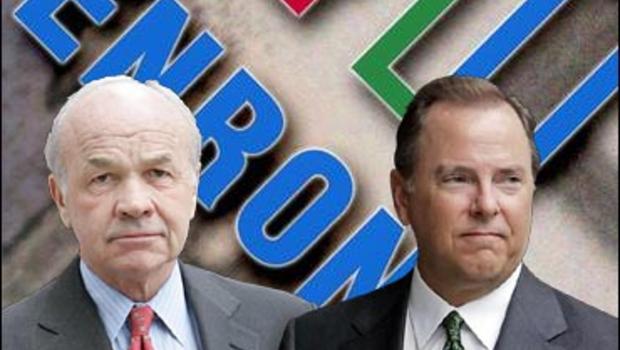
Lay-Skilling, Week Three

The glacial pace of the criminal trial of former key Enron executives Ken Lay and Jeff Skilling quickened this week, as former Enron Broadband CEO Ken Rice finished his testimony after not quite three days on the stand.

Although the mainstream media accounts of the trial continue to be generally favorable for the prosecution and, as such, the trial remains an extremely difficult one for the defense, my sense is that the biggest news after three weeks is that this trial is settling in to being a very difficult one for the prosecution.

The holes in the prosecution’s case are apparent after just two witnesses. The Task Force inexplicably spent almost three times longer with its first witness — Mark Koenig — than it did with Rice, which put the trial on its initial glacial pace.

Then, in an apparent reaction to that miscue, the prosecution seemingly hurried through Rice’s testimony, who is arguably the more important witness of the first two.

Moreover, much of the substance of the testimony of both witnesses was rather odd. Koenig claimed that he believed that Skilling and Lay misled the investment community in various ways, but he didn’t know the mechanics of how that was supposedly accomplished.

On the other hand, Rice asserted that Skilling misled the investment community on the prospects of Enron’s broadband unit, but he didn’t implicate Lay in any alleged wrongdoing at all.

Then, on cross-examination, Rice conceded that he believed Enron Broadband had great long-term potential, but that Skilling and he were involved in improperly hiding some of the unit’s short-term problems.

To make matters worse for the Task Force, the testimony of both men barely touched on a key element of the prosecution’s case — the alleged huge conspiracy within Enron to cover up the wrongdoing at the company.

Indeed, when the prosecution asked Rice on re-direct about whether he was involved in such a conspiracy, Rice replied unenthusiastically that “Mr. Skilling and I had misled investors on a number of occasions about the prospects of our business” at the broadband unit.

So much for the biggest conspiracy of all time.

But perhaps most importantly, both Koenig and Rice admitted during cross-examination that, despite testifying now that they were involved in lying about Enron to the investment community years ago, neither of them made any statement to Skilling, Lay or anyone else at the time of the supposed lies about the wrongdoing.

Similarly, neither of these key prosecution witnesses testified that either defendant ever once acknowledged telling a lie. That lack of evidence of fraudulent intent dovetails with the defense’s theory that Koenig and Rice are only now claiming that they were involved in wrongdoing to hedge their risk of long prison sentences under their plea deals with the prosecution.

That the prosecution had Rice dead to rights on illegal insider trading charges at the time he cut his plea deal also didn’t help his credibility, either.

So, after filing and publicizing a lengthy indictment against Lay and Skilling that asserts a wide array of alleged corporate crimes, the Task Force doesn’t want the jury to see that indictment (although the Lay-Skilling team does) and the Task Force’s case appears to have come down to a plain “pump and dump” case — Skilling and, to a lesser extent, Lay touted the failing company’s shares while selling their own (that Lay’s sales were forced under margin calls is a knawing problem with that theory that the Task Force has not even addressed, yet).

That theory of the case plays on “the presumption” in such cases — i.e., that Lay and Skilling are rich and Enron collapsed, so they must be guilty of something for failing to announce to the investing public that Enron was really just a highly-volatile trading company rather than the more stable logistics company that they contended Enron had become.

After three weeks of trial, it would not be surprising if some of the jurors are saying to themselves about that theory: “Is that all you’ve got?”

Finally, sometimes small things in big trials are the best indicators of problems.

Throughout the trial, Judge Lake has ordered the prosecution to advise the defense of its next five witnesses.

As late as yesterday evening, the prosecution still hadn’t even decided on its next five witnesses, and at least one of those witnesses — Koenig’s former aide, Paula Rieker — will likely be largely duplicative of Koenig’s earlier testimony.

That the prosecution is fumbling over the order of its witnesses at this early stage of the trial is a pretty darn good indication that this is not a prosecution team that is confident in its case.

The Money Lawyers

Money Lawyers.jpgBruce Carton over at the Securities Litigation Watch blog is excerpting portions of Joseph C. Goulden’s new book called The Money Lawyers (Truman Talley 1995), and the first excerpt is a portion of the chapter in the book about controversial class action plaintiffs’ lawyer, William Lerach. Goulden notes that Lerach disarmed him about Lerach’s legendary reputation for combative behavior in their first meeting:

Stories of the [Lerach] temper are legion. An unfriendly adversary told me he once heard Lerach tell corporate executives during negotiations, “I don’t give a f**k if I put your company into bankruptcy. I’m going to take away your beach house and your condo in Aspen by the time I’m finished with you.” When he talks about high tech executives, he tosses around vitriol such as “scumbags” and “crime in the suites.” He can be combative when dealing with other lawyers. One remembers hearing Lerach storm, “Your professional life is at an end. I am going to destroy you.”
But he chose to open our talk with a grin. “So,” he said, “some of those guys are saying nasty things about me, eh?”

UT football’s newest recruiting tool

vinceyoung11.jpg
“Recruits, click on the picture. You could have one of these if you come to UT.”

The power-law theory of homelessness

homeless2.jpgMalcolm Gladwell, he of Tipping Point fame, has authored this fascinating New Yorker article on homelessness, which includes a particularly interesting discussion of the health care costs for the chronically homeless. One example that Gladwell uses is the story of a Reno, Nevada homeless man nicknamed “Million Dollar Murray,” who — when all his health care and substance-abuse treatment costs were calculated for the ten years that he had been on the streets — probably ran up a medical bill as large as anyone in the state of Nevada. As one sage Reno cop observed: ìIt cost us one million dollars not to do something about Murray.î
The entire article is a must read, and here is a snippet to give you a flavor for it:

Continue reading

Have you noticed what’s happening with oil prices?

oreillyconfused.jpgHave you noticed that crude oil prices have declined by 12% this month?
Crude-oil futures dropped $2 on the New York Mercantile Exchange yesterday, falling to the lowest level in two months. Benchmark light, sweet crude-oil futures for March fell $1.92 to settle at $57.65 a barrel, which is the lowest front-month settlement since Dec. 19th. That makes four straight days of losses amounting to almost $5 a barrel. Meanwhile, government data reflects that U.S. petroleum inventories are above the higher end of the average range for this time of year, and oil stockpiles are now at their highest level since late June, 2005.
No word yet from Bill O’Reilly on how the big oil companies, with all their market power, could not prevent this large decline in crude oil prices.