
The Lord of Regulation’s abuse of power

SpitzerC.jpgIn this Wall Street Journal ($) op-ed, Chief Executive magazine editor William J. Holstein addresses a common theme of this blog — namely, the dubious motives and methods behind New York AG (“Attorney General” or “Aspiring Governor,” take your pick) Eliot’s Spitzer’s multiple investigations into alleged business corruption. Here is a sampling of posts over the past year regarding Mr. Spitzer’s abuse of power.
Addressing Mr. Spitzer’s heavy-handed treatment of former AIG chairman and CEO Maurice Greenberg and his son, Jeff, the former Marsh & McClennan CEO, Mr. Holstein notes the following:

Mr. Spitzer has charged in and discovered a pattern of practices he doesn’t like. He is applying a new set of values to reinsurance practices that had been in place for years . . .
Reflecting their dismay at the high-handed conduct of King George, the Founding Fathers created a judicial system with a stringent set of procedural safeguards to protect against overzealous or arbitrary prosecution. Yet in the atmosphere that Mr. Spitzer has helped create, the presumption is that CEOs are guilty — if Eliot Spitzer says they’re guilty.

Then Mr. Holstein turns to the specific “charges” that Mr. Spitzer has made publicly to prompt AIG to can Mr. Greenberg:

In dispute in the AIG case are highly complex transactions that may have reduced the company’s shareholder equity of $82.9 billion by as much as 2%. It’s not yet known if the total losses will reach that level, nor if they were material to AIG as a whole. After Mr. Greenberg’s departure, the board ran up the white flag to Attorney General Spitzer and declared the transactions “improper.”
Were they? One proper way to resolve this would be to create a policy framework with clear rules, which does not currently exist. Another way would have been for the Securities and Exchange Commission to negotiate an earnings restatement with AIG.
But Mr. Spitzer reportedly threatened a criminal indictment, which in effect would have put AIG out of business. Then he went on television to pronounce that the AIG transactions were “wrong” and “illegal,” . . . It’s not yet clear what the charges are. Nor has Mr. Spitzer heard Mr. Greenberg’s side of the story.
So the New York attorney general both charges and convicts in the court of public opinion.

Then, Mr. Holstein bores in on the hypocritical nature of Mr. Spitzer’s self-righteous campaign against business executives:

Mr. Spitzer’s political ambitions are increasingly clear. He wants to use his record to become governor of New York. Mr. Spitzer’s campaign office even paid Google to link a search for “AIG” to a Web site promoting his campaign before it was quickly taken down. In the same television show where he discussed the AIG case, Mr. Spitzer said he was “very close” to presidential hopeful Hillary Clinton and didn’t rule out a run for the vice presidency or presidency.
Mr. Spitzer has thus created a reasonable doubt about whether he is using the legal process for political gain. An attorney general running for higher office is different than a senator running because it creates a risk that the legal system becomes politicized and is no longer seen as adhering to principles of fair play and due process. . .
Ironically, the cornerstone of Mr. Spitzer’s actions has been an attack on conflicts of interest and cozy relationships that had long been tolerated. He is attempting to create a new ethical standard. Yet he has turned a blind eye to his own ethical problem.

The existence of business fraud at companies such as Enron, WorldCom, Tyco and maybe even AIG does not necessarily mean that there is more misconduct in big business than in any other relatively large organization, such as big government. Nevertheless, Mr. Spitzer and other prosecutors are publicizing these instances of business fraud to generalize arbitrarily against those who are easy and popular targets — i.e., wealthy and apparently greedy businessmen.
That tactic plays well with the mainstream media, which enjoys portraying the morality play of Mr. Spitzer as the defender of noble egalitarianism fighting against the forces of corrupt capitalism. In the wake of such seemingly simple stories, many complex structured finance transactions — which most prosecutors and journalists do not understand and do not perform the homework necessary to understand — are unfairly and incorrectly portrayed as complex business frauds despite the fact that such transactions are beneficial to shareholders of the company and have been reviewed and approved by multiple professionals who are experts in such transactions. Moreover, with the inviting prospect of greater political rewards resulting from the favorable publicity, prosecutors such as Mr. Spitzer have dispensed with any notion of prosecutorial discretion in regard to investigating business executives over such transactions.
And for those who would respond — “So what’s the big deal? What’s the problem with eroding the rule of law a bit to nail a few greedy business executives?” — I would remind them of Sir Thomas More’s advice to young lawyer Will Roper in the great movie, A Man for All Seasons. After Roper opines that it is acceptable to abuse the rule of law in order to achieve the laudable goal of prosecuting the Devil, Sir Thomas responds:

“Oh? And when the last law was down, and the Devil turned ’round on you, where would you hide, Roper, the laws all being flat? This country is planted thick with laws, from coast to coast, Man’s laws, not God’s! And if you cut them down — and you’re just the man to do it, Roper! — do you really think you could stand upright in the winds that would blow then?”
“Yes, I’d give the Devil the benefit of law, for my own safety’s sake!”

Folks, even greedy business executives are entitled to the protection of due process in the face of the overwhelming power of government. Not only for their protection, but for ours.

Southwest Airlines continues to roll

Southwest Air.jpgOn a day in which the stock market was hammered generally, Dallas-based Southwest Airlines savvy use of fuel hedges allowed it to offset high fuel costs and nearly triple its profit to $76 million in the first quarter. Southwest’s net profit was equivalent to nine cents a share, which compared with a profit of $26 million (three cents a share) in the year-earlier quarter.
However, after Southwest, first quarter results from other airlines will likely be bleak. With several airlines wallowing in bankruptcy, JetBlue Airways — another discount airline — is the only other airline that is expected to report a profitable first quarter.
Southwest’s hedging program allows the company to lock in fuel prices and protect itself from soaring fuel costs. Southwest saved $155 million during the quarter by capping 86% of its fuel expenses at the equivalent of just $26 a barrel of crude oil, close to half the actual cost of oil during the quarter. Southwest has also hedged 85% of its 2005 jet fuel costs at the equivalent of $26 a barrel of crude oil, 65% of its expected 2006 fuel needs are hedged at $32, and 45% of 2007 fuel costs are hedged at $31.
Meanwhile, Southwest also reduced its costs almost 4% from a year ago, while operating revenue rose 12% to $1.66 billion.
Southwest is one well-managed business.

For goodness sakes, get on with it

SpitzerGov2.jpgDon’t miss this Wall Street Journal ($) editorial today, which addresses the same issue that many of these earlier posts address in regard to the Lord of Regulation‘s ongoing public flogging of American International Group, Inc. and its former chairman and CEO, Maurice “Hank” Greenberg:

[Y]ou don’t have to belong to the ACLU to wonder about the lack of due process here. Mr. Spitzer uncovers questionable accounting about an insurance transaction and demands that the board fire the CEO. He then uses that firing to justify a public accusation of “fraud” that he hasn’t yet proven to anybody, much less to a jury of Mr. Greenberg’s peers.
To which our reaction is, then why not get on with it and indict the man? If Mr. Greenberg’s behavior is so heinous that it warrants a denunciation as “fraud” on national TV, what is Mr. Spitzer waiting for?

As an aside, this post addressed the Lord’s unusual public statement from last week in which he stated that his public flogging of AIG would probably not result in a criminal prosecution of the company, although the same could not be said about Mr. Greenberg. AIG and Berkshire Hathaway board members and shareholders heaved a joint sigh of relief and gave thanks to the Lord for his public statement.
Well, it turns out that the Lord may have had more than market stabilization as a motive for that public statement. The Lord is already running for Governor of New York, and it turns out that some of the Lord’s largest campaign contributors are partners in the law firm that is defending AIG in the Lord’s investigation of the company. Inasmuch as that firm has apparently been advising AIG to roll over for the Lord during the investigation, do you think the AIG board knew of the connections between the company’s law firm and the Lord before acting on that advice?

This is not what the Chamber of Commerce had in mind

BP logo_bp.gifIn the wake of dismantling former Russian oil giant OAO Yukos, the Russian government hammered British Petroleum PLC‘s Russian joint venture with new back-tax claims totaling about $790 million. The news did not do much for the already jittery capital markets that are considering investments in Russia’s badly undercapitalized exploration and production infrastructure.
The news also came just weeks after Russian President Vladimir Putin promised in a meeting with local business leaders to control the excesses of Russian tax inspectors who have slammed numerous Russian companies over the past several years. In the case of Yukos, that conduct led to the effective nationalization of the company.
The BP Russian venture — called TNK-BP — announced that it would fight the claims, although that approach did not do Yukos much good. At least BP’s potential financial exposure is limited because the joint venture was formed only in 2003 in a transaction in which BP’s Russian partners agreed to carry most of the exposure.
Although Russian officials have sought to portray the Yukos case as an isolated event involving a rogue company, the tax claims against TNK-BP and others have continued to undermine investor confidence in the Russian business system. The current Russian government tax claims against TNK-BP are the largest against a company with a major foreign investor.
Meanwhile, in a closing statement during the Russian government’s trial of criminal charges against him, former Yukos chairman and CEO Mikhail B. Khodorkovsky laid the wood to the Russian government yesterday in which he alleged that the charges were “the fantasies of a pulp-fiction writer” meant to cover up the Russian government’s effort to seize his oil assets and silence him politically.

The Lord of Regulation chats with the Oracle of Omaha

Buffett image2.jpgLet’s review the landscape of regulating business for a moment.
Various former executives of disgraced and insolvent Enron Corp. are under indictment for using structured finance transactions that independent lawyers and accountants approved to mislead investors regarding Enron’s true financial condition. Although such transactions came to light almost four years ago, no such Enron executive has yet to be tried on such charges. In the meantime, Enron has been effectively liquidated.
Several years ago, General Reinsurance Corp., a unit of Berkshire Hathaway, and American International Group, Inc. entered into at least one large structured finance transaction with each other. As with Enron’s structured finance transactions, numerous executives, lawyers, accountants and perhaps even consultants for both companies reviewed and approved the deal. Here are the previous posts on the saga involving AIG and Berkshire.
New York Attorney General Eliot Spitzer, the new Lord of Regulation, believes that the companies did not account for the transaction properly and, as a result, that the transaction made AIG and Berkshire’s financial performance appear better to each company’s investors than it really was. Despite not having heard his side of the story, the Lord has already concluded that former AIG chairman and CEO Maurice “Hank” Greenberg — a rather hard-knuckled executive — committed a crime in regard to the transaction.
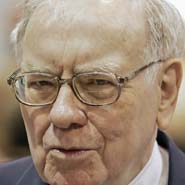
Greenberg image2.jpgYesterday, as this NY Times article reports, the Lord had a nice chat with the avuncular Oracle of Omaha, the chairman of Berkhsire, in which he questioned the Oracle over his knowledge of the transaction. The Oracle replied that he knew about the deal generally, but that others at General Re handled the details of the transaction. The Oracle also stated that he understood that the deal had been properly accounted for, but again, he did not really know much about the details of all that.
By the way, the Oracle agreed to chat with the Lord because the Lord assured him that — unlike the dastardly Mr. Greenberg — the popular Oracle is not a target of the Lord’s investigation. In appreciation for the Lord’s courteous gesture, the Oracle served up some more juicy tidbits of AIG’s involvement in the transaction for the Lord to chew on.
In the meantime, former Enron chairman and CEO Ken Lay’s defense of the criminal charges against him relating to Enron’s structured finance transactions is precisely the same as the Oracle’s above explanation of his role in the transaction with AIG.
Ken Lay2.jpgIn the wake of almost unprecedented negative publicity — much of which has been flamed by prosecutors pursuing him — Mr. Lay is facing the prospect of spending much of the remainder of his life in jail. The same is probably true for Mr. Greenberg.
Meanwhile, another large company that engaged in similar structured finance transactions — and which collapsed at about the same time as Enron — announced yesterday that it had settled civil charges with the SEC over its involvement in such transactions. No criminal charges were ever filed in regard to that matter.
And the Oracle returns to Omaha to work on his next letter to shareholders.
Quare: Is this any way to regulate business?

You don’t say?

eliot_spitzer.jpgEliot Spitzer, the New York AG (i.e., “Aspiring Governor”) made the Sunday talk show circuit yesterday in regard to his campaign against corporate wrongdoing generally and his ongoing investigation of transactions between AIG and a unit of Berkshire Hathaway (earlier posts here) specifically.
The investigation — which has not yet resulted in a single indictment, but has battered AIG’s stock and credit rating — involves scrutinizing complicated financial transactions that were approved by scores of transaction lawyers, accountants, and consultants for both AIG and Berkshire. Indeed, the MSM reporting on Mr. Spitzer’s campaign have not even attempted to obtain an explanation of the transactions from the persons involved in structuring the transactions. Nevertheless, the Lord of Regulation said yesterday that he had strong evidence that former AIG chairman and CEO Maurice “Hank” Greenberg committed fraud in initiating the deal between A.I.G. and General Re, the subsidiary of Berkshire. Mr. Spitzer’s following comments will give you a flavor for the entire interview:

These are very serious offenses, over a billion dollars of accounting frauds that A.I.G. has already acknowledged. . .
That company was a black box, run with an iron fist by a C.E.O. who did not tell the public the truth. That is the problem.

Today, this NY Times article today reports that Mr. Greenberg is probably going to refuse to testify based on his Fifth Amendment privilege at a deposition that Mr. Spitzer has scheduled for Tuesday.
After Mr. Spitzer’s public comments of yesterday, how could Mr. Greenberg responsibly do anything else?
By the way, it’s nice to see that someone else is noting that Mr. Spitzer is manipulating prejudices in an unhealthy manner.

Did Buffett rat out AIG?

warren_buffett.jpgIn an extraordinary development in the unfolding criminal investigation of transactions between American International General, Inc. and Berkshire-Hathaway, Inc., this NY Times article reports that Berkshire chairman Warren Buffett — in an effort to win leniency for Berkshire in an unrelated case — directed Berkshire’s lawyers several months ago to turn over documents describing the transaction between Berkshire unit General Re and AIG that is at the heart of the criminal investigation. Here are the previous posts on the AIG and Berkshire saga.
As a result of Mr. Buffett’s peace offering, former AIG chairman and CEO Maurice “Hank” Greenberg is facing the prospect of giving a deposition next week to the Justice Department, Securities and Exchange Commission, Eliot Spitzer and the New York attorney general’s office, and New York insurance regulators. In comparison, Mr. Buffett will merely be “interviewed” on Monday by the investigators, who consider him merely a witness in the AIG probe at this point.
According to the Times article and this similar Wall Street Journal ($) article, Mr. Buffett and Berkshire served up AIG and Mr. Greenberg on a platter to prosecutors in December when prosecutors were questioning Berkshire officials regarding General Re’s transactions with Reciprocal of America, a failed Virginia-based insurer. The prosecutors are investigating whether General Re had helped Reciprocal disguise loans as reinsurance to hide losses from insurance regulators. Two Reciprocal executives have copped plea deals and began cooperating with investigators, which led prosecutors to inform Berkshire lawyers that General Re and Berkshire executives may face criminal charges in connection with their probe of Reciprocal. A couple of weeks later, the Times and WSJ report that, at Mr. Buffett’s behest, Berkshire lawyers gave investigators documents regarding General Re’s questionable transaction with AIG.
Sort of makes one feel warm and fuzzy about doing business with that American business icon, Warren Buffett, doesn’t it?

Enron-AIG-Berkshire: Regulating earnings management

Holman Jenkins2.jpgDon’t miss Wall Street Journal ($) columnist Holman Jenkins’ Business World piece today. In analyzing the Lord of Regulation’s assault on American International Group, Inc. and its long history of being rewarded by the market for its adroit management of earnings, Mr. Jenkins makes an interesting point about the importance of trust — or, as he dubs it, the “predictability premium” — in AIG’s business, something that was touched on in this earlier post:

That Mr. Greenberg did his accounting as he thought best was no secret to anybody, even before recent revelations. Money Magazine called AIG a “faith stock,” lumping it with other giant, complex money machines such as GE and Citigroup. This newspaper dubbed it one of the economy’s great “black boxes.” Indeed, the whole reason to own AIG in the 1990s was to reap the predictability premium built into its stock price thanks to Mr. Greenberg’s ability to generate uncannily rising earnings from a complex of more than 100 businesses, including not just insurance, but aircraft leasing, commodity trading and much else.
In some ways, this model was already falling out of step with the business mainstream by the 1980s, long before Enron made “transparency” the central virtue of the new corporate value system. But exceptions were granted to AIG and a few others (like GE). Their opacity might have earned them skepticism in the marketplace, but instead they were awarded higher share prices. AIG sold for about 26 times its earnings, compared to 10 or 15 for most insurers.
Let’s dwell on this for a moment: When the market was the arbiter, it unambiguously rewarded Mr. Greenberg and AIG’s shareholders for applying the techniques of earnings management. The market understood that behind the screen lay all the volatility and mishaps that insurance is heir to, but it applauded Mr. Greenberg for using his wiles to create a security (AIG’s stock) that transmuted that volatility into unnaturally smooth reported earnings.
One big albatross for [former AIG chairman and CEO, Maurice “Hank” Greenberg] will be the Enron overhang. By far, the largest factor in AIG’s stock decline is the evaporation of its predictability premium, not the accounting scandal. But that won’t stop trial lawyers, prosecutors or the media from assuming that the distance between AIG’s peak and its ultimate low reflects the damage Mr. Greenberg personally did to investors.

And in closing, Mr. Jenkins notes that it may still be a tad early to be making a play for AIG stock, which is down almost 30% in value from the beginning of the year:

[AIG’s board of directors] no interest in defending any of this, since board members have learned that their personal fates are best served by running up a white flag. Eliot Spitzer, New York’s attorney general, let it be known this week that their compliance had met with his approval.
There’s also a question of whether, in a market where skepticism rather than trust is the rule, it’s possible or sensible to maintain an organization as complex as AIG. Hold onto your seats for the battle over Starr International, a peculiar entity set up years ago and holding much of the incentive wealth of the company’s top executives. We can’t think of a quicker way to destroy the morale of AIG’s remaining leadership, and thus perhaps the company.

Houston-based Fortune 500 companies

Fortune-500.gifFortune magazine’s annual list of the 500 largest U.S. publicly-owned companies has just been published, and the following 21 Houston-area companies made the list. The asterisk next to Anadarko’s name notes that the company is based in The Woodlands, which is 30 miles north of downtown Houston:
Fortune-500 list.gif

ChevronTexaco wins bidding for Unocal

unocal.gifSan Ramone, California-based ChevronTexaco Corp. won the bidding yesterday for its California-based rival Unocal Corp. yesterday in a cash-and-stock package valued at $16.8 billion. The deal is the largest oil-sector deal since 2001 when the acquirer was created under Chevron’s merger with Texaco.
ChevronTexaco is paying a premium price for Unocal as U.S. oil companies face heightened competition for scarce oil-and-gas reserves, many of which are locked up in regions where the companies are not welcome. The theory behind the deal is that it turns the merged company into the second-largest holder of oil-and-gas reserves in Southeast Asia behind Petrochina Co. and also strengthens ChevronTexaco’s presence in the Caspian Sea region.
However, today’s high oil prices can turn such deals upside down in a hurry. Although the price allows companies such as ChevronTexaco to have the strong balance sheet necessary for such acquisitions, should oil prices retreat from current levels in the next two to three years, the risk of write-downs in goodwill is high. ChevronTexaco hedged that risk somewhat by financing the deal mostly with its own stock — ChevronTexaco will pay $4.4 billion in cash and the balance in stock, and will assume $1.6 billion in Unocal debt.
Moreover, the deal reflects the increasing price that oil companies will pay for reserves. ChevronTexaco was able to replace only about 20% of the oil and gas that it produced in 2004, even though it generated in excess of $13 billion in profits and ended the year with over $9 billion in cash. The merged company will have daily production of over 3 million barrels of oil equivalents and increases ChevronTexaco’s reserves by about 15%.
The deal values Unocal at $62.07 a share, which is a 3.6% discount based on Unocal’s closing price of $64.35 on Friday. Widespread market anticipation that Unocal would be acquired has increased its share price nearly 50% since the beginning of the year. News of the deal actually sent both Unocal and ChevronTexaco stock down yesterday on the New York Stock Exchange, Unocal to $59.60 and ChevronTexaco to $56.98.