A blast from the insider trading past

FosterByTopkatBW.jpgRemember R. Foster Winans? He was the “Heard on the Street” columnist for the Wall Street Journal from 1982 to 1984 who was convicted of insider trading on his own writing. Then-US Attorney’s Rudolf Guliani’s career-boosting crackdown on insider trading was in full swing, so Guiliani went after Winans for violating insider trading laws by leaking advance word of the contents of his columns to a Kidder, Peabody & Co., trader and receiving $31,000 in return. Winans admitted that his conduct was unethical but not criminal, which made no difference to the jury that ultimately convicted him, for which he served a year in prison. He then went on to a career of writing books and being a media pundit with regard to business crime cases such as the Martha Stewart case, yet his case remains controversial because it was the first time that insider trading laws had been extended to cover a columnist writing about companies with which he had no formal connection. The US Supreme Court ultimately deadlocked on whether the insider trading laws covered Winans’ actions.
With that backdrop, it’s not surprising that Winans has concluded that insider trading laws should be abolished (HT DealBreaker):

People invest in the market precisely because they think they know things others don’t. It could be as innocent as the belief that Apple will sell more iPods next year, or as questionable as a tip that a private equity group is going to make an offer for a utility.
In between are shipping clerks, accountants, taxi drivers, therapists, corporate officers and anyone else who acquires a bit of information and buys or sells stock hoping to gain an advantage.
Being against insider trading is like being against sin, the libertarian Harry Browne once observed. Like most sins, it principally offends those who don’t or can’t indulge; like most sins, it shouldn’t be a crime.

Winans’ article is O.K., but if you really want the goods on this topic, check out both Stephen Bainbridge and Larry Ribstein on the folly of criminalizing insider trading. Thom Lambert weighs in here, too.

Morgenson’s mortgage myths

sub-prime-mortgages-newtxt1932006.gifOver the past weekend, the New York Times business columnist Gretchen Morgenson continued her “sky is falling” bit with the regard to the subprime mortgage market (see prior post here). Larry Ribstein, who used to disassemble Morgenson’s columns on a weekly basis before tiring of it, somehow musters the energy to expose Morgenson’s vacuous analysis once again, which saves the rest of us from having to muck through her blather.
Nevertheless, it is rather shocking that a Pulitizer Prize-winning business columnist doesn’t take the time to understand that an equity investment in a company that originates subprime mortgages is very different from an investment in debt that is secured by pools of subprime mortgages (mortage-backed securities or “MBS’s”), which are designed to endure a temporary drop in house prices or rise in default rates. Consequently, while Morgenson wrings her hands over the fact that investing in subprime mortgage originators hasn’t been a good idea for the past year, she can’t explain why this means that the markets in subprime MBS’s are in serious trouble. The reality is that they probably aren’t.
But then again, maybe Morgenson doesn’t even understand the equity markets all that well. According to this NY Post article, Morgenson’s story mischaracterized the Bear Stearns recommendations on one of those nefarious subprime originators:

Bear Stearns is claiming that one of its analysts was done wrong in a scathing New York Times analysis of the collapsing subprime mortgage industry.
Bear analyst Scott Coren was described as having written “an upbeat report” about a collapsing subprime mortgage lender, New Century Financial, a company considered to be just days away from bankruptcy.
The article, written by Pulitzer prize-winning columnist Gretchen Morgenson, chronicled in a Page One article how Wall Street willingly created a burgeoning market for bonds-backed loans that were virtually certain to have trouble making their principal and interest payments. Coren, who upgraded his call on New Century on March 1, appeared to be portrayed in a conflict of interest to rival that of the notorious Internet bubble era.
But, in fact, Coren had made a series of gutsy calls on the subprime mortgage sector – no mean feat at Bear Stearns, a firm that in recent years has earned hundreds of millions of dollars annually from mortgage trading.
He put out a “sell”- called an “underperform” at Bear – when New Century stock was at $38 and maintained it until it slumped to $15.
Even Coren’s upgrade on March 1, when New Century was clearly beginning to collapse, advised investors to “stay on the sideline.”

Better rethink that conspiracy, Gretchen.

Boom Town, USA

Boomtown%20Casino_jpg.jpgMaybe it’s because I cut my teeth in business law during a prolonged recession in the Houston area in the mid-to-late 1980’s that followed a boom cycle earlier in the decade, but these kinds of articles always worry me a bit:

Galvanized by the record profits at energy companies, this city, the center of the countryís energy industry, has shaken off the effects of the Enron implosion six years ago and is enjoying its strongest resurgence in more than 20 years, business officials and real estate developers say.
Some energy companies are expanding and putting up new buildings. Others, like Citgo, Schlumberger and Halliburton, have moved their headquarters to Houston. Oil and natural gas companies have helped reduce office vacancy rates to 15 percent, a five-year low, according to Grubb & Ellis, a real estate company. Job growth is double the national average ó 97,400 jobs were created in 2006. The National Association of Realtors says the housing market in Houston is one of the strongest in the country.
ìThe increase in the oil business has made Houston,î said Randall Davis, a Houston condominium developer. ìIt feels a touch like the 1980s ó everyone is out, the restaurants are full, the bars are full. Itís like New York.î
The good news extends across the city. The port recently opened a $1.4 billion container terminal to tackle soaring traffic. In 2006, it handled 1.6 million 20-foot containers, up 29 percent from 2003. At the Texas Medical Center, hospitals and universities are investing billions in new facilities. Residential and mixed-use developments are going up downtown.

Read the entire article here. Houston in 2007 is a very different place than the Houston of 1985, particularly with regard to the more diversified local economy now than back then. But the energy industry remains the primary driver of the economy, although competition for that industry appears to be the bigger risk now than the price risk that has prompted the local economy’s boom and bust cycles through the years. This week’s announcement that Halliburton is moving its corporate headquarters from Houston to Dubai is a definite wakeup call for Houston’s leaders. Just as many Midwestern energy companies abandoned Tulsa for Houston over the past couple of decades, the same thing could happen to Houston as big energy concerns leave for greener pastures overseas.

Eichenwald’s non-disclosure

kurt%20eichenwald.jpgFormer NY Times reporter Kurt Eichenwald — best known for his coverage of the Enron scandal for the Times and his book on the scandal, Conspiracy of Fools — penned this Times article (related blog post here) over a year ago that told the sad story of a teen-ager who was seduced by online pedophiles.
Well, fresh from making a mint off of writing about Enron’s alleged non-disclosures, it appears that Eichenwald has his own non-disclosure problem relating to this story, at least according to this NY Times Editor’s Note:

An article by Kurt Eichenwald on Dec. 19, 2005, reported on a teenage boy’s sexual exploitation on the Internet, and an accompanying Reporter’s Essay by Mr. Eichenwald published on nytimes.com explained the details of his initial contact with the subject.
The essay was intended to describe how Mr. Eichenwald persuaded Justin Berry, then 18, to talk about his situation. But Mr. Eichenwald did not disclose to his editors or readers that he had sent Mr. Berry a $2,000 check. Mr. Eichenwald said he was trying to maintain contact out of concern for a young man in danger, and did not consider himself to be acting as a journalist when he sent the check.
Mr. Eichenwald explained in his essay that, at the outset, he did not identify himself to Mr. Berry as a reporter. After they met in person, but before he decided that he wanted to write an article, Mr. Eichenwald said he told the youth that the money would have to be returned. Times policy forbids paying the subjects of articles for information or interviews. A member of Mr. Berry’s family helped repay the $2,000.
The check emerged as part of a criminal proceeding involving Mr. Berry in which a Michigan man is charged with criminal sexual conduct, enticing a minor to commit immoral acts and distributing child pornography. The trial began yesterday.
The check should have been disclosed to editors and readers, like the other actions on the youth’s behalf that Mr. Eichenwald, who left The Times last fall, described in his article and essay.

This New York Magazine article reports on Eichenwald’s testimony as a witness in the criminal proceeding and Eichenwald’s long explanation with related reader comments over at PoynterOnline is also quite interesting. Meanwhile, the Gawker weighs in with a snarky post here. As the story continues to gather steam, MediaWire Daily chimes in earlier this week with this interesting aspect of Eichenwald’s payment to Berry, and this FAIR article reports on a kerfuffle that recently arose between Eichenwald, the Times, Slate and journalist Debbie Nathan over investigating online child porn in violation of child predator laws, which Gawker is reporting will result in a $10 million defamation lawsuit by Eichenwald against Nathan. Finally, Michelle Malkin piles on here.

The Buffett Rule

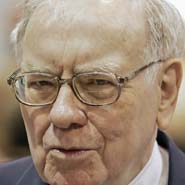
warren_buffett.jpgIt’s not every day that the NY Times editorial page heaps praise on a businessman, so my eyebrow raised a bit when I read this editorial yesterday elevating Berkshire Hathaway chairman Warren Buffett to folk hero status.

But it wasn’t too long ago that the Times and other mainstream media outlets were questioning whether Buffett had been involved in criminal wrongdoing.

Indeed, there was even speculation that Buffett did some fancy footwork to avoid the same fate as his friend and business associate, former AIG chairman, Maurice “Hank” Greenberg. Buffett avoided an indictment and Greenberg’s fate, but others at Buffett’s company were not so fortunate.

So, do we now have the makings of “the Buffett Rule?”

A folksy and media savvy businessman involved in complicated structured finance transactions is given a pass so long as he serves up a few sacrificial lambs when prosecutors criminalize the deals, regardless of whether the prosecutors fully understand the transactions in the first place.

Meanwhile, a decidedly unfolksy businessman who is involved in the same transactions stands behind his company and subordinates, but is publicly accused of lying and forced to resign to save his company from being prosecuted out of business.

Sounds a bit like the Apple Rule, don’t you think? Or is it more like the Dell Rule?

My, we are getting quite a few rules here. Perhaps we should rethink the reason why we need such rules in the first place.

An underappreciated cost of regulation

Sirius%20Radio.jpgRuss Roberts has a common sense post over at Cafe Hayek explaining why the federal government should not oppose the proposed merger of satellite radio companies XM and Sirius, both of which are enduring blistering competition with each other and a wide variety of other available entertainment options. As usual, even though this isn’t a close call as to whether the merger should be approved, the Federal Communications Commission is already showing some resistance to it.
One thing that Roberts doesn’t mention in his post is that the FCC’s threatened resistance is particularly incongrous because the regulatory agency dictated the playing field in satellite radio by only licensing two companies in the first place. So, instead of allowing a reasonably free market to sort out the winners and losers, the FCC’s regulatory wand made sure that there would only be two companies competing in the market, neither of which is anywhere close to turning a profit. Of course, it didn’t help that XM and Sirius have had to expend considerable funds and management time in opposing attempts by the National Association of Broadcasters and the recording industry to manipulate regulations in their favor and against satellite radio.
Which brings me to my point. Many folks believe that, inasmuch as established businesses generally abhor regulation, that must mean that regulation is good for the consumer. However, the reality is that established businesses typically use a part of their resources to deal with and manipulate regulation to their advantage and against that of new companies that seek to compete against the established businesses. A big, well-established business can absorb the high cost of regulation and pass it along to the consumer. A thinly-leveraged start-up does not have that luxury.

The magic of innovation and markets

feeddemon-product.gifFeedDemon is a highly-popular RSS aggregator that I have used for several years. Nick Bradbury developed FeedDemon, and he passes along the interesting story of how development of this elegant product came about:

I used to rely on email, but it’s almost useless to me now.
Funny thing is, if it weren’t for spam, I might not have created FeedDemon. As I’ve mentioned before, after spam and anti-spam filters made it impossible for me to communicate with customers by email, I dumped email and started using my blog and its RSS feed to communicate instead.
And that led to the creation of FeedDemon, which I’m having a blast working on. So I actually benefited from spam. Go figure.

The politics of destruction

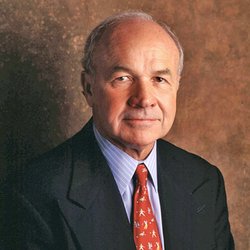
Ken-Lay-R_jpg_250x1000_q85.jpgIn this International Herald Tribune article, Michael Oxley — the “Oxley” of the Sarbanes-Oxley corporate governance statute — confirms the vacuous nature of the politicians who passed that destructive law and encouraged the destruction of Arthur Andersen and various Enron executives:

Presiding over a recent dinner in Paris for more than 200 accountants, Oxley — the former Republican congressman from Ohio and co-author of the Sarbanes-Oxley corporate governance law — was asked during the question period whether he realized he had helped create one of the most crushing financial burdens ever imposed on business.
Was Oxley aware, his questioners asked, that the law that he and Senator Paul Sarbanes, a Maryland Democrat, rushed onto the books five years ago after the collapse of Enron and WorldCom had contributed to a sharp decline in listings on U.S. stock exchanges? And, knowing what he knows now about the cost and effects of the law, would Oxley — who retired in January after 25 years in Congress — have done it any differently?
“Absolutely,” Oxley answered. “Frankly, I would have written it differently, and he would have written it differently,” he added, referring to Sarbanes. “But it was not normal times.” [. . .]
“Everybody felt like Rome was burning,” Oxley, 62, recalled during an interview after the dinner in Paris. “People felt like they were getting cheated. It was unlike anything I had ever seen in Congress in 25 years in terms of the heat from the body politic. And all the members were feeling it.”
Until that moment, a bill to tighten corporate controls had been languishing in the Congress for years, held back by lobbying by big business. But suddenly, the impetus was there, and the firestorm led Oxley, then head of the House committee that oversees America’s financial services industry, to quickly push forward a solution based on that measure to calm the hysteria of voters.[ . . .]
in the summer of 2002, with pressure also mounting from the administration of President George W. Bush, there was no question that the bill needed to be pushed through, however imperfect.
“The president called Paul and I down to the White House almost immediately after the Senate passed its bill, 97 to 0” on July 15, Oxley recalled.
“I remember it was in the Cabinet Room and you could see the pressure he was under because the Democrats were pressing his relationship with ‘Kenny boy'” — a reference to Kenneth Lay, the chief executive of Enron, who had sought help from the administration to avoid a bankruptcy filing in the weeks before the giant energy trading company collapsed.
“The president basically said, ‘Get this wrapped up,'” Oxley said. The House and Senate quickly agreed on a new draft, and Bush signed the bill into law on July 30. [. . .]
A month later, Arthur Andersen, the accounting firm that had been convicted of obstructing the government’s investigation into the collapse of Enron, declared bankruptcy after 89 years in business, crushed by Enron-related liabilities.
The Andersen prosecution was “a White House decision,” Oxley said. “They had to really look tough and so they decided at the highest levels they were just going to give the death penalty to Arthur Andersen.”
“I think at the end of the day virtually anyone would agree it was a terrible decision, because you eliminated a major accounting firm,” he added, “and you just sent a chill through the accounting industry.”

Read the entire article. Yet another example of the legislative overreaction to a perceived problem being far worse than the problem itself.

Rich Kinder’s Enron lesson

rich_kinder%20030707.jpgThe following blurb from Houston-based Kinder Morgan’s recent 10K certainly indicates that chairman and CEO Rich Kinder learned a thing or two from his experience at Enron, particularly in the area of public relations:

Unlike many companies, we have no executive perquisites and, with respect to our United States-based executives, we have no supplemental executive retirement, non-qualified supplemental defined benefit/contribution, deferred compensation or split dollar life insurance programs. We have no executive company cars or executive car allowances nor do we offer or pay for financial planning services. Additionally, we do not own any corporate aircraft and we do not pay for executives to fly first class. We are currently below competitive levels for comparable companies in this area of our compensation package, however, we have no current plans to change our policy of not offering such executive benefits or perquisite programs.

Hat tip footnoted.

Jim Crane’s bumpy ride continues

EGL%20logo%20030107.pngEGL Global Logistics founder and chairman Jim Crane’s efforts to take the Houston-based transport company private (see earlier posts here, here and here) continued this week as Crane hooked up with New York City-based private investment firm Centerbridge Partners LP and Toronto-based The Woodbridge Co. Ltd., to propose buying all the outstanding common stock of EGL for $36 per share in cash. The new proposal provides EGL shareholders with the same consideration that Crane offered in his earlier proposal to acquire the company, which amounted to about a 20 percent premium over the closing price of EGL stock on Dec. 29 of $29.78. The Woodbridge Company plans to team up with Merrill Lynch to provide the $1.175 billion of debt financing necessary to complete the transaction.
EGL is a good example of a company that could benefit from a management-led leveraged buyout. The company’s growth has lagged over the past couple of years, so the 20% premium that Crane is willing to pay would likely not be available to EGL shareholders anytime soon. Crane built the business since starting it back in the 1980’s, so he understandably remains bullish on its future prospects. However, the market generally is not as sanguine about EGL’s future. Thus, this looks on the surface like a good deal for EGL shareholders, despite what Ben Stein would probably say.