GM and the Ghosts of Enron

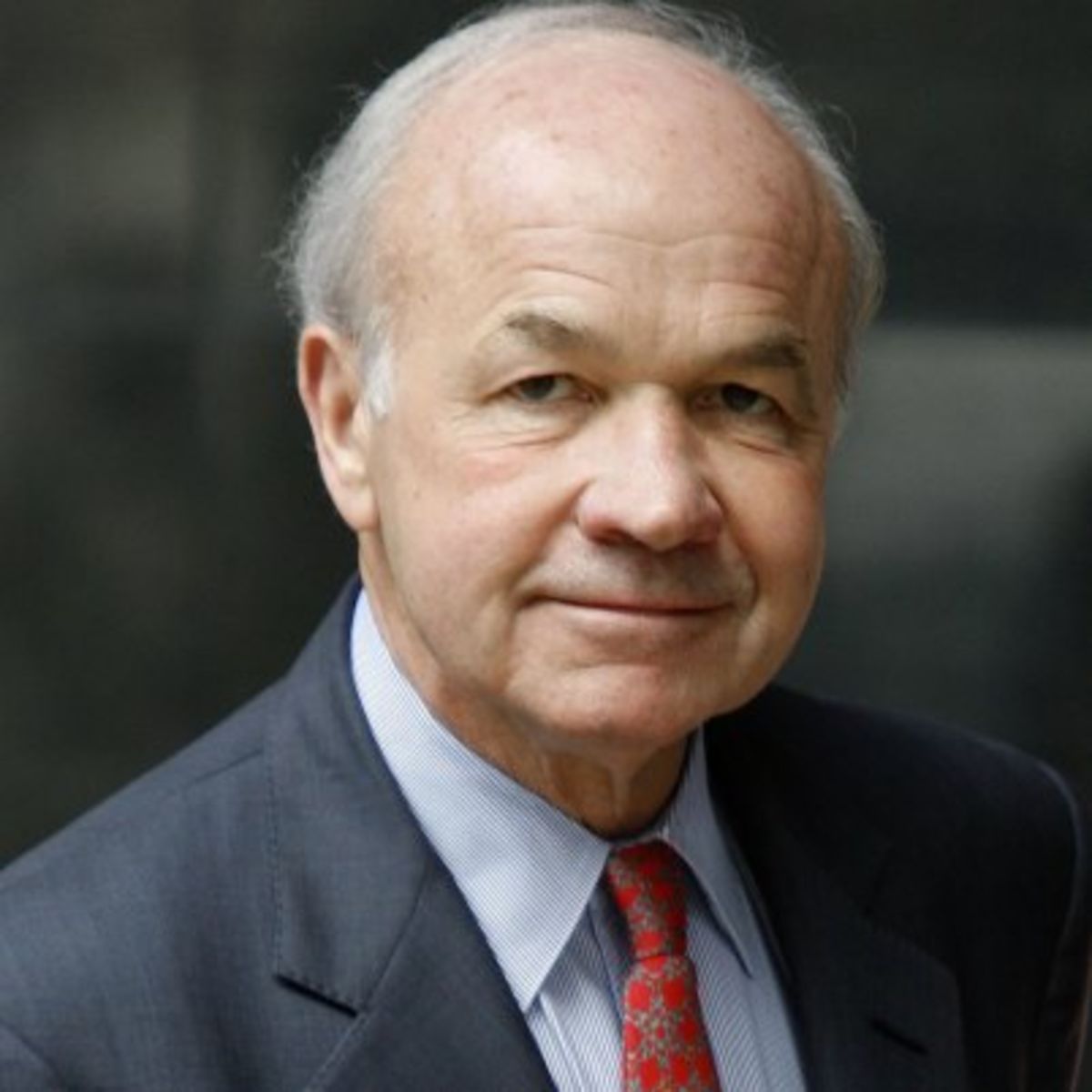
Ken Lay was prosecuted to death for promoting Enron even though he had a reasonable basis for believing that what he was saying about his company was true.

Fast forward a couple of years. Yesterday, the W$J reported (NYTimes here) that General Motors may not be able to avoid bankruptcy because of political problems involved in obtaining a bailout loan package from the federal government. GM is “rapidly burning through cash reserves as car sales plummet and their access to credit tightens. GM has warned it may run out of money within months without outside help.”

From what I can tell, no one is calling for the scalp of GM CEO Rick Wagoner because of confident public statements that he made just a few months ago about his company.

So, the corporate crime lottery continues. A truly civilized society would find a better way.

Can you spare $350 million?

Jerry Jones And you think the Texans’ season is going badly?

Get a load of what Dallas Cowboys owner Jerry Jones is facing, and I’m not talking about whether to fire head coach Wade Phillips (H/T Brad Humphreys):

Industry watches as Cowboys look for loan

The Dallas Cowboys are seeking to borrow $350 million by Dec. 1, according to numerous finance sources, in one of the worst credit environments in the nation’s history.

The club’s proposed deal would refinance $126 million the team borrowed last year through the now-imploded auction-rate securities market, as well as add new debt to cover cost overruns at the team’s $1.2 billion stadium that is set to open next year, the sources said. [.  .  .]

For the Cowboys, getting out from underneath the auction-rate debt is a pressing concern. They are one of four NFL teams to have borrowed from the auction-rate securities (ARS) market, a market that allowed companies to borrow cheaply and continue to reset the interest rate with auctions of the debt weekly and monthly.

In February, the ARS market seized up, and debt auctions failed, which automatically triggered significant interest rate hikes. [.  .  .]

The Cowboys estimated the stadium would cost $650 million when they announced the project in 2004. With $350 million of public funding and $76 million from the NFL, it looked like a choice deal for the team.

The club arranged to borrow at least $450 million through Banc of America Securities for its portion, with the first $126 million through the ARS market. But Jones agreed to cover cost overruns as part of the team’s share, and like many stadiums in this period, the price has spiraled.

H’mm. I wonder whether the Cowboys will apply for a portion of the TARP fund, too?

Checking up on Krispy Kreme

The folks over at WallStrip update us on the mercurial Krispy Kreme.

Remember that hotel deal you invested in?

HiltonThis post from over a year ago reviewed the absurdly highly-leveraged deal that Blackstone Group LP was proposing to make for Hilton Hotels. That deal was a head-scratcher even during the heady days of easy money.

As this W$J article from yesterday notes, the deal ended being structured with "only" $20 billion in bank debt rather than $25 billion (with Blackstone pitching in $6 million in equity), but that really didn’t change the fundamental of the deal much. Hilton is projected to generate $2 billion in before-tax cash flow this year, which is enough to cover the $1.3 billion in interest expense on the bank debt. But cash flow is probably going to decline next year because of depressed demand for hotel rooms and Hilton will probably be forced to use its liquidity reserves to make up for any cash-flow short-fall.

Blackstone paid for Hilton at about 13 times estimated 2008 pretax cash flow. Similar public hotel companies are currently trading at about seven times their projected before-tax cash flow for 2008. The WSJ article quotes an analyst on the situation: "It’s very difficult to assume any equity if you have to mark to market those assets. But they may argue it’s a long-term investment for them." Make that a very long-term investment.

But as bad as this deal looks for Blackstone, it looks even worse for the seven banks that put up the $20 billion in financing. They are, as the WSJ puts it tactfully, "struggling" to sell pieces of the debt package in the current strained credit markets.

Gee, I’m sure glad we steered clear of that investment debacle, huh? Except that we apparently didn’t:

[I]t now looks like U.S. taxpayers are on the hook to Hilton’s fortunes, too. That’s because when J.P. Morgan Chase & Co. in March took over Bear Stearns, the Federal Reserve assumed $30 billion of Bear’s illiquid assets. Part of those loans and securities is Bear’s $4 billion unsold portion of the $20 billion Hilton financing package, according to people familiar with the matter.

Lacking appreciation for capitalism

Comedian Louis CK sums it pretty well:

The Prince of Regulation

Andrew Cuomo Get a load of the letter that New York Attorney General Andrew Cuomo, the new Prince of Regulation, sent to about ten Wall Street firms the other day:

We believe that the Board of Directors is most appropriately positioned to respond to our requests as the firm’s top management likely has a significant interest in the size of the bonus pools. In this new era of corporate responsibility we are entering, boards of directors must step up to the plate and prevent wasteful expenditures of corporate funds on outsized executive bonuses and other unjustified compensation.

As my Office has told AIG, now that the American taxpayer has provided substantial funds to your firm, the preservation of those funds is a vital obligation of your company. Taxpayers are, in many ways, now like shareholders of your company, and your firm has a responsibility to them.

Accordingly, we also ask that the Board inform us of the policies, procedures, and protections the Board has instituted that will ensure Board review of all such company expenditures going forward. Please provide this Office with an accounting of the actions the Board plans to take that will protect taxpayer funds.

So, Cuomo charts the same political course as Eliot Spitzer before him and Rudy Giuliani before Spitzer. Embrace the Greed Narrative and then sit back and let the mainstream media do the rest. Before you know it, even both major presidential candidates tout the myth that business failure is always about dastardly villains and innocent victims.

My question for Cuomo and his mainstream media minions is quite simple: What is the likely quality of the management and board members who are willing to stick around and put up with Cuomo’s grandstanding?

My bet is that you won’t see many Hank Greenbergs.

Meanwhile, those less-than-stellar management teams all have tickets to feed at the Fed’s money trough.

Ah, the webs we weave.

Placebo Nation

In light of this NY Times article reporting that half of American doctors responding to a nationwide survey regularly prescribe placebos to their patients, I pass along the following business opportunity, courtesy of the ever-clever Dr. Boli:

placebo ad

Different directions

blogosphere1 Newspapers are under siege. This Henry Blodget post reports on the continuing financial deterioration of the New York Times, which looks to be in real trouble.

Meanwhile, the blogosphere continues to thrive. For example, this Stephanie Stradley post about the chronically under-performing Houston Texans defense is far more insightful than anything that I’ve read in years from the cheerleaders, er, I mean, reporters who cover the Texans for the Houston Chronicle, which continues to layoff employees by the droves.

And to think that one of those Chronicle cheerleaders — whose most recent piece is this fawning salute to the manager who was mainly responsible for blowing the 2003 NL Central pennant for the Stros — had the audacity to defame Stradley recently.

Any wonder why newspapers and the blogosphere are going in different directions?

Stossel’s Politically Incorrect Guide to Politics

If you didn’t have the opportunity to watch or record it last Friday, then watch the following six YouTube segments of John Stossel’s Politically Incorrect Guide to Politics when you have the time (the other five segments are below the break). The program is television at its best presenting and analyzing key issues involving government regulation of business and the impact of that regulation on the creation of jobs and wealth. Enjoy:

Continue reading

Security theater

tsa While considering the abject vacuity of the presidential candidates’ positions on the major issues this election season, I started thinking about some minor issues that might make a difference in my vote.

For example, if either major candidate came out in favor of dismantling the "security" apparatus that the federal government has foisted upon us to make airline travel an aggravation, at best, and an ordeal most of the time, then that candidate would probably get my vote.

Alas, neither candidate has proposed such a dismantling.

Nevertheless, don’t miss this clever-but-serious Jeffrey Goldberg/Atlantic.com article on the utter uselessness of the Transportation Safety Administration’s airport security procedures (prior post here).

Inasmuch as the only two airport-security measures that really matter — fortified cockpit doors and the awareness of the flying public as to what a hijacking can mean — have been in place virtually since the attacks of September 11, 2001, Goldberg zeroes in on the wasteful airport security process that we have allowed the TSA to impose on us at a substantial direct cost and an even greater indirect one.

Moreover, that process does virtually nothing to discourage serious terrorist threats. Rather, the inspection process is "security theater" that simply makes a few naive travelers feel safer about airline travel.

Finally, if all that weren’t bad enough, the worst news is that once a governmental "safeguard" such as the TSA apparatus is adopted, few politicians are interested in dismantling it even when it’s clear that process is ineffective, expensive and obtrusive.

That’s food for thought as we get ready to endure implementation of the next round of governmental regulation of business.