Who Fears Freeing Whom?

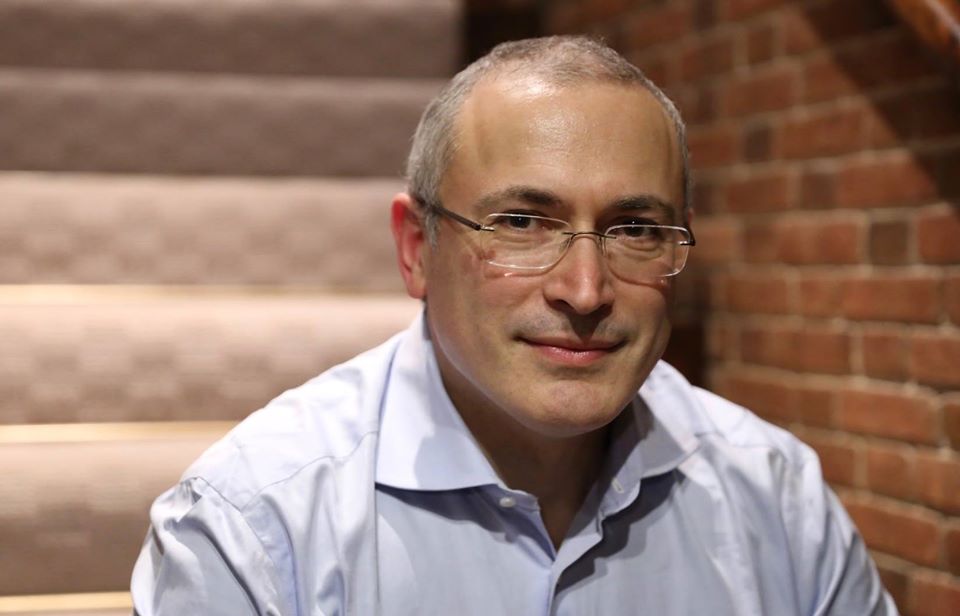
In this lengthy NY Times Magazine piece from this past weekend, Andrew Meier decries the Russian government’s unjust prosecution and treatment of former Yukos chairman, Mikhail Khodorkovsky:

Many can’t quite embrace an oligarch as a prisoner of conscience. He is a titan who fell from favor, some say, not a dissident physicist or a novelist arrested for a subversive manuscript.

Whatever his sins, though, Khodorkovsky was not jailed for breaking the law. His courting of the Bush White House and pursuit of oil partners at home and abroad infuriated the Kremlin. But his gravest error was to challenge Putin.

The reason behind his imprisonment, Khodorkovsky claims, “is well known and widely discussed. It was my constant support of opposition parties and the Kremlin’s desire to deprive them of an independent source of financing. As for the more base reason, it was the desire to seize someone else’s efficient company.”

His motives may have been mercenary, but Khodorkovsky in his cell has come to embody the fiat of the state, its arbitrary and boundless power. To date, the authorities have brought charges against 43 former Yukos employees and associates, conducted more than 100 raids .   .   .

Meanwhile, the Times and most of the rest of the mainstream media have largely ignored — and often promoted — similar mistreatment and persecution of business executives in our own country.

Yeah, Russian criminal justice system is corrupt. America’s is far superior.

Old narratives die hard.

Thinking about financial regulation

wallstreet

Peter Wallison and Steve Randy Waldman have each written a thought-provoking and important analysis of the effect of regulation on the recent financial crisis.

First Wallison:

What caused the financial crisis?

The widely accepted narrative, prominent in the media and pressed by the Obama administration, is that the crisis was caused by deregulation–the "repeal" of the Glass-Steagall Act and the failure to regulate both derivatives and mortgage brokers–which allowed excessive financial innovation, risk taking, and greed among financial players from mortgage brokers to Wall Street bankers.

With this diagnosis, the proposed remedy is more regulation and government control of the financial system, from the over-the-counter derivative markets to mortgage brokers and the compensation of CEOs.

The alternative explanation is that the crisis was caused by the government’s own housing policies, which fostered the creation of 25 million subprime and other low-quality mortgages–almost 50 percent of all mortgages in the United States–that are now defaulting at unprecedented rates.

In this narrative, the fact that two-thirds of all these weak mortgages are now held by government agencies, or were produced by government requirements, shows that the demand for these mortgages–and the financial crisis itself–originated in Washington.

The problem for the administration’s narrative is that its principal examples do not stand up to analysis: the repeal of a portion of the Glass-Steagall Act did not eliminate the restrictions on banks’ securities activities (they were left unchanged), the mortgage brokers were responding to demand created by the government, and, there is no evidence that the failure to regulate credit default swaps (CDS) had any effect in causing or enhancing the financial crisis.

Without a persuasive explanation for the cause of the financial crisis, the administration’s regulatory proposals rest on a mythic foundation.

And Waldman:

An enduring truth about financial regulation is this: Given the discretion to do so, financial regulators will always do the wrong thing.

Remember — it’s the incentives, folks.

Fertitta gets squeezed this time

Looks as if Tilman Fertitta is about to endure a bit of his own medicine.

As this post from a couple of months ago explains in detail, Landry’s Restaurants, Inc. shareholders have had a wild — and mostly bad — ride over the past several years as Fertitta (who is the company’s founder, CEO and chairman) tried to figure out a way to finance taking the company private.

Because Landry’s board failed to obtain a standstill agreement from Fertitta while he put shareholders through a series of failed buyout offers, Fertitta increased his ownership stake in Landry’s from approximately 39% to 55% as the company’s stock fell as low as $5 per share. As you might expect, Fertitta and the Landry’s board are defendants in a shareholder lawsuit in connection with that oversight.

Finally, after shareholders and the markets widely panned Fertitta’s Saltgrass Steakhouse spinoff proposal in September, the Landry’s board tentatively approved an offer from Fertitta to buy the balance of Landry’s shares for $14.75 per share. Compared to the spinoff proposal, Fertitta’s cash offer looked relatively good.

There is just one small problem with Fertitta’s proposal this time — under Delaware corporate law, Fertitta had to agree that his proposal is subject to a requirement that a majority of the Landry’s shares that Fertitta does not control have to approve the deal.

Enter William Ackman and his Pershing Square Capital Management hedge fund.

In an Schedule 13D filed with the SEC this past Friday, Pershing and its partner William McGuire (the Borders Group chairman) announced that they had purchased just under 10% of Landry’s outstanding shares and that they hold derivatives contracts that could hike the share to almost 14% of the oustanding shares.

And while they were at it, Pershing and McGuire announced that they opposed Fertitta’s $14.75 per share buyout offer.

So, Fertitta would appear to have only two choices. Either pull his proposal off the table — and risk a wholesale shareholder revolt of his actions that have depressed the company’s stock price over the past several years– or raise his offer to satisfy Pershing.

And even if he decides to meet Pershing’s asking price, where is Fertitta going to find the financing for his proposal? It’s not as if the financing markets have been particularly bullish on the company over the past couple of years.

Hold on tight, Landry’s shareholders. Your wild ride is not over yet.

The NY Times Steve Davidoff has more.

Refusing to throw in the towel is not a crime

Cioffi and Tannin Thank goodness.

Despite the government’s sordid expansion of crimes against business people over the past decade, at least it’s not a crime to decline to throw in the towel on a business venture simply because there are signs that it might fail. As John Carney eloquently points out, that’s in all of our best interests.

Sort of makes one wonder what would have happened if Jeff Skilling had been tried in even a reasonably fair environment?

And the government’s response of putting Messrs. Cioffi and Tannin through hell over the past year?:

"Of course, we are disappointed by the outcome in this case, but the jurors have spoken, and we accept their verdict," said Benton Campbell, the U.S. Attorney for the Eastern District of New York, in a written statement.

Of course, the off-the-record response was a tad less diplomatic toward the jury. But at least Campbell should know about failed prosecutions. Is a result such as this the reason why he insists on continuing to bring them?

Update: Frostburg State Economics Professor William Anderson, who has written extensively on the adverse economic impact of the government’s criminalization of business policy, followed the trial closely and provides this insightful postscript, which includes the following insightful observation about the obstacles that defendants face even in the face of a weak prosecution:

If anything, the slanderous and dishonest post-acquittal remarks by prosecutors drive home just how contemptuous federal prosecutors are of everyone else. The jury did not acquit because they were too stupid and vapid to understand the clarity of the prosecutionís case; they acquitted because they did understand that the governmentís simple, clear presentation was not true, or, at very best, did not do a good job of meeting the “reasonable doubt” standards.
I was not surprised at the acquittal, given what I knew was presented in court and given what my sources had been telling me. My only fear was a federal jury being, well, a federal jury that throws sops to those poor, underpaid prosecutors who claim they only are trying to do justice.
In the end, however, the jury did its job, and judge did his job, the defendants were innocent, and the prosecution continued to lie. Oh, and the media will continue to be the media. Like the Bourbons, they “learn nothing and they forget nothing.”

Too Big Even to Consider Failing

As with many folks in the financial and legal world, I’m finishing up Andrew Ross Sorkin’s entertaining new best-seller, Too Big to Fail: The Inside Story of How Wall Street and Washington Fought to Save the Financial System—and Themselves (Viking 2009). Clear Thinkers favorite Arnold Kling has the best analysis of the book that I’ve read to date:

Reading the book leads me to ponder the differences between Chauffered America–Hollywood, investment bankers, and high government officials–and Strip Mall America–people who launch businesses like restaurants, hair salons, and other small enterprises. [.  .  .]

The obvious sociological point is that the top finance people live in a bubble, with secret entrances, isolated offices, chauffered automobiles, and private jets. Even the top government officials inhabit this world. Sorkin describes Geithner arriving at the airport in DC and losing it over not being met by a driver. Forced to take a taxi, Geithner turns to his colleague and says that he has no cash. Perhaps this would have been a moment to teach the head of the New York Fed how to use an ATM. [.  .  .]

I do not see how reading this book can help but reinforce a Simon Johnson/James Kwak view of Washington captured by Wall Street. Paulson seems to have no use for anyone who is not a Goldman Sachs alumnus. Geithner seems to have no use for anyone who is not a CEO of a large financial institution. Both of them view the collapse of major Wall Street firms as Armageddon.

The “regulatory overhaul” promised by the Obama Administration is still the same-old, same-old. Chauffered America will be restored to its exalted status, with a few new rules and regulations thrown in.

Instead, somebody should be asking the deeper question about Chauffered America. If Chauffered America were to disappear, would the rest of us miss it? Or could Strip Mall America get along just fine without the big-time bankers and their friends in government?

One comes away from the book with the conclusion that the primary purpose of the government and corporate leaders involved in resolving the crisis was to maintain the elitist culture of Wall Street with regard to financial matters, while at all times making sure that the government protected the maximum number of the folks making the bad bets from ever having to endure the true extent of the risk that they took in placing those bets. That’s why things like this happened.

As I noted after the demise of Lehman Brothers last fall, resolving the crisis was not rocket science. Sorkin’s book establishes that the leaders who were calling the shots were never going to let on that such was the case.

Muddled thinking

owen daniels Everyone who follows football around these parts is feeling bad for Texans’ TE Owen Daniels, who blew out an ACL in this past Sunday’s game against Buffalo. He is done for the remainder of the season.

At the time of the injury, Daniels was having the best season of his four-year career and was leading NFL tight ends in receiving yardage.

But what is really bad about Daniels’ situation is that he and his agent rolled the dice and rejected the Texans’ offer of at least $15 million in guaranteed money for signing a multi-year contract before the beginning of this season. As a result, Daniels is playing this season under a one-year club tender called for by the collective bargaining agreement that pays him $2.8 million.

Daniels and his agent apparent rationale in rejecting the offer was that the Texans were low-balling in comparison to what other first-tier tight ends have received over the past couple of seasons. So, they decided that Daniels should take the risk of injury and play well this season so that, after the season, he could force the Texans either to match a higher offer from another team or let him go to the higher bidder.

But given the high risk of injury in the NFL, how could Daniels and his agent leave at least $12.2 million on the negotiating table? What were they thinking?

Now, Daniels will probably not be able to a complete season at full strength until the 2011 season. And there is no certainty that another lucrative offer will be awaiting him then even if he fully recovers from the injury and plays well.

I don’t like the NFL compensation system. I believe it is far too highly-regulated. The system wrongly prevents the players who endure terrible physical risk and create most of the wealth for the owners from offering their services to the highest bidder.

But what I like even less is muddled thinking that results in a huge financial loss for a talented young man such as Daniels.

Why is Timothy Geithner Still Employed?

Last week, we learned that Timothy Geithner, while the head of the New York Fed, let Goldman Sachs and several other large investment banks fleece the Fed in connection with the AIG bailout.

Then, over the weekend, we learn that the Geithner-orchestrated $2.3 billion federal government investment in C.I.T. Group last fall without requiring debtor-in-possession financing protections under chapter 11 of the Bankruptcy Code is going to result in a total loss of that investment. Why? Because C.I.T. has decided to file bankruptcy now.

Now, in the big scheme of things, $2.3 billion is not all that much money when placed in the context of the federal budget and the American economy.

Heck, it’s not even close to as much as Geithner left on the table for the investment banks in regard to the AIG bailout.

But Geithner has proven beyond a reasonable doubt that he is in over his head. This bailout stuff is not rocket science.

Why is Geithner still Treasury Secretary?

Bluffing Geithner is Profitable

Say what?

Timothy Geithner — while heading up the New York Fed in 2008 — left upwards of $13 billion of taxpayer money on the table to the likes of Goldman Sachs, Merrill Lynch and Deutsche Bank during negotiations over payment of AIG’s credit default swaps because “some counterparties insisted on being paid in full” and Geithner “did not want to negotiate separate deals.”

As regular readers of this blog know, I thought the federal bailout of AIG and various other Wall Street firms was a bad idea from the start because it prevented our insolvency and reorganization system from allocating the risk of loss among the creditors of the financially-troubled firms.

Nevertheless, after various political forces stoked a climate of fear, Congress approved broad bailout legislation even though it was clear at the time that few of the legislators understood what they were approving.

Not surprisingly, various large creditors of the financially-troubled firms did very well for themselves under the bailout legislation. Can’t blame them for protecting their shareholders’ interests, now can you?

But really. Geithner got fleeced for billions in regard to AIG’s bailout by investment banks that had no negotiating leverage whatsoever. What were the banks going to do if Geithner had demanded that they take a discounted amount? Risk a global financial meltdown by demanding that the Fed pay AIG’s CDS’s at par?

Geithner let them get away with it. And now he is out Treasury Secretary.

So it goes.

Ellen Podgor on the Trial Penalty

Stetson College of Law Professor Ellen S. Podgor, who authors the popular White Collar Crime Prof Blog, has written an important law review article on a key issue that is confronting defense attorneys and courts in this age of criminalizing merely unpopular business people and practices — the onerous trial penalty that a defendant faces for electing to exercise the right to force the government to prove guilt beyond a reasonable doubt:

This Article  .  .  . shows that innocence is no longer the key determinant in some aspects of the federal criminal justice system, even for those charged with white collar offenses. Rather, our existing legal system places the risk of going to trial, and in some cases even being charged with a crime, so high, that innocence and guilt no longer become the real considerations. This is especially true for upper level white collar offenders like CEO’s and corporate entities.

In these cases maneuvering the system to receive the least onerous consequences may ensure the best result for the accused party, regardless of innocence. Arthur Andersen LLP, Jamie Olis, and Jeffrey Skilling proceeded to trial after criminal charges were brought against them. In contrast, KPMG, Gene Foster, and Andrew Fastow secured plea agreements or deferred prosecution agreements with reduced sentences and finite results. As one might imagine, the latter group’s sentences or fines were significantly below those of the individuals and entities that proceeded to trial. The pronounced gap between those risking trial and those securing pleas is what raises concerns here. [.  .   .]

The reward of a “not guilty” verdict at trial comes at a high cost. There is the high cost of going to trial, a cost that far exceeds the typical street crime because of the long investigation and trial and in large part be-cause these cases are predominantly a product of documents. It can also be a short-lived verdict when the government decides to proceed against the individual with a second prosecution, even after a not guilty finding. [.  .  .]

This means that innocence or guilt does not frame the judicial process in white collar cases. The risk of trial becomes so great that in order to minimize the possible consequences innocence becomes an irrelevancy. Although the plea bargain to trial differential existed for many years in crimes outside the white collar crime context, the high sentences now being given to individuals and entities charged with white collar crimes place those crimes in comparable stead with street crimes. This gives pause to whether the next phase of wrongful convictions might move beyond street crimes into the white collar world.

My sense is that many prosecutors these days have come to the conclusion that merely obtaining an indictment in a business-related case means that they probably won’t have to bother with a trial — the trial penalty that the defendant faces will almost always prompt a plea bargain.

Thus, the indictment itself has become the punishment for risky business behavior that prosecutors simply do not like.

We live in scary times, indeed.