
Understanding Adoption

One of the most discouraging aspects of the societal tide of resentment and scapegoating that has permeated the corporate criminal prosecutions since the demise of Enron has been the utter lack of perspective regarding the horrendous human cost of those prosecutions.

Even the horrendous financial cost of those prosecutions seems easier to confront.

A stark example of the human cost is what happened to Ken Lay’s family, who endured the decline of a loving father and grandfather as he defended himself against dubious charges that in a less-heated climate would likely never have been pursued.

Equally barbaric is the reprehensible 24-year prison sentence assessed to former Enron CEO Jeff Skilling, whose family has been deprived of their father for over three years now and is threatened to be without him for most of the rest of his life.

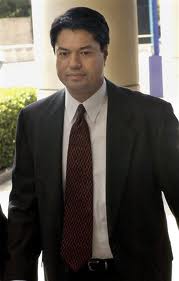
But the family that arguably paid the steepest cost from the wave of unjust corporate prosecutions was the family of Jamie Olis, the former mid-level Dynegy executive who was thrown to the prosecutorial wolves by his employer and then sentenced to a ludicrously excessive 24 plus-year prison term for his involvement in a structured finance transaction for which he profited not one dime.

The Fifth Circuit Court of Appeals ultimately threw out that sentence, which resulted in a still-too-harsh six-year re-sentencing. Olis was finally paroled last year and reunited with his wife and young daughter, who literally grew up visiting her father in prison.

But even in the face of such inhumanity, the human spirit perseveres.

Throughout the Olis family’s ordeal, Jamie’s father — Bill Olis — stood out as a rock of stability and common sense.

Whether it was attending the myriad of hearings in Jamie’s case in Houston, or escorting Jamie’s wife and daughter the hundreds of miles to visit Jamie in far-off prisons, or lending moral support to other families who were enduring similar injustices, Bill Olis projected a sense of calm perspective that was contagious to all who came in contact with him.

He had much to be bitter about in regard to what the federal government did to his son and family, but Bill Olis never gave in to bitterness. He was a quintessential Christian gentleman and nothing that the government did to his family could change that.

Throughout his son’s darkest times, Bill remained confident that he and his family would ultimately be reunited with Jamie. Yeah, the government is powerful, but no earthly force was going to destroy Bill Olis’ family.

As a result, Ellen Podgor of the White Collar Crime Prof Blog re-named her “Collar for the Best Parent Award” to the “Bill Olis Best Parent Award” because — in the category of a parent supporting an imprisoned child — “no one comes close to Bill Olis.”

What was not well known through all of this was that Bill Olis was slowly fading away physically during his son’s imprisonment. Bill had an oxygen unit with him almost constantly as he tended to his family’s needs throughout their ordeal.

No big deal for Bill. Mere failing health was not going to stop Bill Olis from being present when his son was released from prison last year. He was there embracing Jamie with the rest of the family, oxygen tank and all.

With the work of reuniting his son with his family done, Bill Olis died over this past weekend. I understand from a family friend that Jamie was able to spend most of Bill’s final two weeks with him, which I know Bill enjoyed immensely. He adored his son.

The Olis family story is a remarkable one and frankly far more interesting than the government’s dishonest case against Jamie.

Years ago, Bill Olis married a single Korean mother and adopted her young son. He provided his wife and son a stable and loving home, and the family flourished. His son excelled in school, obtained advanced degrees in both business and law, and embarked upon a successful career in corporate finance.

And when the government targeted the son as a sacrificial lamb for the anti-business mob, Bill Olis spent his last days in this world supporting his son every step of the way and making sure that he returned to his wife and daughter.

Then he passed away.

A Christian minister friend once observed to me that a good way to embrace what is good about the Christian spirit is through understanding the nature of adoption.

Bill Olis was living proof of the truth of that observation.

The Duke

A good way to start the new year — Duke Ellington and Take the "A" Train.

The Dude abides in academia

jeff bridges Somehow, it’s comforting to know as we move into 2010 that analysis of The Big Lebowski has moved into academic circles.

Of course, these emerging academic treatments have a ways to go before they can rival Rob Ager’s work on the film, the first installment of which can be viewed here.

Meanwhile, if you don’t mind some pretty salty language, enjoy the clip below of the Dude and his friends discussing what to do about his rug.

Happy New Year!

Thinking about security theater

Homeland security Given the Homeland Security Department and Transportation Security Administration’s typically over-the-top reaction (see also here) to the Christmas Day attempt to blow up a jet flying into Detroit from Amsterdam, one wonders at what point the government’s elaborate "security theater" will finally make flying so miserable that it will choke the life out of the U.S. airline industry? Professor Bainbridge provides a good roundup of the blogosphere’s discussion of that and related issues.

The latest incident also reminded me of this prophetic Bruce Schneier post from about a month ago. Schneier does the best job that I’ve read of explaining why a balance between legitimate and symbolic is helpful in deterring terrorism, but that most of Homeland Security’s security theater is utterly misguided, as well as a waste of time and resources.

The entire post is excellent, but two points he makes are particularly important.

First, Schneier observes that the governmental impulse "to do something" in response to an attack is mostly misdirected:

Often, this ‘something’ is directly related to the details of a recent event: we confiscate liquids, screen shoes, and ban box cutters on aeroplanes. But it’s not the target and tactics of the last attack that are important, but the next attack. These measures are only effective if we happen to guess what the next terrorists are planning .   .   . Terrorists don’t care what they blow up and it shouldn’t be our goal merely to force the terrorists to make a minor change in their tactics or targets  .   .   .

Even more importantly, Schneier points out that the right kind of security theater — that is, the best way to counteract the damage that terrorism attempts to inflict upon all of us — is to act as if we are not scared of it:

The best way to help people feel secure is by acting secure around them. Instead of reacting to terrorism with fear, we — and our leaders — need to react with indomitability.

By not overreacting, by not responding to movie-plot threats, and by not becoming defensive, we demonstrate the resilience of our society, in our laws, our culture, our freedoms. There is a difference between indomitability and arrogant ‘bring ’em on’ ehetoric. There’s a difference between accepting the inherent risk that comes with a free and open society, and hyping the threats .   .   .

Despite fearful rhetoric to the contrary, terrorism is not a transcendent threat. A terrorist attack cannot possibly destroy a country’s way of life; it’s only our reaction to that attack that can do that kind of damage.

Schneier is spot on. Rather than making air travel increasingly distasteful, Homeland Security and the TSA ought to be encouraging Americans to spit in the terrorists’ collective eye by traveling even more by air under reasonably tolerable and legitimate security arrangements.

Accord Perfection

In the continuing series of remarkable commercials, Honda chips in.

The Light in the Darkness

Every Christmas since 1949, The Wall Street Journal has published the following op-ed — In Hoc Anno Domini — from the late Vernon Royster.

Royster’s piece reminds us not only the the brutal nature of life in the Roman Empire, but the extraordinary impact that Judeo-Christian culture has had over the past two thousand years in improving the quality of life.

We take it for granted at our peril.

So the light came into the world.

When Saul of Tarsus set out on his journey to Damascus the whole of the known world lay in bondage. There was one state, and it was Rome. There was one master for it all, and he was Tiberius Caesar.

Everywhere there was civil order, for the arm of the Roman law was long. Everywhere there was stability, in government and in society, for the centurions saw that it was so.

But everywhere there was something else, too. There was oppression—for those who were not the friends of Tiberius Caesar. There was the tax gatherer to take the grain from the fields and the flax from the spindle to feed the legions or to fill the hungry treasury from which divine Caesar gave largess to the people. There was the impressor to find recruits for the circuses. There were executioners to quiet those whom the Emperor proscribed. What was a man for but to serve Caesar?

There was the persecution of men who dared think differently, who heard strange voices or read strange manuscripts. There was enslavement of men whose tribes came not from Rome, disdain for those who did not have the familiar visage. And most of all, there was everywhere a contempt for human life. What, to the strong, was one man more or less in a crowded world?

Then, of a sudden, there was a light in the world, and a man from Galilee saying, Render unto Caesar the things which are Caesar’s and unto God the things that are God’s.

And the voice from Galilee, which would defy Caesar, offered a new Kingdom in which each man could walk upright and bow to none but his God. Inasmuch as ye have done it unto one of the least of these my brethren, ye have done it unto me. And he sent this gospel of the Kingdom of Man into the uttermost ends of the earth.

So the light came into the world and the men who lived in darkness were afraid, and they tried to lower a curtain so that man would still believe salvation lay with the leaders.

But it came to pass for a while in divers places that the truth did set man free, although the men of darkness were offended and they tried to put out the light. The voice said, Haste ye. Walk while you have the light, lest darkness come upon you, for he that walketh in darkness knoweth not whither he goeth.

Along the road to Damascus the light shone brightly. But afterward Paul of Tarsus, too, was sore afraid. He feared that other Caesars, other prophets, might one day persuade men that man was nothing save a servant unto them, that men might yield up their birthright from God for pottage and walk no more in freedom.

Then might it come to pass that darkness would settle again over the lands and there would be a burning of books and men would think only of what they should eat and what they should wear, and would give heed only to new Caesars and to false prophets. Then might it come to pass that men would not look upward to see even a winter’s star in the East, and once more, there would be no light at all in the darkness.

And so Paul, the apostle of the Son of Man, spoke to his brethren, the Galatians, the words he would have us remember afterward in each of the years of his Lord:

Stand fast therefore in the liberty wherewith Christ has made us free and be not entangled again with the yoke of bondage.

Merry Christmas from the Family

It wouldn’t be Christmas in Texas without taking a moment to listen to Texas singer-songwriter and Houston native Robert Earl Keens classic Texas Christmas carol and video, Merry Christmas from the Family Keen is playing the House of Blues at 8 p.m. on Monday.

Have a restful, joyous and safe holiday!

To Everything There is a Season

Still sounding darn good in 2006, Roger McGuinn, Chris Hillman and David Crosby sing Pete Seeger’s classic that The Byrds made famous in the 1960’s, Turn! Turn! Turn!

Beauty is nothing without brains

Below is another in the continuing series of commercials that represent some of the most creative product on television.

Junior Brown

Junior Brown One of the best shows that I’ve attended during my almost 40 years in Texas is one by Austin’s Junior Brown.

In addition to being arguably Texas’ most gifted guitarist, Junior performs an amazing breadth of material that spans Country-Western, Rock and Roll, the Blues and Surf music.

Below are videos of two of his classic country western songs — My Wife Thinks Your Dead and Highway Patrol — and, after the fold, a recording of 409 by Junior and the Beach Boys, plus another of his special medley of rock songs, which includes his spot-on imitation of Jimi Hendrix’s Purple Haze (!) at around minute six or so.

Junior Brown is a Texas treasure. Enjoy.

Continue reading