Tax simplification made simple

flat%20tax.jpgOne of the more distressing aspects of the Bush Administration’s distractions is the abandonment of the movement toward income tax simplification. In this lucid EconTalk session, Alvin Rabushka of Stanford University’s Hoover Institution lays out the case for the flat tax, which he has been advocating with colleague Robert Hall since 1981. Rabuska’s plan would reform the current system that is based on the 66,000 page U.S. Tax Code with a single rate and no deductions other than personal exemptions, and each individual tax return would be the size of a postcard. This is a common sense reform that is long overdue for many reasons, including one that Russ Roberts makes: “Wouldn’t it be wonderful if all the talented people who currently help rich people avoid taxes were instead encouraged to something productive?” Check out Rabushka’s talk.

More love for Zach

jenkins042407.jpgClear Thinkers favorite Dan Jenkins is not having any part of the notion that Zach Johnson‘s victory in The Masters Golf Tournament was boring due to a tricked-up Augusta National:

I, for one, loved it. The Augusta National, with an assist from nature, finally reined in technology. That alone was worth a roar, wasn’t it?
They took the winning 72-hole score back to 289, the highest it had been since 1954 and 1956, when the basic culprits were strong, gusty winds and the hard old Bermuda/rye greens that wouldn’t hold a pitchfork if Tiger Woods was swinging it.
If there was anything I liked better than seeing the tour pros have to face a tough course for a change, it was learning that Zach Johnson, the new Masters champion, is an unapologetic God-fearing lad who has a Yorkshire terrier like I do.
Only his is named Hogan.

Read the entire article.

Criminalizing business in Kazahkstan

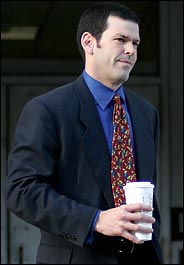
man%20in%20PrisonBars.jpgThis New York Times article reports on the troubles of American businessman Mark Seidenfeld, the telecommunications entreprenuer who made a fortune during the dizzying days of Kazahkstan’s conversion from a communist to a market economy. The case against Seidenfeld is controversial and is being watched closely, largely because Kazakhstan is perceived to be one of the least repressive countries in the region for foreigners to do business. However, what is most chilling about the account is how many similarities exist between the way in which the Kazahkstan criminal justice system is handling this case and the way in which many recent criminal prosecutions against U.S. businesspersons have been handled in the American criminal justice system (a point made earlier here). Interestingly, several human rights organizations are weighing in with the Kazahkstan government about the handling of the Seidenfeld case, something that is unheard of in regard to similar prosecutorial tactics that are taking place in the U.S.

MLB team values

Major%20LeagueBaseball%20logo.gifForbes just published its annual valuation of Major League Baseball clubs, with the Stros rating a solid 11th among the 30 clubs at an estimated $442 million, or a bit more than a 1/3rd of the value of the top-ranked Yankees and about 60% of the value of the second-ranked Mets and Red Sox. The Texas Rangers are valued at about $80 million less than the Stros. Craig Depken provides some heavy duty analysis of the numbers and comes to the following conclusion:

In the business of baseball, especially in an era of free-agent salaries and the luxury tax, the more the team wins, the lower the profits. What’s going on? The source of this conundrum is the diminishing returns to quality on the revenue side: marginal improvements in team quality do not increase revenue as much. On the cost side, marginal improvements in team quality become ever more expensive.

The Glisan Interview

Tongues were wagging all over Houston this weekend as a result of Wall Street Journal reporter John Emshwiller’s exclusive interview ($) with former Enron treasurer and Andy Fastow confidant, Ben Glisan (excerpts of the interview are here).

The theme of the interview is that Glisan initially deluded himself into thinking that he hadn’t done anything wrong while at Enron, but that he discovered his true self during his 4+ year prison term and came to terms with his criminality.

Emshwiller — whose coverage of the Enron case has been subject to serious conflict of interest issues before — laps up the morality play. Next thing you know, Glisan will be joining Sherron Watkins as a speaker on the “corporate governance reform” rubber chicken circuit.

However, as with almost everything pertaining to Enron, the true story about Glisan is more nuanced than meets the eye.

Glisan was a golden boy at Enron, a rising star in the management circles who Fastow plucked as his hand-picked replacement after running off Enron treasurer Jeff McMahon in early 2000. Contrary to the unsupported statements contained in the interview with Emshwiller, there are real questions as to whether Glisan did much of anything wrong in his duties as Enron’s treasurer.

However, it does appear that he used poor judgment in getting drawn into one of Fastow’s partnership deals in which he made a quick $1 million in mid-2001 on a nominal investment, although it remains unclear as to whether Glisan actually knew that he was engaged in any criminal wrongdoing in taking that return on his investment.

Nonetheless, later in 2001, a month or so before Enron filed its chapter 11 case, Glisan was ultimately canned as Enron’s treasurer because of his failure to disclose that investment in connection Enron’s failed merger negotiations with Dynegy, and so he quickly came under the scrutiny of federal investigators who were suspicious that Glisan’s $1 million return violated the “too good to be true rule” that prosecutors often rely upon to prosecute wealthy businesspeople.

For over a year and a half after being fired by Enron, Glisan continued to maintain to investigators that he had not engaged in any criminal conduct while at Enron. But soon after being indicted in 2003, Glisan — who had not made big money at Enron and was not financially capable of mounting a formidable defense to the criminal charges — copped his deal with the Enron Task Force and began serving his prison sentence.

The rest of the story is not particularly surprising. Glisan was treated roughly during his early days in prison and he quickly began negotiating with the Task Force prosecutors for better accommodations in return for testimony in other Enron-related criminal cases.

He ended up being one of the key witnesses in the Nigerian Barge trial, even though he was not directly involved in the transaction. Most of his testimony in that trial was hearsay of alleged statements made by other “co-conspirators” that was admitted as evidence under an exception to the hearsay rule that would have otherwise excluded such testimony. That testimony helped lead to the improper convictions of four former Merrill Lynch executives that were later overturned on appeal.

Glisan then parleyed his Nigerian Barge work into a transfer to a better prison, where he offered his testimony against former Enron executives Jeff Skilling and Ken Lay in return for liberal furloughs from prison to Houston, where he lived at home while working with prosecutors.

Although the Lay-Skilling jurors viewed him as an effective prosecution witness, there remain substantial questions whether Glisan was truthful during much of his testimony.

So, what to make of all this?

Simple morality plays are easier to write and understand, and certainly easier (and legally safer) to spin on the rubber chicken circuit. The truth in such matters is often far less certain and more difficult to understand, but it’s far more likely to prevent the injustices that have been heaped upon the four former Merrill Lynch executives, Jeff Skilling, Ken Lay, Kevin Howard and Chris Calger, just to name a few. As Ellen Podgor comments:

Although not the focus of [the Glisan interview], it is interesting to note that the risk and cost of trial weigh heavily in the decision to plea. Glisan, like Martha Stewart realized the value of “getting it over with,” and “moving on.” But is that the way the justice system is supposed to work?

The next troubled Texas PGA Tour event

Byron%20Nelson%20championship%20logo.jpgThe Shell Houston Open recently finished a rather uninspiring 2007 edition of the event. Now, the EDS Byron Nelson Championship in Dallas — which has also had (earlier post problems brewing) over the past several years — is looking as if it will have its weakest field in years, although it still appears to be better than the SHO’s field. Another PGA Tour event entering the Tiger chasm? The Star-Telegram’s Gil LeBreton thinks so:

The message this time, though, seems unmistakable. If the tributes planned for Byron werenít enough to lure Woods back this year, what makes anyone think that heíll come back next April? Or the year after?
Or that Tiger Woods will ever play tournament golf again in Texas?
His first and last appearance at Colonial came in 1997. A disappointing final round left Woods steamed and tied for fourth place, and he has never returned.
He played in the Texas Open, a fall tour event in San Antonio, in 1996 and came in third. He has never returned.
Woods has never played in the Shell Houston Open.
The Nelson, however, was supposed to be Woodsí tournament. The tournament where Fergie, the Duchess of York, once came to see Tiger play. From 1997 to 2004, Woods played in the Nelson Championship seven times, shooting a combined 77 under par.

Nifty graphic relating to the Virginia Tech shootings

The New York Times has published this nifty graphic display that provides an excellent overview and explanation of the specific locations of the shootings at Virginia Tech last week. Definitely worth checking out.

Protecting the Metroplex from the evils of poker

poker.jpgThis post from late last year reported on the dubious policy of the Dallas Police Department to deploy SWAT teams to bust peaceful poker games. To update that precarious state of affairs, Radley Balko passes along this long email from a fellow who was arrested during one of the raids, even though he was simply chopping veggies for the gamblers to eat. The following is a glimpse of what occurred during the raid:

The raid occurred around 7:40 p.m. I was in the kitchen area which was just inside the front door when suddenly there was loud banging from the door. Within seconds, the room was full of Dallas SWAT officers yelling for everyone to put their hands in the air. Behind the Dallas SWAT team came many more law enforcement officers and several camera crews for the A&E reality show, Dallas SWAT. The camera crewís chests were clearly marked as ìA&E Film Crew.î
Bear in mind that, prior to police entering, the place was virtually quiet. There was the sound of poker chips in the air, but not much else. The players were essentially professionals and working stiffs having funÖthere were doctors, lawyers, accountants, and other professionals. There was hardly anything ìdangerousî about the place at all. In fact, the cops found no weapons in the facility or on anyone there. The show of force and weaponry brought by the cops was simply outrageous and unjustified, given the circumstances, but, then again, are they enforcing the law or making a TV show?

Read the entire post. Feel safer?

How to fix Houston traffic

Houston_traffic.jpgBoth surprisingly and refreshingly, the L.A. Times runs this insightful piece on several experts’ proposals to address various Los Angeles area traffic problems. The experts are a level-headed bunch, including Joel Kotkin, James E. Moore, Donald Shoup and Ted Bakalar. Inasmuch as the Houston region shares many of traffic characteristics with the L.A. area, several of the suggestions are equally applicable to local traffic. My favorite is by Kotkin:

What Los Angeles needs is a transit system that better reflects what it is ó a sprawling mid-density city. So build the world’s easiest-to-use bus system. This network should expand such transit innovations as the MTA’s Metro Rapid buses, which run in dedicated lanes, and Rapid Express buses, which make few stops. These systems are far less expensive to build than light rail or a “subway to the sea.”

An investment market for Charlie Pallilo

TRADING%20floor%20042007.jpgMy favorite sports talk radio show in Houston is Charlie Pallilo‘s afternoon show over at 790-AM, but I’ve always wondered why the quite bright Pallilo isn’t off making millions trading bonds or running a hedge fund. Moneyball’s Michael Lewis reports in this CondeNast Portfolio article about a market that is right up Pallilo’s alley — investing in professional athletes:

Wall Street is about to launch a new way to trade professional athletes the way you trade stocks. A piece of Tiger, anyone?
When financial historians look back and ask why it took Wall Street so long to create the first public stock market that trades in professional athletes, they will see ours as an age of creative ferment. Theyíll see a new, extremely well-financed company in Silicon Valley that, for the moment, sells itself as a fantasy sports site but aims to become, as its co-founder Mike Kerns puts it, ìthe first real stock market in athletes.î . . . The athlete would sell 20 percent of all future on-field or on-court earnings to a trust, which would, in turn, sell securities to the public. Theyíll also single out the birth of the first European hedge fund that runs a multimillion-dollar portfolio of professional soccer players, the value of which rises and falls with the playersí performances.
As a number of smart people seem to have noticed at once, professional athletes have all the traits of successful publicly traded stocks, beginning with enormous speculative interest in them. Americans wager somewhere between $200 billion and $400 billion a year on sports, and between 15 million and 25 million of them play in fantasy leaguesówhich is to say that a shadow stock market in athletes already exists. That market may not know everything there is to know about the athletes it values, but it probably knows more than New York Stock Exchange investors know about the N.Y.S.E.ís public corporations. ìPeople worry about lack of transparency in sports,î says the leading sports agent. ìMy newspaper this morning has two and a half pages of business news and 17 pages of sports. The day after the game, you know Peyton Manningís thumb is hurt. What do you know about the C.E.O. of I.B.M.?î

Let’s see now. You will soon be able to place a legal bet on a professional athlete over the Internet, but not on the outcome of a game?