That’s what you call a plug

I thought what occurred to the football after the punt in the video below only happened to my golf shots on soggy courses. I guess that’s what you get from re-sodding a football field immediately before a several-inch deluge:

Todd Graham’s Inferno

the-mobRice University gave Todd Graham his first opportunity to be a head coach of a college football program. And Graham was quite successful in his only season on South Main, leading the Owls to their first bowl game since the early 1960’s.

But Graham’s stay on South Main was anything but platonic. After being named Conference USA Coach of the Year and renegotiating his contract with Rice, Graham announced a couple of weeks after the bowl game that he was leaving to replace his former boss as head coach at the University of Tulsa. By virtually all accounts, Graham handled the job change about as badly as possible.

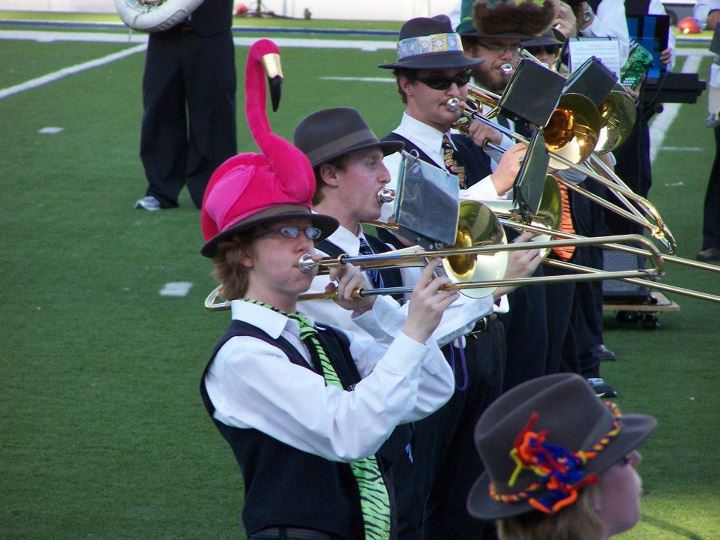
Well, as predicted in my post at the time of Graham’s job change, it was just a matter of time before Rice’s notorious Marching Owl Band (“the MOB”) would have an opportunity to comment on Coach Graham’s antics, and that opportunity presented itself this past Saturday during halftime of the Rice-Tulsa game at Rice Stadium. The MOB performed a halftime show entitled “Todd Graham’s Inferno,” which concluded with the following comment over the stadium public address system:

Childish for sure, but nothing out of the ordinary for the MOB. And it was certainly not even as clever as the MOB’s theme for their halftime show during Rice’s bowl game against Troy last year — “Troy Loses. Read Homer”

So, how did the University of Tulsa respond? By doing precisely what the MOB probably wanted — fueled the inferno by filing a complaint against the MOB with the C-USA commissioner:

The University of Tulsa has sent a formal complaint to Conference USA regarding Rice’s halftime show during the Golden Hurricane-Owls football game on Saturday.

The performance by the Rice marching band was titled “Todd Graham’s Inferno” and depicted a search for the former Owls coach through different circles of Hell, based on Dante’s “Divine Comedy.”

After taking numerous jabs at Graham, the show ended by calling the Tulsa coach a “d—–bag” over the public address system.

“We filed a formal complaint with the conference and that’s where it stands now,” TU athletic director Bubba Cunningham said.[. . .]

When asked what he wanted the complaint to accomplish, Cunningham said, “We need to provide an environment where a student-athlete can participate and fans can enjoy college athletics in a very positive way.”

Sportsmanship has been a point of emphasis in C-USA, the Tulsa athletic director said. “When we don’t meet those standards, we need to look at ourselves as a league and find how we can make that experience better,” he said.

Yeah, that was real sportsmanship displayed by Cunningham and Tulsa last year when they lured Graham away from Rice right in the middle of recruiting season.

At any rate, all of this provides the opportunity to pass along again the following anecdote about football coaches that legendary Houston sportswriter Mickey Herskowitz tells:

In the mid-1960’s, the Los Angeles Rams had hired George Allen off of the coaching staff of George Halas in Chicago.

Halas was furious that the Rams failed to ask for his permission and threatened to take Allen to court. At a league meeting after the issue was resolved, Halas used the occasion to vent his anger at his former defensive coach.

“George Allen,” Halas raged, “is a man with no conscience. He is dishonest, deceptive, ruthless, consumed with his own ambition.”

At that point, Vince Lombardi leaned over to the owner of the Rams and whispered:

“Sounds to me like you’ve got yourself a helluva football coach.”

Hedging the Trial Penalty

Although some have questioned his business ethics, no one has ever questioned that legendary Houston oilman Oscar Wyatt is good at hedging risk.

After Wyatt was sentenced yesterday to a year in prison as a result of his plea deal (previous posts here), my sense is that Wyatt hedged the trial penalty risk (i.e., a life sentence) in an reasonably effective manner.

Meanwhile, in another plea deal, a tenured economics professor at the University of Pennsylvania faces a likely prison sentence of four to seven years for bludgeoning his wife to death. The professor says he “just lost it.”

What must Jamie Olis think about that as he finishes serving what will almost certainly be a longer sentence than the professor will serve?

And what about Chalana McFarland, a first-time offender who was sentenced to 30 years in prison in connection with a mortgage fraud scheme. Ellen Podgor is following that case.

Or former Enron executive Jeff Skilling, who continues to serve a 24-year sentence for simply availing himself of a forum in which to defend himself against charges that are far more nebulous than murder or mortgage fraud?

Finally, tomorrow afternoon in Houston federal court, the NatWest Three, three former bankers from the U.K. who have been forced to live in Houston apart from their families in the U.K. for the past year and a half, will likely enter into a plea deal in order to hedge the considerable risk of a lengthy prison sentence if they were to defend themselves in a U.S. court from Enron-related charges that U.K. authorities concluded were too weak to merit a prosecution there (see previous posts.

Is the draconian trial penalty in the American criminal justice system really generating the type of results that a truly civil society wants?

Update: The real NatWest Three deal.

The NY Times on the DeBakey-Cooley rapprochement

DeBakey%20and%20Cooley%20112807.jpgFollowing on this earlier post about Todd Ackerman’s fine piece on the rapprochement between longtime Texas Medical Center rivals, Dr. Michael DeBakey and Dr. Denton Cooley, this New York Times article examines the history of the feud and the recent reconciliation.
The article passes along the following famous anecdote from the investigation into Dr. Cooley’s use of an artificial heart back in the early 1960’s without proper authorization:

Dr. Cooley recalled that a lawyer had once asked him during a trial if he considered himself the best heart surgeon in the world.
ìYes,î he replied.
ìDonít you think thatís being rather immodest?î the lawyer asked.
ìPerhaps,î Dr. Cooley responded. ìBut remember Iím under oath.î

Read the entire article.

The Sherman hiring

sherman%20picture.jpgWell, Texas A&M Athletic Director Bill Byrne’s “nationwide search” for a new head coach to replace Dennis Franchione took a couple of days and extended all of about 100 miles southeast of College Station as A&M hired Houston Texans assistant head coach Mike Sherman as its new head coach yesterday. The deal is for seven years at $1.8 million per year. Ryan over at TAMaBINPO has a nice overview of Sherman’s coaching career.
Although some in the Aggie nation were disappointed that A&M didn’t hire a “big-name” coach de jour, my sense is that hiring Sherman is a reasonably good move. A&M is currently in the latter stages of a somewhat divisive search for a new president, so the A&M Board of Regents doesn’t need more faculty flak from another flank. Moreover, A&M overpaid badly to hire Franchione, so the buyout of Coach Fran’s contract is going to be expensive, even by A&M standards. Under these circumstances, eschewing a high-priced, big-name coach is certainly understandable.
Within the coaching profession, Sherman has an excellent reputation as a hand’s-on coach, which frankly Franchione did not have when A&M hired him. The only negative comment that I’ve heard about Sherman is that he was not a particularly good evaluator of talent as Green Bay’s general manager from 2001-04. That trait has certainly reared its head during his stint with the Texans — Sherman was among those who blessed the questionable decision to pick up an expensive option to keep former Texans QB David Carr around for another year and he lobbied hard for the Texans to overpay old and injured RB Ahman Green. Those two decisions are costing the Texans big-time in terms of salary cap space.
Nevertheless, Sherman will have plenty of assistance in picking talent for A&M’s football program and he inherits one of the richest bases for recruiting good football players in the U.S. The initial problem that Sherman faces in the recruiting wars is that three Big 12 South programs — Oklahoma, Texas and Texas Tech — have been clearly superior to the Aggies’ program for a prolonged period now, although the reasons for each program’s superiority are different. UT and OU have had better overall talent than A&M, while Tech has simply outcoached A&M while deploying comparable talent.
At this point, the OU and Texas programs are two of the select few big-time college football programs that are recruiting almost entirely high school prospects who project to have the potential to develop into players capable of playing in the National Football League. A&M does not yet have that luxury in recruiting players into its program, so Sherman will be dealing with a talent deficit to programs like OU and UT for at least the first 2-3 years of his tenure at A&M. With the exception of A&M’s last two victories over UT, Franchione’s A&M teams did not generally compete well against teams that had superior talent. How Sherman’s teams deal with that talent deficit during his initial A&M seasons will largely determine whether Sherman succeeds or fails in Aggieland.

Reviewing the Kindle

amazon_kindle_in_hand.jpgThis John P. Falcone/Webware article does a good job of providing a preliminary evaluation of the new Amazon Kindle reading device:

The Bottom Line: With its built-in wireless capabilities and PC-free operation, Amazon’s Kindle is a promising evolution of the electronic book (and newspaper, and magazine)–but overpriced content could be its Achilles’ heel.

The six-minute Amazon video on the Kindle is here.
Update: The WSJ’s technology reviewer, Walter Mossberg, is not particularly impressed after using the Kindle for a few days, while the Chronicle’s excellent technology columnist, Dwight Silverman, is a bit more optimistic, but not yet sold.

How the Shark was hooked

Greg%20norman%20adn%20Chris%20Evert_a.jpgThis earlier post noted that former PGA Tour member Greg Norman had duck hooked his divorce and was probably going to have to pay for dearly for doing so. After a cooling off period, Norman and his former wife settled matters quietly. Or so they thought.
Now, it appears that the Shark is calling a rules violation (H/T Stu Mulligan) on his ex-wife over her public disclosure of the details of Norman’s affair with former tennis star, Chris Evert. As you might expect, tails are wagging among the Palm Beach society crowd:

Golf legend Greg Norman has a message for his ex-wife: You won’t get any more of my money!
Norman’s legal eagles have filed a lawsuit against the sport’s former first lady, Laura Andrassy, alleging that she has already breached their two-month-old divorce settlement.
The filing asks a Martin County judge to award damages. Several sources close to the case – who asked to remain anonymous because no one familiar with it is legally allowed to talk about it – said those damages could include Norman’s keeping a large part of the settlement he still owes her. [. . .]
So, why’s the fair-haired golfer ticked off?
According to Norman’s filing, it’s because Andrassy squawked to the press about her broken marriage, former tennis champ Chris Evert, Norman’s new love, and how Evert “stole” the Australian from her.
In an interview for papers in Oz and another with Page Two in late September, Andrassy described in detail how Evert befriended her while visiting the Normans’ home on Jupiter Island, then moved in for the “kill.” Andrassy said she suspects Evert, then married to former Olympic skier Andy Mill, first hooked up with her hubby last year when the two couples were on a fishing trip.
Fine and dandy! But the problem, according to Norman’s filing, is there’s supposed to be a confidentiality agreement between him and Laura – and she breached it.
“The confidentiality agreement is really not that specific, and besides, I didn’t talk about Greg. I talked about myself and Chris, and I have no agreement with her,” Andrassy said by telephone as she drove through California’s Napa Valley on Tuesday. [. . .]
Norman’s new high-octane attorney, Jeff Fisher, did not comment. Said Norman’s White Shark Enterprises CFO Jack Schneider: “At least we abide by our agreement.”

Evert “hooked up” with Norman on a fishing trip and then moved in for the “kill”? Stay tuned for the next episode of the lifestyles of the rich and famous.

2007 Weekly local football review

Goodsen%20taking%20off.gif(Jay Janner/Austin American photo; previous weekly reviews here)
Texas Aggies 38 Texas Longhorns 30

For the second straight year, the Aggies (7-5/4-4) upset the Longhorns (9-3/5-3), this time as a resignation present for Aggie head coach Dennis Franchione. I trust that dirty look that Franchione gave to A&M athletic director Bill Byrne at the post-game press conference when he announced his resignation is an indication of how buy-out negotiations have gone. A&M officials have scheduled a news conference for 11 a.m. today to introduce Texans offensive coordinator Mike Sherman as the Aggies’ new head football coach while hoping that Aggie fans didn’t notice the Texans’ offensive gameplan in yesterday’s game (see below).
At any rate, the Aggies dominated this game as the porous Longhorns defense made A&M QB Stephen McGee look like Joe Montana, and that’s really hard to do. But the irony of the victory is that the Ags gameplan was precisely what A&M fans thought they were getting when A&M hired Franchione five years ago — diverse offensive production, forcing turnovers, creating big plays, exciting trick plays and consistent wins over top tier teams of the Big 12. Unfortunately, this second straight win over the Longhorns came way too late for Coach Fran.
Meanwhile, almost as interesting as the Aggies’ coaching search is the quandry that faces Longhorn coach Mack Brown. With the defeat, the Horns have now lost to Texas A&M and Oklahoma in the same season for the first time since 1993. The Horns have also lost two straight games to unranked and underachieving Aggie teams and have squandered BCS bowl berths in two consecutive seasons. And that’s even after the Horns played one of the their easiest schedules in recent history.
However, most troubling for the Horns is a defense — and even more precisely, a pass defense — that has plummeted over the past year far below UT standards. As noted above, the Horns defense made McGee, who is a mediocre college QB, look like an NFL prospect while throwing for 362 yards. And that was not particularly unusual, either. Against a weak schedule, the Horns defense gave up an average of 533 yards in its final three games, gave up 28 points or more in half of their games as well as 35 points per game over their last four. My sense is that Coach Brown will be taking a hard look at whether staff changes are in order this off-season.
The Aggies and Longhorns now await bowl assignments, although it appears likely that the Aggies will meet Michigan or Penn State in San Antonio’s Alamo Bowl. The Longhorns are probably ticketed for yet another appearance in the Holiday Bowl, which was their typical destination before the now fading-in-memory 2005 National Championship.

Browns 27 Texans 17

I’m not making this up. After the Texans’ (5-6) recent two game winning “streak,” the Texans’ cheerleaders in the local mainstream media were actually mentioning the word “playoff” in their media pieces. Then, the Texans in this game proceed to score one TD in the first 57 minutes against the NFL’s worst defense, convert only two third-downs all game, and commit three turnovers, giving the team 29 on the season, four more than last season’s 6-10 team. Message to local mainstream media — the words “playoffs” and “Ron Dayne, starting running back” are incompatible. It would also be nice if the Texans defense didn’t make the Browns’ (7-4) RB Jamal Lewis look like he had just become five years younger. The Texans travel to Nashville next Sunday to face Vince Young and the fading Titans (6-5) before returning home for three of their last four games of the season.

Tulsa 48 Rice 43

The feisty Owls (3-9/3-5) made a game of it, but ultimately simply did not have the horses to stop Tulsa (9-3/6-2) and win the Todd Graham Revenge Bowl. It would have been a nice victory for the Owls and the Houston Cougars, who would have won the C-USA West Division for the second straight year if Tulsa lost. But Rice returns its offensive nucleus of QB Chase Clement, WR Jaret Dillard and HB James Casey, so next season’s Owls will still be able to score some points. Now, if they could just find someone to tackle . . .

Houston Cougars 59 Texas Southern 6

Remind me again — why was this game scheduled? It seemed absolutely appropriate that the game ended up being played in a mush pit caused by a cold, driving rainstorm. The Cougars (8-4/6-2) have accepted a Texas Bowl berth at Reliant Stadium on December 28th against probably a Big 12 team, either Oklahoma State (6-6/4-4) or Colorado (6-6/4-4). If the Big 12 qualifies two teams for BCS bowls, then the Coogs will play an at-large opponent such as TCU (7-5/4-4).

Arena wasteland

sbc_center.jpgAnne Linehan over at blogHouston.net has been having fun (as has Tory Gattis) watching Houston city officials try to rationalize how the city is not really going to have to cough up any money to subsidize a portion of the Houston Dynamo’s proposed new downtown stadium. Anne’s coverage of this issue is particularly timely given this recent San Antonio Express-News article that reports that the San Antonio Spurs are seeking another $164 million from the local government for the ATT Arena that is only five years old!
To make matters worse, San Antonio — which has its share of infrastructure problems — has not enjoyed any of the economic growth around the ATT Arena that was predicted by promoters of the arena when it was approved back in 1999:

When Bexar County asked voters in 1999 to approve a $175 million arena for the San Antonio Spurs, officials promised it would spark “economic development opportunities” for the neglected East Side.
Today, few businesses have opened their doors near the arena ó even as the Spurs ask for more tax dollars to upgrade the 5-year-old AT&T Center.
A new tattoo parlor on Houston Street appears to be the latest investment in the neighborhood. It opened in a stretch of boarded-up buildings in early 2006, said David Leon, the shop’s ornately tattooed owner.
Business is good, Leon said. But no customers stop by after a Spurs game.
“I think they’re too scared to even stop, because of how bad the label of the East Side is,” Leon said.
Despite a lot of talk and studies, the neighborhood around Leon’s shop hasn’t changed much since Nov. 2, 1999, when voters overwhelmingly agreed to subsidize the arena with a venue tax on hotel rooms and car rentals.
The team wants to tap into the venue tax again, a move that will be up to voters. The Spurs started with a wish list of $164 million in improvements for the AT&T Center. The county told the team to whittle their proposal to $75 million.
But so far, the arena has failed to accomplish everything voters were once promised by the county. Sluggish growth near the AT&T Center has troubled those who argued against the location.
“It’s been disappointing to me that there hasn’t been more development in that area,” said former Mayor Howard Peak, who tried unsuccessfully to have the arena built downtown. [. . .]
From the Spurs’ perspective, spokesman Leo Gomez said the NBA team is proud of its neighbors. But he emphasized the Spurs never promised a new arena would bring them an economic boom.
“We know better than that,” Gomez said. “It hasn’t worked in any other community in the country. And it’s not going to happen here.”
Gomez said the real question for voters is simple: Should the AT&T Center continue to be a top-notch facility for San Antonio? If so, he said, it needs more tax dollars to keep it that way.
Within view of the arena last week, a woman stood across from Leon’s tattoo parlor, hawking purses to passing motorists. . .

As noted earlier here, the notion that professional sports stadiums promote economic development is a myth. Maybe there is a good reason to provide public financing for a downtown soccer stadium in Houston. But building it to spur economic development is not one of them.

A Texas Medical Center giant

feigin.jpgThis Alexis Grant/Chronicle Q&A column interviews one of the truly outstanding physicians who has made the Texas Medical Center one of the most extraordinary medical centers in the world — Dr. Ralph Feigin of Texas Children’s Hospital. Take a moment to review Dr. Feigin’s remarkable biography and the interview, and then take a moment to appreciate this man’s tremendous contribution to pediatric medicine in Houston over the past 30 years. It’s a legacy that will not soon be matched.