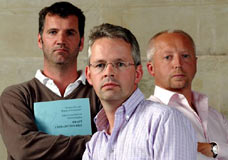
Art Briles Moves from Houston to Baylor

Art Briles resigned last week as head coach of the University of Houston football program and accepted the same position at Baylor University and the change generated the usual knashing of teeth some sectors of the UH community that typically follows such moves.

However, Briles’ move surprised no one, except for perhaps a few folks in West Texas who figured that he would hold out at Houston until Mike Leach at Texas Tech moved on and Briles could lay claim to his dream job.

Although Briles was reasonably successful at Houston, he never really seemed at home as the Cougars’ coach.

Most folks don’t realize that Houston’s program is still relatively young by college football standards and Briles never was comfortable with the multi-tasked job of leading the Houston program into a Bowl Championship Series conference.

The Houston program burst on to the national stage during the 25 year tenure of Bill Yeoman, the outstanding and innovative coach of the Cougars from 1960-85. When UH hires a new head coach to replace Briles, that will be the sixth head coach in the 22 years since Coach Yeoman retired. And during that span, there have been even more UH athletic directors than football coaches.

In many ways, the UH football program reflects the struggles of the University overall.

As noted repeatedly on this blog, the University of Houston is a relatively young state research university (only since the 1963) that the State of Texas has consistently shortchanged in financial support in comparison to Texas’ two flagship research institutions, the University of Texas at Austin and Texas A&M University.

Inasmuch as the UH football program is also relatively young in comparison to the UT and A&M programs, it pales in terms of fan and financial support in comparison to its older and better-endowed competitors.

Nevertheless, Houston’s football and other athletic programs competed quite well with its better-endowed neighbors during the 20 year period in which UH participated in the old Southwest Conference. As with the University of Houston generally, the UH athletic program has produced more “bang for the buck” than any other athletic program in Texas over the past 50 years.

Despite that legacy, when Briles took over in 2003, Houston’s football program had been lagging badly for a decade coinciding with the demise of the Southwest Conference.

Former Coach Yeoman campaigned hard at the time to have UH hire his former player Briles (who was a Texas Tech assistant coach at the time), even though it was clear even then that Briles had his eye on the Texas Tech head coaching job. Briles has been angling for the Tech head job for years because Tech Coach Leach apparently has been trying to get out of Lubbock almost continuously since he got there.

Unfortunately for Briles and other prospective coaches for the Tech job, Leach apparently doesn’t seem to perform nearly as well in those pre-hiring interviews as he does while directing his high-powered offense on Saturday afternoons.

Thus, when the Baylor job came open, Briles elected to take it and stake his claim to a program in a Bowl Championship Series conference.

And that’s the real difference in the two jobs. Houston has the potential to be one of the top non-BCS conference programs, but Baylor is already in a BCS conference. Thus, Baylor has the advantage of having access to a share of the considerable sums of money that the BCS pays to the BCS-member conferences.

As a result, even a downtrodden program such as Baylor in a BCS conference is likely to have more resources than a potentially better-situated but non-BCS conference program such as UH, at least for the time being.

My sense is that Briles is a reasonably good hire for Baylor. He is West Texas through and through, and that should fit in well in Waco. He did a good job at UH, although his teams’ offensive flair was offset by often-poor defensive play.

Briles took over a UH program that had gone 8-26 in the previous three seasons, including an ugly 0-11 slate in former UH Coach Dana Dimel’s second season in 2002. Briles immediately brought in talented freshman QB Kevin Kolb, around whom he built his innovative offense, which includes variations on the spread, the Wing-T and the Single Wing offenses.

Briles and Kolb led the Cougars to a 7-5 record in that first season, including a close bowl loss to Hawaii. In 2004, the Cougars took a step backward during an uninspired 3-8 season, but bounced back the following season when they went 6-6 with a blowout bowl loss to Kansas in the Fort Worth Bowl.

In 2006, everything came together for Briles, Kolb and the Coogs as they went 10-4, won UH’s second Conference USA championship and lost the Liberty Bowl in a close game to South Carolina.

This past season, Briles led the Coogs to an 8-4 record and Texas Bowl berth in his first “after-Kolb” season, although Houston’s progress appeared stunted late in the season around the time the Baylor job came open.

I don’t know if Briles’ interest in the job had anything to do with that downturn, but Briles and a number of key members of his staff have bailed out on coaching the Cougars in the Texas Bowl. I’m reasonably sure that has not left a pleasant taste in the mouth of UH Athletic Director, Dave Maggard.

Although Briles’ did a good job of turning around the UH program, it would be a stretch to say that his UH record was outstanding.

Based on final Massey Composite ratings, Briles had one top 70 team at UH, the 2006 C-USA championship team. UH under Briles was 6-24 against teams that finished in the Top 75, including 1-8 against non-conference teams in the Top 75.

Moreover, Briles tenure at UH coincided with a downturn in the quality of C-USA teams as teams such as Rice, Marshall, SMU, and UTEP entered the league and powers such as Louisville, Cincy and USF left.

In C-USA games, Briles’ teams were 5-14 against C-USA teams with a winning a record and won only one road game against a C-USA team that had a winning record.

Briles’ teams were 28-4 against teams that finished out of the Top 75 or were Division 1-AA, so his teams didn’t lose much to bad teams — about once a year. UH’s best win under Briles was over Oklahoma State in 2006, but really Briles’ record at UH is nothing out of the ordinary.

Whether Briles’ decision made a good decision in taking the Baylor job is a tougher call.

While Briles could have had as long a contract as he wanted at UH, Baylor has become a coaching graveyard.

Recently-fired coach Guy Morriss is a well-respected coach within the profession and he couldn’t get over the hump in the five seasons that he coached there.

Briles’ Baylor contract calls for $1.8 million annually over seven years, but a buyout of that contract is almost certainly far less than that.

So, if Briles stinks up the joint in Waco over his first three seasons, then he could very well be looking at the same fate as Morriss while making considerably less than if he had simply stayed at UH.

Expectations at Baylor at this point are not the same as UH, so Briles first goal will simply be to get the Bears to a .500 season in the Big 12 South. Taking a peak at the 2008 Baylor schedule, that does not appear to be likely in his first season:

Aug. 30 Wake Forest (probable loss)
Sept. 6 Northwestern State (toss up)
Sept. 13 Washington State (toss up)
Sept. 20 at Connecticut (probable loss)
Oct. 4 Oklahoma (loss)
Oct. 11 Iowa State (toss up)
Oct. 18 at Oklahoma State (probable loss)
Oct. 25 at Nebraska (probable loss)
Nov. 1 Missouri (loss)
Nov. 8 at Texas (loss)
Nov. 15 Texas A&M (probable loss)
Nov. 22 at Texas Tech (loss)
Toss ups: 3
Probable losses: 5
Sure losses: 4

3-9 overall and 1-7 in the Big 12 looks likely, so Briles’ honeymoon in Waco will probably be short. And the Big 12 South is not a friendly place in which to experience short honeymoons.

Who should UH hire to replace Briles?

Within the coaching profession, the UH head coaching position is considered an attractive one, albeit not one without problems. My sense is that the UH should hire an experienced coach who has recruited in the Cougars’ usual pipelines for players and who has experience in raising funds.

The next big step for the Houston program is either the upgrade of Robertson Stadium into a decent college football stadium or the construction of a new stadium. Either of such endeavors is going to cost between $100-$150 million, so hiring an experienced coach who is interested in working in Houston for the long term while being involved in a facilities fund-raising campaign makes a lot of sense.

Kind of makes you wish that there were still college football coaches like Bill Yeoman out there, doesn’t it?

The Dickie Scruggs affair

Scruggs%20Katrina%20G.gifMississippi plaintiff’s lawyer Richard “Dickie” Scruggs has been the subject of a couple of previous posts (here, here and here) regarding the detrimental impact that his litigation approach is having on his home state’s insurance markets.
Detrimental impact on insurance markets is one thing. But an indictment alleging bribery of a judge is another level of trouble altogether. Walter Olson’s Overlawyered is the go-to site for information on the Dickie Scruggs affair, with posts here, here and here linking to news reports and blog posts in the first week after the indictment. Don’t miss Walter’s coverage. It’s first rate.

Try to do this at the age of 71

bob_charles.jpgBob Charles of New Zealand was a very good PGA Tour golfer back in the 1960’s and 70’s when he won six PGA Tour events, including both the Houston Open and the British Open in 1963. Over his career, Charles has won 70 events worldwide.
However, none of those many achievements is as remarkable as what Charles pulled off earlier this weekend. The 71 year-old shot a 68 in the second round of the New Zealand Open — a tournament that he first played in 53 years ago — to become the oldest player ever to make the cut in a European Tour event. The previous European Tour record holder was Christy O’Connor, who made the Irish Open cut in 1989 at the age of 64. The late Sam Snead holds the PGA Tour record, making a cut at the 1979 Westchester Classic at the age of 67.
After his remarkable achievement, Charles talked about how his round was almost derailed before it started by a “senior moment”:

Sir Bob later admitted to having had a “senior moment” at the start of the day which nearly scuppered his record-breaking round before it had begun.
Turning up at the wrong tee (the 1st, understandably enough) for his 8am start, Sir Bob was forced to commandeer a buggy to transport him to his true starting tee (the 10th) which he reached with 30 seconds to spare.
“Oh well, I’m entitled to be forgetful at my age,” he laughed later.

More heat for Judge Kent

sam%20kent%20120107.jpgThis Brenda Sapino Jeffreys/John Council/Texas Lawyer ($) article reports that an unnamed source close to the Fifth Circuit Judicial Council’s investigation of Galveston-based U.S. District Judge Samuel Kent (previous posts here) has disclosed that the Department of Justice has issued a subpoena to the council demanding turnover of transcripts and documents related to the council’s investigation:

The person close to Kent’s disciplinary matter says last week the 5th Circuit Judicial Council was considering whether to honor a subpoena from the DOJ asking for transcripts and documents related to Kent’s disciplinary action. The council’s decision on whether to honor the DOJ subpoena may indicate how it will vote on McBroom’s request to forward the Kent matter to the Judicial Conference. [. . .]
The person close to Kent’s disciplinary matter says the following: The 19-member 5th Circuit Judicial Council has between 300 and 400 documents and depositions related to Kent’s disciplinary matter. Some judges on the council are taking the position that the proceedings are confidential and the documents should not be released to the DOJ. But other judges believe the documents should be released to prosecutors, because the information may become part of a federal grand jury proceeding รณ a process that is secret. However, the person believes that some information will be released to the DOJ.
The Judicial Council’s vote to issue the September order admonishing Kent was not unanimous; some of the judges believed the punishment was not harsh enough and that the order did not adequately describe Kent’s alleged conduct, says the person close to the Kent matter.
While [former courtroom deputy Cathy] McBroom’s initial complaint filed with the Judicial Council contained “vague” allegations of sexual harassment, some judges on the council became alarmed after reading about more serious allegations relayed by McBroom’s family and friends in the Houston Chronicle article after the Judicial Council released its September disciplinary order, says the person close to Kent’s disciplinary matter. “The more serious allegations that have come out in the press, [Judicial Council] members have said, “I don’t remember that,’ ” says the person close to Kent’s disciplinary matter.

This is getting more interesting each week. Now it is looking as if a federal grand jury may very well be investigating Judge Kent when his suspension expires and he takes his new place on the bench among Houston federal judges come the first week in January. That will make for some interesting federal courthouse elevator conversations.

The Real NatWest Three Deal

Natwest Three.jpgI gave up hope long ago that the mainstream media would ever provide particularly accurate reports regarding the Enron-related criminal prosecutions.

However, the mainstream media news reports on the plea bargain hearing earlier this week in the Enron-related NatWest Three case (see NY Times, WSJ, Chronicle) are particularly devoid of any meaningful perspective of what really happened in the case (a copy of one of the plea agreements, which is the same as the other two, is here).

The real story of the plea bargain can easily be distilled from the pleadings that are on file in the case. It’s a substantially more nuanced story than what you are hearing from the mainstream media.

The prosecution in the NatWest Three case alleged that the three bankers defrauded NatWest, their former employer, by conspiring with former Enron CFO Andrew Fastow and his sidekick, Michael Kopper, to underpay NatWest for its interest in an entity named Swap Sub, which was an affiliate of one of Enron’s special purpose entities (LJM1) that Fastow and Kopper ran.

Swap Sub was involved in one of LJM1’s primary transactions, which was to hedge Enron’s valuable but highly volatile interest in a technology company called Rhythms NetConnections, Inc (“Rhythms”). The NatWest Three were responsible for overseeing the banking relationship between Enron and NatWest, including NatWest’s interest in Swap Sub. Another investor in Swap Sub was Credit Suisse First Boston (“CSFB”), which owned the same percentage interest in Swap Sub as NatWest.

In early 2000, Fastow and Kopper offered to buy NatWest’s interest in Swap Sub for $1 million. NatWest evaluated its interest in Swap Sub in response to the offer and concluded that its interest was worth zero. At the time, NatWest was in the process of being taken over by Royal Bank of Scotland and, thus, was amenable to disposing of the Swap Sub interest. So, NatWest agreed to accept Fastow’s $1 million offer, Fastow and Kopper created an entity called Southampton specifically to buy NatWest’s interest in Swap Sub, and the deal closed on March 17, 2000.

After NatWest had agreed to accept Fastow’s offer to buy the bank’s Swap Sub interest, Fastow offered to sell a portion of that interest to the three bankers personally for $250,000 upon Southampton’s completion of the purchase of the interest from NatWest. The NatWest Three still worked for NatWest at the time of Fastow’s offer, but they were all contemplating leaving the bank because of the impending takeover by the Royal Bank of Scotland. Inasmuch as acceptance of Fastow’s offer while they were still working for NatWest might run afoul of the bank’s conflict of interest rules, the NatWest Three took an option to acquire the Swap Sub interest rather than buy it outright.

Subsequently, one of the bankers (David Bermingham) resigned from NatWest, exercised the option in late April, 2000 and paid Southampton $250,000 for the interest. At the time that Southampton bought NatWest’s interest in Swap Sub, the NatWest Three did not disclose to NatWest that they had bought the option to acquire a portion of that interest through Southampton. That non-disclosure ultimately became an important fact in the plea bargain of the NatWest Three.

Shortly after Fastow offered to buy NatWest’s interest in Swap Sub for $1 million, Fastow and Kopper — unbeknownst to NatWest or the NatWest Three — offered CSFB $10 million for its interest in Swap Sub. CSFB, like Natwest, also evaluated its interest in Swap Sub at the time of the offer and concluded — as did NatWest — that the interest had zero value.

Inasmuch as Fastow and Kopper didn’t have $10 million to buy CSFB’s Swap Sub interest, they reached an agreement with Enron on March 22, 2000 to unwind the Enron-LJM1 hedge transaction on the Rhythms stock, the result of which was that Enron would buy a large chunk of Enron stock from Swap Sub for $30 million. Inasmuch as the unwind transaction would not close until the end of April, Fastow borrowed $10 million from Enron on March 22nd to pay CSFB for its Swap Sub interest. Neither NatWest nor the NatWest Three knew anything about these developments.

Subsequently, in late April, 2000, Fastow arranged with former Enron chief accountant Richard Causey to close the unwind transaction between LJM1 and Enron on the Rhythms stock. The transaction has since been subject of a substantial amount of scrutiny in the various investigations and litigation relating to Enron and it appears reasonably probable that Enron should not have paid a dime (much less $30 million) to LJM1 for agreeing to unwind the hedge. The best explanation that I have heard is that Fastow and Kopper pulled a fast one on Causey, who received nothing from the unwind transaction.

After receiving the $30 million in connection with the unwind transaction, Fastow used $10 million to repay the loan from Enron that he had used to pay CSFB for its interest in Swap Sub and paid the NatWest Three $7.3 million for their interest in Swap Sub. Fastow spread the balance of the money around to some of his underlings, including Enron treasurer Ben Glisan, who received about $1 million. Glisan’s failure to disclose his receipt of that $1 million eventually led to his termination in early November, 2001 as Enron’s treasurer. It also formed the basis of the criminal case against him.

Interestingly, the first time that the NatWest Three had any indication that the $7.3 million that they had received for their interest in Swap Sub may have resulted from a Fastow fraud on Enron was when they heard that Glisan had been fired in early November, 2001 over his failure to disclose his receipt of $1 million from Southampton.

As a result, the NatWest Three immediately and voluntarily reported everything to the UK Financial Services Authority (the UK equivalent of the Securities and Exchange Commission) — their involvement in the sale of NatWest’s interest in Swap Sub to Southampton, their purchase of the option from Fastow to acquire a portion of that Swap Sub interest, their non-disclosure to NatWest of the option at the time, their exercise of the option and purchase of the Swap Sub interest from Southampton, and their eventual receipt of $7.3 million for that interest.

The UK authorities passed along that information to the SEC and, the next thing you know, the NatWest Three had become the subjects of a criminal complaint filed on June 27, 2002 in Houston (that really encourages voluntary disclosure of information, now doesn’t it?). No US investigator ever contacted the NatWest Three to get their side of the story before filing the criminal complaint against them. UK criminal authorities never pursued any charges against the them.

The Enron Task Force originally alleged that the NatWest Three knew at the time they took the option to acquire a portion of NatWest’s interest in the Swap Sub that Fastow and Kopper were going to unwind the hedge on the Rhythms stock. Thus, the Task Force asserted that the NatWest Three knew that the unwind transaction would make NatWest’s interest in Swap Sub worth far more than either the zero value that NatWest placed on it at the time or the $1 million that Southampton eventually paid NatWest for it.

In that connection, the Task Force contended that the $10 million that Fastow arranged to pay CSFB for its interest in Swap Sub and the $7.3 million that the NatWest Three eventually received for their interest in Swap Sub was conclusive proof that the bankers had defrauded NatWest of the true value of its interest in Swap Sub.

Alas, the government’s theory of the case appears largely to have fallen apart over the past year and a half. NatWest and CSFB’s zero valuations of their respective interests in Swap Sub at the time Fastow offered to buy them proved to be valid and accurate. Given those valuations, the $250,000 that the NatWest Three agreed to pay at the same time to buy a portion of NatWest’s Swap Sub interest was clearly a speculative bet that placed the three bankers at considerable risk of loss of their entire investment.

Similarly, it also turns out that Fastow had a good reason to pay CSFB more for its interest in Sub Swab (i.e., $10 million rather than the $1 million paid to NatWest). At the time, CSFB was providing a myriad of other financial services on Enron-related deals for Fastow. Thus, buying the Swap Sub interest for $10 million was a convenient vehicle for Fastow to curry favor with CSFB. It did not mean that CSFB’s Swap Sub interest was worth anything close to $10 million.

Finally, considerable evidence emerged during the case that confirmed that the NatWest Three knew nothing about Fastow and Kopper’s plan to unwind the Rhythms hedge with Enron when they bought a portion of NatWest’s former interest in Swap Sub. Importantly, that lack of knowledge is consistent with the story that the NatWest Three told to UK Financial Services Authority in November, 2001 immediately after learning of Fastow’s possible fraud on Enron as a result of Glisan’s resignation.

So, after years of litigation, the NatWest Three pled guilty to a single count of wire fraud. The basis of the guilty plea is that the three bankers failed to disclose to NatWest the option that they had taken from Fastow to purchase a portion of NatWest’s interest in Swap Sub at the time that NatWest sold that interest to Southampton.

Importantly, the basis of the plea deal is not that the NatWest Three knew and didn’t tell NatWest that the value of the bank’s Swap Sub interest was going to skyrocket soon after Southampton bought it as a result of Fastow completing the unwind transaction with Enron.

Subject to court approval, the plea bargain provides that the defendants will serve 37 months in prison, that they will pay restitution of $7.3 million to the Royal Bank of Scotland (NatWest’s successor) and that the prosecution will support the defendants’ request that they be allowed to serve their prison sentence in the UK.

Under UK rules pertaining to prison sentences of white collar criminals, it is expected that the three former bankers would be released from their UK prisons after serving approximately half of their sentence.

As the Financial Times’ Martin Wolf observes here, this plea deal appears to be the product of the draconian trial penalty that the three bankers faced if they availed themselves of their right to a trial and lost. Under those circumstances, the defendants were facing possible sentences of 35 years each, although the sentences would likely have been considerably less than that. Nevertheless, the sentences after a trial probably would have been greater than 37 months and, had the NatWest Three defended themselves at trial and lost, the prosecution almost certainly would never have agreed to support a request to serve their prison sentences in the UK.

Thus, on one hand, the defendants could risk a trial in a virulent anti-Enron environmentย that could result in a long prison sentence that would have to be served in the US prison system thousands of miles away from their families. Or, on the other hand, they could enter into a plea deal that gives them the hope of being able to serve a considerable amount of a much shorter and definite sentence in the UK prison system near their families.

Given those choices, my sense is that the NatWest Three’s choice was a rational and reasonable decision.

It’s simply not a choice that they should have been forced to make.

Say what, John Edwards?

John_Edwards_NYC%20113007.jpgFollowing on the previous post, have you heard about demagogue John Edwards‘ latest proposal?
A two-year ban on advertising for prescription drugs.
Paul Jacob suggests a common sense ban of another sort.

The key issue in the 2008 Presidential race

As usual, the Onion identifies the issue with precision:

Poll: Bullshit Is Most Important Issue For 2008 Voters

Shell’s cell phone policy

CellPhones%20113007.JPGThe Chronicle’s Mary Flood reports Shell Oil Co. general counsel has directed attorneys at law firms who do work for his company not to drive and talk on their cell phones while doing Shell business.
I wonder if this means that Shell will also direct its outside counsel not to talk to people riding with them in their car while doing Shell business?

The return of Coach Slocum on a Mobile

coach%20slocum%20112907.JPGNew Texas A&M football coach Mike Sherman was an assistant coach in the A&M program under R.C. Slocum, the folksy former head coach who was somewhat unceremoniously dumped when the A&M reached to hire Dennis Franchione five years ago. As one Aggie friend put it to me earlier in the week: “So, we endured Coach Fran for five years just to turnaround and hire one of R.C.’s former assistants? Why didn’t we just do that in the first place?”
At any rate, Slocum had been exiled from the Aggie football program during the Franchione regime. Incredibly, Sherman’s press conference earlier this week in which he accepted the A&M job was the first time that Slocum — who still works for A&M in its alumni relations department — had been in the new A&M Bright Football Complex. He apparently had never been invited before!
Nevertheless, Slocum is experiencing a rebirth in the A&M football program with the hiring of his former assistant Sherman. And one of the fringe benefits of that new level of involvement is the reappearance of the weekly segment that used to run on John Granato and Lance Zierlein’s local morning radio show during Slocum’s tenure at A&M, “Coach Slocum on a Mobile.”
“Coach Slocum on a Mobile” is comprised of an impersonator doing an incredibly precise imitation of Coach Slocum’s folksy East Texas twang as he provides often hilarious answers to questions tossed to him by Granato and Zierlein. Yesterday morning, Granato and Zierlein’s new KGOW 1560 AM morning drivetime show carried its first segment of “Coach Slocum on a Mobile,” which included the following gems:
On A&M’s new offense under Coach Sherman:

“Well, we’re bringing back the ‘Gulf Coast Offense’ with QB Randy McCown.”

On A&M’s 38-30 win over Texas this past weekend:

“Did you see (former A&M RB) Jamaar Toombs run over (former UT DB) Michael Griffin this past Friday? It was great!”

On the insecurity of big-time college coaching positions:

“You know, I’ve always said if you can go 7-5 and have the opportunity to go to Shreveport, maybe Houston, for a bowl game, you ought to keep your job.”

The old “Coach Slocum on a Mobile” segments during Coach Slocum’s head coaching days at A&M were classics, which included such pearls of wisdom as “1/2 of the teams in America lose every week and so I don’t think there’s any shame in losing,” that the tight end position in the Gulf Coast Offense is a “supertackle,” that “Baylor is the Notre Dame of the South,” and — channeling former UT coach Darrell Royal’s observation about passing — “Three things can happen when you throw the ball, and two of ’em ain’t good.”
If you want a taste of pure Texas football culture, then tune in to a few segments of “Coach Slocum on a Mobile.” You won’t be disappointed.

The real issue behind the Ashby high-rise

Bissonet%20high%20rise%20112907.jpgDon’t miss this Christof Spieler post in which he identifies the real issue that needs to be addressed in regard to the controversial Ashby high-rise condominium project — the issue of the project’s scale in relation to the rest of the neighborhood. Thus, enacting a “hurry-up” city ordinance addressing a not-as-important issue (i.e., alleged traffic congestion) is a prescription for making poor public policy. Solid analysis. (H/T Charles Kuffner).