| The Colbert Report | Mon – Thurs 11:30pm / 10:30c | |||
| Bend It Like Beck | ||||
|
||||
Colbert: Bend it Like Beck
Reply

| The Colbert Report | Mon – Thurs 11:30pm / 10:30c | |||
| Bend It Like Beck | ||||
|
||||
 During football season, two Clear Thinkers favorite subjects are the annual Texas-OU game and former Texas head coach Darrell Royal (here, here, here, here and here).
So, this Barking Carnival post on the epic 1976 game — Royal’s last as Texas’ coach — is a must read on the eve of this year’s game. The comment referred to in the title of this post was Royal’s reply to former OU coach Barry Switzer’s response to Royal’s allegation that the OU coaching staff was spying on Texas practices.
The raw emotion of the game — arguably the most severe of any rivalry game already — rose to a boiling point in the ’76 game as a result of the animosity between the coaching staffs.
Get ready to rumble!
 You know, it’s not every day that a federal appellate court concludes that a newspaper’s coverage of a particular event was a major factor in the creation of a presumption of community prejudice.
But that’s precisely what the Fifth Circuit Court of Appeals did with regard to the Houston Chronicle’s coverage of the demise of Enron generally and the prosecution of Jeff Skilling specifically (see pp. 41-45 of the Fifth Circuit decision in Skilling’s appeal).
And now the Supreme Court has decided to review the Fifth Circuit’s refusal to grant a Skilling a new trial in another venue because of that presumption of community prejudice. That almost never happens.
So, what does Loren Steffy — the Chronicle’s main business columnist and one of the main leaders of the mob against Skilling (see here) — have to say about the Supreme Court’s decision to review his handiwork?:
More surprising was the court’s decision to review the venue issues. The district court never gave much credence to the argument that pretrial publicity and Enron’s stature in Houston tainted potential jurors, and Skilling’s attorney, Dan Petrocelli, never mentioned it his is argument before the appeals court. As I’ve said before, the media coverage issue is especially interesting, given that someone from Skilling’s legal team apparently was actively engaging in the media coverage by making anonymous posts on Chronicle blogs, including this one.
So, let’s review. Houston’s only daily newspaper reports on the demise of one the city’s largest employers in such a biased fashion that an appellate court uses it as a basis for finding a presumption of community prejudice in the criminal trial of one of the company’s leading executives. Then, the Supreme Court of the United States finds the issue so troubling that it decides to review it, which rarely happens in regard to this particular issue.
And the leader of the mob’s reaction to all this?:
(i) That “the district court never gave much credence” to the issue?Well, the Fifth Circuit has already decided that the district court was wrong about that.
(ii) That Skilling’s lawyer “never mentioned it” during oral argument?Oral argument is driven by the appellate judges’ questions to the lawyers, which in this case were directed to the honest services wire-fraud issue. A substantial part of Skilling’s appellate briefs addressed the community prejudice issue.
(iii) That the Chronicle’s biased coverage was no big deal because someone from Skilling’s team attempted to provide at least a small dose of balance to the Chronicle’s biased coverage of the Skilling trial by commenting on Chronicle blog sites?
So much for fair and balanced reporting, eh?
Meanwhile, over the past couple of years, precisely what happened to Enron has also taken down numerous trust-based Wall Street firms and substantial evidence has arisen that the Enron Task Force engaged in widespread prosecutorial misconduct in prosecuting Skilling.
The Chronicle has not even acknowledged the former, while it has soft-pedaled coverage of the serious scandal represented by the latter.
Wouldn’t it be ironic if that, in its haste to lead the mob against Skilling and Enron, the Chronicle misses what Larry Ribstein has characterized as the real crime in regard to Enron — the prosecution of Skilling?
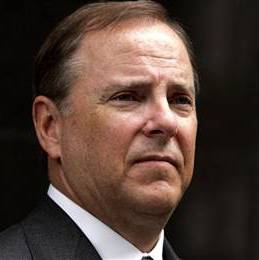 On the heels of the U.S. Supreme Court’s decision earlier this year to hear Conrad Black’s appeal of his criminal conviction on honest services wire-fraud charges under 18 U.S.C. § 1346 (“Section 1346”), the Court yesterday granted former Enron CEO Jeff Skilling’s appeal on similar grounds.
My sense is that Skilling has a good chance of having the Supreme Court overturn his conviction. Here’s why.
The Fifth Circuit Court of Appeal’s decision in Skilling’s appeal — which is looking by the minute similar to the Fifth Circuit’s decision in the Arthur Andersen case that was overturned by a unanimous Supreme Court — made a mess of two key issues:
(i) application of the honest services wire-fraud statute to Skilling’s actions, and
(ii) application of the standard for deciding the proper venue for Skilling’s trial in the face of a presumption of community prejudice against Skilling.
The Fifth Circuit panel’s decision in Skilling’s appeal failed to reconcile the reasoning in upholding Skilling’s conviction for honest services wire-fraud with earlier Fifth Circuit panel decisions on the same issue in the Nigerian Barge and Kevin Howard cases.
Inasmuch as there is now a split between Fifth Circuit decisions and several other circuit appellate courts on the scope of honest services wire-fraud, the issue is ripe for Supreme Court consideration. Indeed, Justice Antonin Scalia earlier this year urged the Supreme Court to take up the issue in his dissent from denial of certiorari in Sorich, et al v. U.S., 129 S.Ct. 1308, 1310 (2009):
“Without some coherent limiting principle to define what ‘the intangible right of honest services’ is, whence it derives, and how it is violated, this expansive phrase invites abuse by headline grabbing prosecutors in pursuit of local officials, state legislators, and corporate CEOs who engage in any manner of unappealing or ethically questionable conduct. . . . Indeed, it seems to me quite irresponsible to let the current chaos prevail.”
Since Justice Scalia’s dissent in Sorich, at least four other Justices (the number it takes to grant an appeal to the Supreme Court) have repeatedly voted over the objection of the Department of Justice to confront the meaning and constitutionality of Section 1346, first in the Black appeal, again in another case in June (Weyhrauch v. U.S.) and now in the Skilling appeal.
As I’ve noted many times over the years, the Enron Task Force’s use of honest services wire-fraud charges to criminalize Enron executives has been the legal equivalent of trying to stick a square peg in a round hole.
Honest services wire-fraud under Section 1346 was intended by Congress to penalize corporate executives and governmental officials for accepting bribes and kickbacks and for engaging in self-dealing at the expense of the employer– i.e., the private gain requirement of the crime.
The Task Force faced a big problem with prosecuting Skilling at all because he never stole a dime from Enron (that is, no private gain). In fact, the Task Force conceded at trial that, not only did Skilling not embezzle any money from Enron, the case against him was not about “greed,” that Skilling always sought to pursue Enron’s “best interests,” and that every act for which he was being prosecuted was undertaken for the purpose of protecting Enron and promoting its share price.
Despite the foregoing, the Task Force persuaded U.S. District Judge Sim Lake to allow the prosecution to proceed against Skilling on a much broader honest services theory — that is, that Skilling simply took on too much risk for the long-term good of Enron and improperly touted the company to the markets.
However, all corporate executives take business risks and promote their companies, so a rule that criminalizes any business decision that seems imprudent to prosecutors or lay jurors operating with hindsight bias — even if if the executive was pursuing the interest of the company — would force corporate executives to proceed at peril of criminal liability in making day-to-day business judgments.
Indeed, in a civil case, Skilling would have had the protection of the “business judgment rule” for his business decisions, but the Enron Task Force’s theory of honest services in Skilling’s case provided for no such defense. Instead, the Task Force lawyers urged the jury to send Skilling to prison effectively for life simply because he breached his duty to do his job and do it appropriately.
Thus, the essence of Skilling’s appeal on the honest services wire-fraud issue is that bribes, kickbacks, and self-dealing is what Congress intended to criminalize under Section 1346, not lapses in business judgment. Where a corporate executive has not sought private gain, his conduct — no matter how questionable, unwise, or wrongful — should not be subject to prosecution under Section 1346, but should be left to assessment for damages that it caused in a civil lawsuit in which responsibility can be assessed to all potentially responsible parties.
The Supreme Court will also consider Skilling’s arguments that (i) if Section 1346 is not limited as described above, it must be struck down entirely as unconstitutionally vague, and (ii) strongly negative publicity about Enron and Skilling in Houston made it impossible for him to be tried by an impartial jury.
On that latter issue, Skilling argues that the Fifth Circuit improperly allowed Judge Lake to rebut a presumption of community prejudice against Skilling through a superficial voir dire of individual jurors even though the Fifth Circuit concluded that Judge Lake had improperly failed to apply the presumption of community prejudice against Skilling.
Frankly, given the extensive evidence of both pervasive local media bias and prospective juror bias against Skilling, if the Supreme Court allows the Fifth Circuit’s decision to stand on the venue issue, then a denial of a motion to change the venue of a trial within the Fifth Circuit will effectively no longer be grounds for an appeal.
Accordingly, the Supreme Court’s review of Section 1346 in the Skilling appeal and the two related cases directly confronts how avaricious prosecutors have abused the open-ended nature of the statute. The amicus brief of the National Association of Criminal Defense Attorneys in the Skilling appeal sums it up well:
[T]he time has come to resolve the confusion that engulfs the honest services statute. [. . .] [The fundamental issue is] whether courts have the power to engraft limiting principles — none of which has any strong textual basis — on the vague language of Sec. 1346. If federal judges lack that power, then the Court must decide whether the honest services statute, shorn of judge-created limiting principles, is void for vagueness . . . The effort by courts to infuse meaning into Sec. 1346 collides . . . with the principle that there is no federal common law of crimes. . . Federal crimes are defined by statute rather than by common law.
Meanwhile, back down in the trial court part of the Skilling case, things are looking even worse for the prosecution.
First, the Fifth Circuit ordered Judge Lake to re-sentence Skilling because of an error that was made in applying a sentencing enhancement in assessing Skilling’s 24-year sentence. The District Court’s docket of Skilling’s criminal case reveals that Judge Lake originally scheduled Skilling’s re-sentencing for July 30th, but that Skilling and the prosecution filed a joint motion requesting Judge Lake to put off the re-sentencing indefinitely pending the filing of Skilling’s motion for a new trial, the prosecution’s response to that motion, and the Court’s disposition of the motion.
In that regard, the Fifth Circuit decision invited Skilling to file a motion for new trial based on issues of prosecutorial misconduct that Skilling raised in the appeal after discovering the evidence post-trial.
Specifically, the Fifth Circuit was particularly concerned about the failure of the Enron Task Force to comply with federal rules requiring the disclosure of exculpatory evidence to the defense from the Task Force’s pre-trial interviews with main Skilling accuser, former Enron CFO Andrew Fastow.
Fastow testified at trial that he told Skilling about the Global Galactic agreement, which purportedly documented a series of illegal “side deals” between Fastow and former Enron chief accountant Richard Causey that guaranteed Fastow would not lose money on certain special purpose entities that he was managing. Skilling denied any knowledge of the purported agreement.
After Skilling’s conviction, the Skilling defense team discovered Fastow interview notes that the Enron Task Force had failed to disclose to the Skilling team prior to trial. Among other things, those notes revealed that Fastow had told the Task Force lawyers that he didn’t think he had told Skilling about the Global Galactic agreement. The Fifth Circuit characterized the Task Force’s non-disclosure as “troubling” in inviting Skilling to file a motion for new trial with the District Court.
Interestingly, the docket reflects that the parties have requested that the deadline for Skilling’s motion for a new trial be pushed back several times over the past six months. The deadline is now in mid-November and, as a result of the Supreme decision to review of Skilling’s appeal, will probably be pushed back until after the Supreme Court rules.
So, what is going on here?
Could it be that Skilling’s team has discovered even more exculpatory evidence that the Task Force failed to disclose to the Skilling defense prior to the trial?
Could it be that the government’s current lawyers — who were not members of the now-disbanded Task Force — are now finding themselves dealing with a serious failure of the Task Force members to comply with rules requiring the disclosure of exculpatory evidence to the defense in Skilling’s case and have little incentive to cover for their predecessors?
In short, could the Skilling case in the trial court be turning into something similar to this?
Finally, as if to remind us how little we have learned from the Enron debacle, on the same day that the Supreme Court announced that it would consider Skilling’s appeal, the parties began picking a jury in the criminal case against two Bear Stearns executives who are accused of committing the “crime” of violating the obligation to throw in the towel on their business venture. Larry Ribstein has more.
A humane and civil society would find a better way to hold people responsible for their errors in business judgment while creating jobs for communities and wealth for investors. I am hopeful that the Supreme Court will agree.
 I went over to Baton Rouge this past Saturday with my friend John Stevenson and his family to visit my old friend Dan McCarney — who is now the Assistant Head Coach of the Florida Gators — and to attend the SEC showdown between the 4th-ranked LSU Tigers and the no. 1 ranked Gators. The Gators won 13-3 in a defensive slugfest.
Gameday Saturday in Baton Rouge is a special cultural event. The entire state of Louisiana — which produces more NFL players per capita than any state in the U.S. — takes special pride in its flagship university and its football team. A record Tiger Stadium crowd of over 93,000 attended the game, but tens of thousands more milled around outside the stadium in hundreds of tailgating parties (which feature splendid Cajun and New Orleans-inspired cuisine) spread throughout the campus.
The atmosphere for a big Saturday night football game is so intimidating for the opposition that the stadium was nicknamed "Death Valley" years ago. The Florida win on Saturday night snapped a 32-game winning streak for LSU in Saturday night games at Death Valley.
Here is slideshow that will give you a glimpse of Gameday Saturday in Baton Rouge. It is one the special experiences in college football. Enjoy!
 (AP Photo/Ross D. Franklin; previous weekly reviews for this season are here)
The Texans 3rd loss in the fifth game of their eighth season (2-3) was actually four games in one:
The first 28 minutes, which the Texans were lucky to lose only 7-0;
The second was the final 2 minutes of the first half in which the Texans were pummeled 14-0;
The third was the first 23 minutes of the 2nd half, which the Texans dominated 21-0; and
The fourth was the final 7 minutes of the game, which the Texans lost 7-0 on a poorly-thrown pass that was returned for a TD and the failure to punch in a TD from the 1-yard line three times in the final minute of the game.
The message here is that, for whatever reason, the Texans do not play most games without breakdowns such as they suffered in the first, second and fourth games above. It’s not clear to me that they are capable of doing so on a consistent basis.
The Texans travel to Cincinnati (4-1) next Sunday to play the red-hot Bengals before returning home the week after to play the 49er’s (3-2).
Oklahoma State 36 Texas Aggies 31
Despite the NCAA’s best efforts to help the Aggies (3-2/0-1) by suspending Oklahoma State’s (4-1) best player (WR/PR Dez Bryant), the Cowboys prevailed as the Aggie defense — exposed last week in the loss to Arkansas — again could not stop a hard-chargin’ marching band, much less the potent Cowboys.
The Aggies travel to Manhattan, Kansas next week to face Kansas State (3-3/1-1) and then to Lubbock to face Texas Tech (4-2/1-1). The Kansas State game is winnable for the Aggies; the Tech game does not appear to be.
Texas Longhorns 38 Colorado 14
If the Longhorns’ (5-0/2-0) offense tries to hang another performance next week in Dallas against Oklahoma (3-2/1-0) like the one they got away with last Saturday against lowly Colorado (1-4/0-1), the 3rd-ranked Horns can kiss their dreams of an undefeated season and a national championship good-bye.
The Texas defense is very good. At this point of the season, the Texas offense is not.
Houston Cougars 31 Mississippi State 24
The 23rd-ranked Cougars (4-1/0-1) rebounded from their disappointing loss to UTEP by beating a BCS Conference opponent for the third time, which is the most of any non-BCS conference team this season. Despite throwing an interception for a TD, Cougar QB Case Keenum continues his amazing season, generating 434 yards passing (39-52) and 4 TD’s. There is simply no QB playing in college football at a higher level of efficiency than Keenum.
The Coogs play Tulane (2-3/0-2) at New Orleans next Saturday before returning home to host SMU (3-2/2-0) and Southern Miss (3-3/1-1) in successive weeks.
Yeah, it’s hard to prepare in a week for Navy’s (4-2) idiosyncratic triple-option attack. But it’s not that hard. The Owls (0-6/0-2) gave the first indication in this game that they are a team capable of losing every game season. I still think they will win a couple, but not if they play as they did against the Middies. The Owls travel to East Carolina (3-3/2-1) next Saturday.

The legendary Roy Orbison, the Boss and James Burton collaborate on one of the best.


Disgraced New York City attorney Marc Dreier’s letter to his sentencing judge was quite interesting. His recent 60 Minutes interview is just as fascinating.
Dreier — who unquestionably stole over $400 million — received a lighter prison sentence than former Enron CEO Jeff Skilling, who didn’t steal a dime.
There is a huge difference between what Marc Dreier did and what Jeff Skilling did. It reflects poorly on us that our criminal justice system cannot distinguish between the two.