This is a pretty darn impressive computer reconstruction of US Airways 1549’s emergency landing in the Hudson River earlier this year.


This is a pretty darn impressive computer reconstruction of US Airways 1549’s emergency landing in the Hudson River earlier this year.

For all you turkey carvers, check out the instructions above, this interesting article and this great NY Times video to get the most meat out of your turkey.
Carve away!
 The disturbing trend of an increasingly powerful federal government criminalizing all sorts of conduct that should not be criminalized has been a frequent topic (see also here) on this blog.
Adam Liptak of the NY Times, who has written extensively about the over-criminalization of American society, reports that a bipartisan group is finally organizing to do something about it:
“It’s a remarkable phenomenon,” said Norman L. Reimer, executive director of the National Association of Criminal Defense Lawyers. “The left and the right have bent to the point where they are now in agreement on many issues. In the area of criminal justice, the whole idea of less government, less intrusion, less regulation has taken hold.”
Edwin Meese III, who was known as a fervent supporter of law and order as attorney general in the Reagan administration, now spends much of his time criticizing what he calls the astounding number and vagueness of federal criminal laws.[. . .]
There are, the [Heritage Foundation] says, more than 4,400 criminal offenses in the federal code, many of them lacking a requirement that prosecutors prove traditional kinds of criminal intent.
“It’s a violation of federal law to give a false weather report,” Mr. Meese said.
“People get put in jail for importing lobsters.”
Nice quote from Meese, but Radley Balko points out that his involvement in the movement would mean more if he admitted his past involvement in the problem.
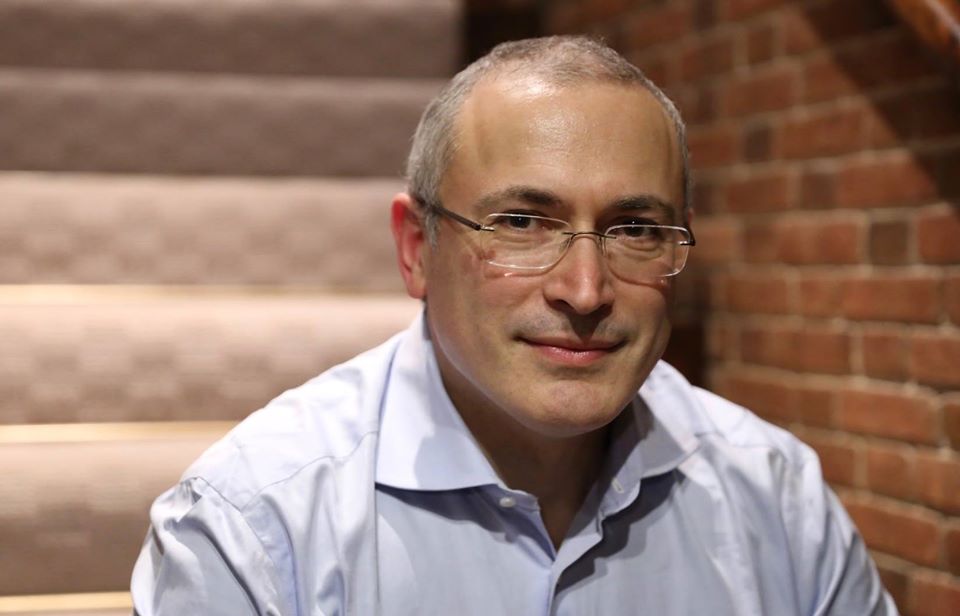 In this lengthy NY Times Magazine piece from this past weekend, Andrew Meier decries the Russian government’s unjust prosecution and treatment of former Yukos chairman, Mikhail Khodorkovsky:
Many can’t quite embrace an oligarch as a prisoner of conscience. He is a titan who fell from favor, some say, not a dissident physicist or a novelist arrested for a subversive manuscript.
Whatever his sins, though, Khodorkovsky was not jailed for breaking the law. His courting of the Bush White House and pursuit of oil partners at home and abroad infuriated the Kremlin. But his gravest error was to challenge Putin.
The reason behind his imprisonment, Khodorkovsky claims, “is well known and widely discussed. It was my constant support of opposition parties and the Kremlin’s desire to deprive them of an independent source of financing. As for the more base reason, it was the desire to seize someone else’s efficient company.”
His motives may have been mercenary, but Khodorkovsky in his cell has come to embody the fiat of the state, its arbitrary and boundless power. To date, the authorities have brought charges against 43 former Yukos employees and associates, conducted more than 100 raids . . .
Meanwhile, the Times and most of the rest of the mainstream media have largely ignored — and often promoted — similar mistreatment and persecution of business executives in our own country.
Yeah, Russian criminal justice system is corrupt. America’s is far superior.
 (AP Photo/Erich Schlegel; previous weekly reviews for this season are here)
The 3rd-ranked Longhorns (11-0/7-0) continued their seemingly unstoppable roll to the BCS Championship Game with another laugher against a Big 12 North opponent, the Fighting Manginos (i.e., Kansas (5-6/1-6)).
QB Colt McCoy had his best game of the season (32/41 for 396 yds/4 TD’s/0 INT) in his final home game as a Longhorn, and it was fun watching him bang on Big Bertha and set off the cannon after the game. The clueless ESPN announcers continue to hype McCoy for the Heisman Trophy, but that they do so undermines the integrity of the award.
Although a fine QB, McCoy has not had close to as good a season as the best college football players this season. Given the highly complementary nature of football, that’s certainly not entirely — or even primarily — McCoy’s fault. But this Texas team revolves around its ferocious defense, not its QB.
Having said that, McCoy has had a phenomenal career at UT. It’s hard to think of a harder act to follow than Vince Young and the BCS National Championship that he delivered, but McCoy has actually been a big part of elevating the UT program to a level even higher than it was in Young’s championship season. That is a remarkable achievement and one that vaults McCoy to the very top of the list of best Longhorn QB’s.
The Horns finish the regular season with their annual rivalry game at A&M (6-5/3-4) on Thanksgiving evening and then the Big 12 Championship game against Nebraska (8-3/5-2) on December 5th at Jerry’s World in Arlington.
In the meantime, Mack Brown and his staff better figure out a way to shore up the Horns’ offensive line, which had McCoy dodging bullets quite often against a mediocre Kansas defensive front. Nebraska probably doesn’t have enough offense to beat the Horns, but their front seven is pretty salty and could give McCoy fits if the Horns’ offensive line plays like it did against Kansas.
Frankly, either the Florida or Alabama defensive front will likely annihilate McCoy if the Horns’ OL doesn’t shape up before the BCS Championship Game.
The Aggies (6-5/3-4) schizophrenic season continued as they hammered Baylor (4-7/1-6) and qualified for a bowl game for the first time since the 2006 season. The Aggies have now won games by margins of 35, 37, 22, 25 and 35 while losing games by margins of 28, 48, and 55. Go figure.
The Ags finish up the regular season on Thanksgiving evening against the Longhorns, and the Ags would do well to stay within two TD’s of the Horns.
A&M still has a long ways to go before they have personnel or depth on par with the Horns, but progress is being made, particularly on the offensive side of the ball where the Aggies sport a well-balanced attack when not embroiled in one of their periodic desperation meltdowns. The extra practice time that the Aggies will receive in preparation for their bowl game should be a good springboard to the 2010 season in which A&M hopes to be competitive in every game on the schedule. As bad as A&M football has been over the past couple of seasons, this year’s bowl game will be the Aggies’ sixth in the past decade. Most programs only dream for such a success rate.
The pure excellence of Cougar (9-2/5-2) QB Case Keenum was best displayed at the end of the 2nd quarter in the 23rd-ranked Cougars romp over Memphis (2-9/1-6).
After Keenum had filleted the Tigers for 35 points and 3 TD passes in the first 22 minutes of the game, Memphis came back with a long scoring drive to close to within 35-14 with 2:38 left in the half. The Tigers have an NFL-quality RB in Curtis Steele, who the Cougars’ leaky defense was having trouble stopping. If Memphis could generate another such drive at the start of the 2nd half, then one could see how they could make a game of it by keeping the ball away from the Cougar offense, much in the same way that Central Florida did in upsetting the Coogs last week.
Keenum would have none of that. In a minute and 58 seconds, he drove the Cougars 73 yds in 8 plays to make it 42-14 at halftime. When the Cougar defense forced a three-and-out on Memphis at the start of the 2nd half, Keenum drove the Cougars to another quick TD to make it 49-14. Keenum took a seat on the bench for the remainder of the game only four minutes into the 2nd half. The Coogs scored on 7 of their first 8 possessions and rolled up 690 yards to Memphis’ 342.
Game, set, match, Keenum and Houston.
It is a testament to Keenum’s brilliance this season that he generated better statistics (29/39 for 405 yds/5 TD’s/0 INT) in a little over a half against Memphis than Texas QB Colt McCoy generated in his best effort of the season this weekend against Kansas playing the entire game.
The Cougars host cross-town rival Rice (2-9/2-5) next Saturday night and, assuming they win that game, will either host Southern Miss (6-5/5-2) or go to East Carolina (7-4/6-1) in the C-USA Championship Game the following weekend, courtesy of Marshall’s (6-5/4-3) victory over SMU (6-5/5-2) this past weekend.
The feisty Owls (2-9/2-5) upset UTEP (3-8/2-5) by forcing six turnovers. After an 0-7 start, Rice has now been competitive in all three games since their off-week during the last week in October, and have won two of those games by forcing turnovers, minimizing errors offensively and making big plays on both sides of the ball. The Owls’ strong play of late will make them sky-high for their game against Houston, which they would dearly love to knock off.
After two straight weekends off, the Texans (5-4) play the Monday Night Game tonight against the Titans (3-6) followed by a showdown next Sunday at Reliant against the undefeated Colts (10-0). Should be an interesting week of football in Houston.
My talented wife’s lovely salad with a glass of Aymara Merlot Reserve 2006 (Argentina). Delightful!


 Larry McMurtry’s Lonesome Dove is one of the best Texas novels of our time. The Pulitzer Prize-winning novel was later made into a wonderful television mini-series, which starred Robert Duvall and Tommy Lee Jones as the iconic former Texas Rangers, Gus McRae and Woodrow Call.
One of the best scenes from the mini-series — and arguably one of the best scenes ever produced for television — is the scene in which Gus dies after being badly injured in an Indian ambush. After searching for his missing friend, Call finds Gus in a doctor’s office after Gus has had one of his gangrene-infected legs amputated. Rather than have his other infected leg amputated, Gus elects to die.
Two old friends — played by brilliant actors at the top of their game — have a final conversation. Television has never been better. Enjoy.

 The fundamental problem with the American health care finance system is that reliance on tax-deductible, employer-based health insurance and government subsidized insurance (such as Medicaid, Medicare) created a culture since WWII in which consumers of health care at the point of delivery expect to pay none (or only a small fraction) of the cost of that health care.
That culture has led to highly inefficient consumption of health care services and product. Some folks consume too much because they have no financial incentive to be prudent about their purchases, while many others who really need services and products go without.
So, reforming the system should start with changing the culture, right?
US wealthy should pay for health care overhaul, poll finds
Data could boost House plan to tax top-tier earners
WASHINGTON – Americans don’t want to shoulder the cost of President Obama’s health care overhaul themselves. They think the rich should pay for it.
That’s the finding from a new Associated Press poll, and it could be a boost for House Democrats, whose plan approved this month proposed taxing upper-income people to fund their sweeping remake of the medical system. . . .
Thus, rather than true reform, Congress simply debates transferring payments from one group to another. Reminds me of the observation that the late Milton Friedman used to make about spending money:
There are four ways in which you can spend money. You can spend your own money on yourself. When you do that, why then you really watch out what you’re doing, and you try to get the most for your money.
Then you can spend your own money on somebody else. For example, I buy a birthday present for someone. Well, then I’m not so careful about the content of the present, but I’m very careful about the cost.
Then, I can spend somebody else’s money on myself. And if I spend somebody else’s money on myself, then I’m sure going to have a good lunch!
Finally, I can spend somebody else’s money on somebody else. And if I spend somebody else’s money on somebody else, I’m not concerned about how much it is, and I’m not concerned about what I get.
And that’s government. . .

Peter Wallison and Steve Randy Waldman have each written a thought-provoking and important analysis of the effect of regulation on the recent financial crisis.
First Wallison:
What caused the financial crisis?
The widely accepted narrative, prominent in the media and pressed by the Obama administration, is that the crisis was caused by deregulation–the "repeal" of the Glass-Steagall Act and the failure to regulate both derivatives and mortgage brokers–which allowed excessive financial innovation, risk taking, and greed among financial players from mortgage brokers to Wall Street bankers.
With this diagnosis, the proposed remedy is more regulation and government control of the financial system, from the over-the-counter derivative markets to mortgage brokers and the compensation of CEOs.
The alternative explanation is that the crisis was caused by the government’s own housing policies, which fostered the creation of 25 million subprime and other low-quality mortgages–almost 50 percent of all mortgages in the United States–that are now defaulting at unprecedented rates.
In this narrative, the fact that two-thirds of all these weak mortgages are now held by government agencies, or were produced by government requirements, shows that the demand for these mortgages–and the financial crisis itself–originated in Washington.
The problem for the administration’s narrative is that its principal examples do not stand up to analysis: the repeal of a portion of the Glass-Steagall Act did not eliminate the restrictions on banks’ securities activities (they were left unchanged), the mortgage brokers were responding to demand created by the government, and, there is no evidence that the failure to regulate credit default swaps (CDS) had any effect in causing or enhancing the financial crisis.
Without a persuasive explanation for the cause of the financial crisis, the administration’s regulatory proposals rest on a mythic foundation.
And Waldman:
An enduring truth about financial regulation is this: Given the discretion to do so, financial regulators will always do the wrong thing.
Remember — it’s the incentives, folks.
 Looks as if Tilman Fertitta is about to endure a bit of his own medicine.
As this post from a couple of months ago explains in detail, Landry’s Restaurants, Inc. shareholders have had a wild — and mostly bad — ride over the past several years as Fertitta (who is the company’s founder, CEO and chairman) tried to figure out a way to finance taking the company private.
Because Landry’s board failed to obtain a standstill agreement from Fertitta while he put shareholders through a series of failed buyout offers, Fertitta increased his ownership stake in Landry’s from approximately 39% to 55% as the company’s stock fell as low as $5 per share. As you might expect, Fertitta and the Landry’s board are defendants in a shareholder lawsuit in connection with that oversight.
Finally, after shareholders and the markets widely panned Fertitta’s Saltgrass Steakhouse spinoff proposal in September, the Landry’s board tentatively approved an offer from Fertitta to buy the balance of Landry’s shares for $14.75 per share. Compared to the spinoff proposal, Fertitta’s cash offer looked relatively good.
There is just one small problem with Fertitta’s proposal this time — under Delaware corporate law, Fertitta had to agree that his proposal is subject to a requirement that a majority of the Landry’s shares that Fertitta does not control have to approve the deal.
Enter William Ackman and his Pershing Square Capital Management hedge fund.
In an Schedule 13D filed with the SEC this past Friday, Pershing and its partner William McGuire (the Borders Group chairman) announced that they had purchased just under 10% of Landry’s outstanding shares and that they hold derivatives contracts that could hike the share to almost 14% of the oustanding shares.
And while they were at it, Pershing and McGuire announced that they opposed Fertitta’s $14.75 per share buyout offer.
So, Fertitta would appear to have only two choices. Either pull his proposal off the table — and risk a wholesale shareholder revolt of his actions that have depressed the company’s stock price over the past several years– or raise his offer to satisfy Pershing.
And even if he decides to meet Pershing’s asking price, where is Fertitta going to find the financing for his proposal? It’s not as if the financing markets have been particularly bullish on the company over the past couple of years.
Hold on tight, Landry’s shareholders. Your wild ride is not over yet.
The NY Times Steve Davidoff has more.