Miami Mega Jail

The closest that many citizens will get to the soft underbelly of the U.S. criminal justice system – i.e., its jails and prisons – is Louis Theroux’s absolutely spellbinding BBC documentary on the Miami, Florida County Jail. Here are parts two, three and four.

The Cease-Fire that is long overdue

No more drug warAmerica’s dubious policy of drug prohibition has been a frequent topic on this blog, so I was pleased to see this Mary Anastasia O’Grady/WSJ column (previous posts on O’Grady’s work are here) yesterday on the Global Commission on Drug Policy’s statement last week calling for a “paradigm shift in global drug policy.”

O’Grady’s column is particularly noteworthy because of her citing of this fine Angelo Codevilla’s/Claremont Institute piece that explains how one of the unintended consequences of the failed War on Drugs is the increasing militarization of America’s borders. As Codevilla notes:

A friendly border is like oxygen: when you’ve got it, you don’t think about it. Only when you lose it does its importance seize you. But by then it is difficult to remember the fundamental truth: if borders are friendly, you don’t have to secure them; and if they are unfriendly, you must pay dearly for every bit of partial security, because ever harsher measures produce ever greater hostility.
Thucydides’ account of the Peloponnesian War gives us what may be history’s most poignant description of how a hostile border proved disastrous to a great power. In the war’s 19th year, Sparta put a small garrison in Decelea, in their enemy’s backyard, which, Thucydides tells us, "was one of the principal causes of [the Athenians’] ruin." "[I]nstead of a city, [Athens] became a fortress," with "two wars at once," and in a few years was "worn out by having to keep guard on the fortifications." Having lost a friendly border, Athens turned itself inside out trying to secure an unfriendly one.

For an excellent overview of why America’s drug prohibition policy should be scuttled, check out this Milton Friedman argument. And if you are interested in how a regulatory structure for recreational drug usage could be devised, the University of Chicago’s James Leitzel’s TEDxUChicago presentation below provides a great starting point:

Who should pay for obesity surgery?

obesity-risk-factorsSo, the NY Times reports that a company that makes lap band devices used in bariatric lap band surgery has applied to the FDA to lower the obesity threshold at which surgery can be performed. If successful, the application would double the number of obese people who would qualify for bariatric lap band surgery.

Some of the obese people who would become eligible for the surgery have health complications that make it difficult for them to lose weight without the surgery. But most of the consumers covered by the new threshold could lose weight and not require the surgery by educating themselves and following healthy nutrition regimens. With third party insurers footing most of the cost of surgery at the point that obesity becomes life-threatening, why bother wasting time learning about — and adjusting a lifestyle to follow — proper nutrition?

Bariatric lap band surgery is expensive. Should consumers who make the effort to control their weight and follow healthy nutrition protocols contribute a part of their health insurance premiums to subsidize surgery for consumers who choose not to do so?

If consumers elect to take the risk of health problems from being obese, then shouldn’t they bear the cost of damages resulting from that risk? And shouldn’t insurers be free to elect not to cover consumers who engage in such risky behavior? Doesn’t shifting the cost of that risk to insurers (who pass it along to the all insureds) simply encourage the obese consumers to consume more health care and avoid confronting their unhealthy lifestyle?

As the late Milton Friedman was fond of saying, consumers will consume as much health care as they can so long as someone else is paying for it.

Time-lapse Thunderstorms

Check out this amazing time-lapse assembly from the Hector Thunderstorm Project in northern Australia.

Hector Thunderstorm Project from Murray Fredericks on Vimeo.

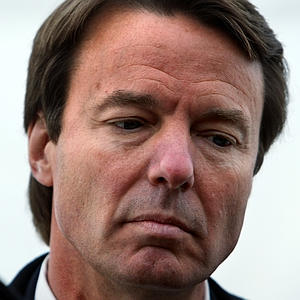
Defending John Edwards

john_edwards-.jpg

Longtime readers of this blog know that I’m no fan of John Edwards. He represented much of what is bad about American political leadership.

However, it occurs to me that any federal indictment that is premised on the allegation that “[a] centerpiece of the Edwards’ candidacy was his public image as a devoted family man” should not be a criminal matter.

The fact that Edwards is an easy target should make no difference. While it is clear that Bunny Mellon and Fred Baron financed the cover-up of Edwards’ mistress and love child, it’s far from clear – and simply not provable beyond a reasonable doubt – that this financing constituted illegal political contributions rather than simply payment of Edwards’ personal expenses that would have been made regardless of whether he was a candidate.

The bottom line on all of this is that the financing of a cover-up to save Edwards’ marriage and preserve his public image is not a crime.

If the Federal Election Commission wanted to make an issue out of this, then it should have brought a civil action against Edwards.

But this has no business being a criminal case.

Even for someone like John Edwards.

Requiem de Verdi

From 1967 with Herbert Von Karajan directing. Simply delightful.

World Financial Meltdown Explained in 3 Minutes

Appalling hypocrisy

jim_tressel_downtroddenSo, let me get this straight.

Ohio State University throws its most successful football coach since Woody Hayes under the bus because he knew about compensation being paid to Ohio State football players, whose talents the institution exploited for enormous profit.

Meanwhile, numerous commentators castigate Ohio State and its coach for being cheaters when, in reality, virtually every big-time college football program engages in similar violations of the NCAA’s dubious regulation of compensation to players who create enormous value for NCAA member institutions. Some institutions are simply better at hiding their violations than others.

I don’t know Coach Tressel, but I’d be willing to bet that he is a good man who simply responded to the perverse incentives of a corrupt system.

Big-time college football is an entertaining form of corruption (see also here). But the corruption is the NCAA’s regulatory scheme, and throwing decent men such as Coach Tressel to the wolves will not change that.

South Park’s analysis is spot on:

Life Lessons with Tom Watson

watsonTom Watson is one of the most remarkable athletes of our time. He won eight major golf tournaments (five Open Championships, two Masters and a U.S. Open) and he has tacked on another six senior major championships since turning 50. At the age of 59, Watson had the golfing world transfixed as he came agonizingly close to winning another Open Championship.

Yesterday, Watson added to his already formidable r√©sum√© by winning the Senior PGA Championship at the age of 61, the second-oldest winner of that event in history. “If this is the last tournament I ever win, it’s not a bad one,” Watson observed after his latest victory. “I’m kind of on borrowed time out here at 61.” Watson has now won six senior majors — only Jack Nicklaus (eight) and Hale Irwin (seven) have won more.

But for all of Watson’s success, arguably the most amazing thing about the man is that none of it has come easily. He struggled in his early years on the PGA Tour to win his first major and dealt for years with the unfair characterization that he was a choker under pressure. Then, after an extraordinary decade in which he was the best golfer on the planet, Watson inexplicably lost his velvet putting stroke, which was the part of his game that separated him from his main competitors. Then, almost another decade later, after honing the other facets of his game to compensate for his lessened putting skills, Watson again won twice on the PGA Tour in his late 40’s and became a dominant force on the Champions Tour after turning 50.

All of which brings us to this wonderful post (also see here) by Joe Posnanski, who – as a fellow Kansas Citian – has covered Watson’s exploits for many years. The first post above relates a fun story about Posnanski’s lack of golf ability, but then explains why Watson is one of the most compelling athletes of our time:

[M]y favorite bit from Wednesday’s conversation with Tom was when he talked about how every shot counts in golf. I was asking him about [Rory] McIlroy’s self-destruction at Augusta, and he said that he wished Rory had fought harder. “I never once saw Jack Nicklaus give away a stroke,” he said. The key to golf is that if you are on pace to shoot 80, you have to try to shoot 79. If you are on pace to shoot 90, you have to try to shoot 89.

And, Tom makes clear, this is not just about making the best of the situation. No, this is about defining who you are as a person. “When you’re hitting the ball well,” he says, “it’s EASY. … And golf is not supposed to be easy.” The most successful people, Tom believes, are the ones who can stay fully committed to the moment, who will be dedicated to do their best even after it’s clear that things are not going to work out as well as they had hoped or planned.

Tom told the story of Byron Nelson, after shooting a 72, griping about what a terrible round he’d played at the Masters. He’d only hit six greens in regulation. He was hacking the ball all over the place. He was grumbling afterward that it was as bad as he could remember playing. And his friend Eddie Lowery, who was Francis Ouimet’s 10-year-old caddy when Ouimet won the 1913 U.S. Open, said: “On the contrary, this was the FINEST round you have ever played. Because you played that badly and you STILL shot a 72.”

That, to Tom Watson, is the gold standard. Most days in life, you are not going to shoot 63. You just aren’t. The wind will be blowing. The ball will bounce funny. The putt will hit a spike mark. Life is simply not set up for five-for-five days at the plate, for 19-of-21 shooting days, for hat tricks and four-sack days and rounds with 10 birdies. If you’re lucky, you will have a few of those days in your life, days when everything seems to click, Ferris Bueller’s day off. And those days are to be enjoyed, cherished, but that’s not real life.

Real life is shooting 72 when you hit only six greens. Every shot counts.