December 21, 2009

2009 Weekly local football review

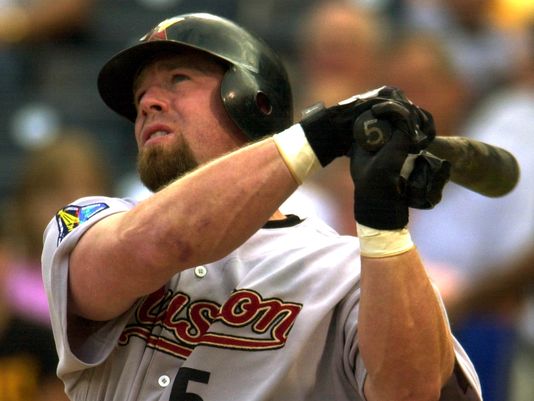
Kubes (AP Photo/Jeff Roberson photo; previous weekly reviews for this season are here).

Texans 16 Rams 13

It is a reflection of the Texans (7-7) endearing mediocrity that they can out-gain the Rams (1-13) by almost 200 yards and struggle to win by a field goal.

Now the Rams have been playing reasonably well over the past month and a half (only one blow-out loss during that span), but come on. They are still the Rams.

Although most sports talk hosts and fans think the Texans are underachieving, my sense is that their record is an accurate measure of their ability at this point in time.

For a variety of reasons, the Texans do not run the ball well. They do spray the ball reasonably well in the passing game, but they lost their second-most explosive receiver (Owen Daniels) to injury several games ago.

The defense has improved steadily during the season, but the lack of a consistent pass rush still puts too much pressure on the secondary, which is the weak link in the unit. The fact that 2007 first-round draft choice DT Amobi Okoye is doing a good imitation of former first-round DT bust Travis Johnson isn't helping matters on the defensive line.

Finally, kicker Kris Brown has been so inconsistent that he looks as if he has all the confidence of a professional golfer undergoing a swing change in an effort to save his career.

Thus, with two games to go (the Dolphins at Miami and home against the Patriots), the Texans still have a chance to register the best record of their tortured eight-season existence. As a team, the Texans don't seem to play with much confidence, which is probably attributable in good part to the overall youth of the team.

But the reality is that the Texans continue to improve. Just not as fast as their followers prefer.

The issue that Texans owner Bob McNair has to resolve is whether it is more likely that such improvement will continue under Gary Kubiak? Or is it more likely to continue under another head coach?

The answer is not clear.

Posted by Tom at 12:01 AM | Comments (0)

December 20, 2009

That wild Landry's ride continues

Fertitta2 Owning shares of stock in Houston-based Landry's Restaurants, Inc. has never been for the faint-hearted.

First, Landry's board of directors failed to obtain a standstill agreement from Landry's chairman and CEO, Tilman Fertitta, as his failed take-private offers over the past couple of years that would have prevented Fertitta from acquiring majority stock ownership in the company while its stock tanked.

Then, the Pershing Square Capital hedge fund entered the picture, bought up a bunch of Landry's shares and announced that it opposed Fertitta's most recent buyout offer.

Now, as Steve Davidoff explains, it appears that Fertitta has not been complying with his board's instructions in making public disclosures about his buyout offers.

At least partly as a result, counsel for a special committee of Landry's board that was created to negotiate Fertitta's buyout offers resigned, apparently in protest.

As a result of this disclosure and other developments, don't be surprised if the Securities and Exchange Commission comes knocking on Landry's door to look into these developments.

And Tilman Fertitta's firm grip on Landry's from its inception may be slowly slipping away.

Posted by Tom at 12:01 AM | Comments (0)

December 19, 2009

Unreliable eyewitness

This video demonstrates one of the reasons that eyewitness accounts are often unreliable.

Posted by Tom at 12:01 AM | Comments (0)

December 18, 2009

They got how much? For doing what?

elpaso Just when it looked as if progress was being made, the harsh reality of the severe trial penalty and the absurd severity of punishment parameters in white collar criminal cases reared its ugly head.

This time its the harsh sentences that U.S. District Judge Melinda Harmon handed down on Thursday to three former El Paso Natural Gas Company natural gas traders -- 14 years to one defendant and 11 years and 3 months to the other two. They were convicted of multiple counts fraud and false reporting in connection with what has become known in Houston as "the trader cases."

The severity of the sentences is mind-boggling when compared with the nature of the alleged "crime."

The government alleged that the three traders provided false information to natural gas industry publications such as the Inside FERC Gas Market Report, which use data from traders to calculate an index price of natural gas.

Inasmuch as movement in index prices can theoretically affect the level of profits that traders can generate, the government's theory was that the defendants provided false information so that they and El Paso could reap higher profits on their trades.

However, the government never proved that the magazines actually used the false information that the defendants provided to them or that the information actually affected the natural gas markets at all. Indeed, a myriad of market factors affect natural gas prices, as with the price of any commodity.

That was no problem for prosecutors, though. The government contended that the market effect of providing the false information was irrelevant and that the prosecution needed only to prove that false information was reported to the magazines in order to make a gain a conviction of the defendants. And they got away with it.

So, key point to all businesspeople -- don't ever provide any information to a publication about your business that could be construed to be false. It really doesn't make any difference whether the false information affects your company. The government contends that the mere transmittal of the false information is the crime.

Meanwhile, three relatively young men (the oldest is 49) with families and promising careers are now facing over a decade of imprisonment for the "crime" of reporting false price information to a magazine.

Just what is the purpose of this?

Posted by Tom at 12:01 AM | Comments (1)

December 17, 2009

"Mr. Ruehle, you are a free man"

Cormac Carney

Larry Ribstein and the WSJ's Holman Jenkins -- both of whom exposed the vacuity of the federal government's backdating witch hunt from the very beginning -- provided their usual insightful perspective on U.S. District Judge Cormac Carney's decision earlier this week to dismiss the government's remaining criminal charges against former Broadcom CFO William J. Ruehle and Broadcom's co-founder, Henry Nicholas, III. A copy of the transcript of Judge Carney's inspiring ruling is below.

Given the excellence of Professor Ribstein and Mr. Jenkins' analysis of the corrupt nature of the backdating prosecutions, there is really nothing to add in that regard. The bottom line is that the unchecked prosecutorial power of the state does enormous damage to lives, families, and careers, as well as job and wealth creation.

But as I read the transcript below and the motion to dismiss that prompted it, imagine my surprise to discover that one of the prosecutors involved in the Broadcom misconduct was a member of the Enron Task Force that engaged in similar conduct in connection with the prosecution of former Enron CEO Jeff Skilling and chairman Ken Lay. Frankly, as bad as the prosecutorial misconduct was in the criminal case against Mr. Ruehle and the other Broadcom executives, it pales in comparison to what prosecutors made Skilling and Lay endure.

Judge Carney provided in the Broadcom prosecutions a perspective of fairness and wisdom that was sadly lacking in the Enron cases. He reminds us that the line between freedom and oppression in civil society is often razor-thin.

His final declaration in the transcript below is one that we should all embrace:

"I don't think anything needs to be said further other than, Mr. Ruehle, you are a free man."

Download Transcript of Judge Carney's Ruling

.

Posted by Tom at 12:01 AM | Comments (0)

December 16, 2009

Criminalizing the neighborhood pharmacist

drug store This blog has long addressed the enormous cost to American society of overcriminalization generally and particularly with regard to business and risk-taking.

But lest we think that the problem is limited to such things as business and victimless crimes, think again says Bob Wachter:

Along comes another case involving jail time for a medical mistake, this one featuring an Ohio pharmacist named Eric Cropp.

Eric was the lead pharmacist at Cleveland’s Rainbow Babies and Children’s Hospital on February 26, 2006. The pharmacy, understaffed that day, received a rush order for chemotherapy for a 2-year-old girl, Emily Jerry, who was undergoing treatment for a spinal malignancy.

An unlicensed and distracted (by press accounts, she was planning her wedding on the day of the event) pharmacy technician mistakenly mixed the chemo with 23% saline rather than the intended 0.9%. Eric, working in cramped quarters and rushed for time, gave final approval to the mixture, partly because, after seeing a spent bag of 0.9% saline next to the mixed solution, he assumed that it had gone into the solution.

In other words, the case was a classic illustration of James Reason’s Swiss cheese model, in which numerous safety checks failed due to a confluence of systems and human errors. Tragically, little Emily died from the hypertonic saline infusion.

On hearing of the error, a Cuyahoga County DA decided that the case merited criminal prosecution, even though Eric had no history of errors in his pharmacy career and root cause analysis of the case confirmed that its cause was simple human error compounded by systems problems. At trial, fearing even harsher penalties, Eric pleaded guilty to involuntary manslaughter, and was sentenced to 6 months in the state prison, 6 months of home confinement, 3 years of probation, 400 hours of community service, and a $5,000 fine. Moreover, the Ohio pharmacy board permanently stripped him of his license, depriving him of his livelihood – forever.  .  .  .

During last week’s webcast, Mike Cohen described visiting Eric in prison. “Like a scene out of a movie,” he recalled, with Eric in his orange jumpsuit, speaking to visitors through a glass wall, other felons – including violent offenders – milling about. As he related the visit, Mike choked up with emotion, clearly seeing this tale as both powerfully tragic and cautionary.

How has it come to the point where the criminal justice system exacerbates the tragedy of a young girl's accidental death by ruining a career and inflicting enormous damage on an innocent family? At least the young girl's family recovered substantial financial damages resulting from the pharmacist's negligence. Where does the young pharmacist's family turn for help?

A truly civil society would find a better way.

Posted by Tom at 12:01 AM | Comments (0)

December 15, 2009

How many felonies did you commit today?

handcuffs Overcriminalization of daily life, particularly as it relates to punishing taking risks necessary to create jobs and wealth, are common topics on this blog.

Longtime Boston attorney Harvey A. Silvergate is an expert on this troubling trend in American jurisprudence. His recent book -- Three Felonies a Day: How the Feds Target the Innocent (Encounter Books, 2009) -- examines how pliable politicians have expanded the criminal laws to the point where the freedom of virtually anyone who attempts to take risks to create jobs and wealth is subject to the whims of often avaricious prosecutors.

Silvergate is currently guest-posting over at The Volokh Conspiracy where, in this post, he examines how the crime of honest services wire fraud involved in the Skilling case has allowed prosecutors pretty much to choose whether to indict and prosecute business people at their discretion:

Because of the vague terminology increasingly used in the ever-expanding federal criminal code, combined with the erosion of intent as a requirement for conduct to be considered prosecutable, the average citizen can easily commit several felonies in any given day.  .  .  .

“Honest services” fraud is an instructive example of this trend, but the federal law books are cluttered with countless others. Creative interpretations of the Computer Fraud and Abuse Act, obstruction of justice statutes, and controversial Patriot Act provisions—to name a few—have turned honest citizens into federal defendants and even convicted felons. [.  .  .]

This dangerous trend is exacerbated by the “win at all costs” mentality of the Justice Department. Colleagues are turned into stool pigeons as prosecutors offer deals for testimony that often bears little resemblance to the truth. (As my colleague Alan Dershowitz colorfully but all-too-accurately puts it, “prosecutors can pressure witnesses not only to sing, but also to compose.”)

Faced with the prospect of a long prison sentence, enormous costs of defense counsel, and frequent threats to indict family members who are thus held hostage, defendants often choose, to parody an old cigarette commercial, to switch rather than fight.

At some point, shouldn't we be asking the question -- why are we doing this to ourselves?

Posted by Tom at 12:01 AM | Comments (0)

December 14, 2009

2009 Weekly local football review

Andre Johnson (Bob Levey/Getty Image; previous weekly reviews for this season are here)

Texans 34 Seahawks 7

Key tip of the day to Seahawk Defensive Coordinator Casey Bradley -- your cornerbacks need safety help in covering Texans WR Andre Johnson.

After a 64 yd TD reception on the first play of the game, Johnson proceeded to run through, around and over the beleaguered Seahawk (5-8) secondary for 193 total receiving yards as the Texans (6-7) broke a four game losing streak in this laugher.

The game was so one-sided that Texans QB Matt Schaub had only 29 yds passing in the 2nd half and still had 365 yds for the game. Before the Seahawks final drive of the first half, the Texans had outgained them 311-25.

Moreover, the Texans defense continued to show signs of improvement as they held the Seahawks to under 300 yds of total offense while forcing three fumbles, sacking Seahawks QB Matt Hasselback three times and injuring his right shoulder on another hard hit. The Texans held the Seahawks to about 20 yards on 14 plays during their first four drives of the game, resulting in four punts.

The Texans to on the road for the next couple of weeks against the Rams (1-12) and Dolphins (7-6) before returning to Reliant Stadium to close the season against the Patriots (8-5). All those games are winnable, but one concern is that PK Kris Brown remains in a funk, missing a 48 yard FG attempt and having another short one blocked when he appeared to kick it thin and low. Many a close NFL game has been lost because of a kicker who suddenly has gone into a funk. Brown certainly appears to be in a serious funk.

Posted by Tom at 12:01 AM | Comments (0)

December 13, 2009

Beauty is nothing without brains

Below is another in the continuing series of commercials that represent some of the most creative product on television.

Posted by Tom at 12:01 AM | Comments (0)

December 12, 2009

The Skilling Merits Brief

Jeff skilling On the heels of the U.S. Supreme Court's hearing earlier this week in Conrad Black's appeal of his criminal conviction on honest services wire-fraud charges under 18 U.S.C. § 1346 ("Section 1346), former Enron CEO Jeff Skilling filed his brief on the merits of his similar appeal with the Supreme Court yesterday.  Oral argument on Skilling's appeal will take place on March1st of next year at 1 p.m.

A copy of the Skilling's merits brief is below. The sections of that copy are bookmarked in Adobe Acrobat to facilitate ease of review, so download a copy to take advantage of those features.

This earlier post and Lyle Denniston's ScotusBlog post on the Skilling merits brief provide thorough analysis of the issues involved in Skilling's appeal, which differ a bit from Lord Black's appeal. So, I won't reiterate those points here.

However, the following are some highlights of the brief, which is well-written and forceful. Citations to the appellate record that are contained in the brief are deleted in the following excerpts.

The following excerpts get to the heart of the appeal:

Skilling not only was tried by jurors drawn from a community passionately committed to convicting him, but he was prosecuted under a vague statute that virtually ensured jurors would vindicate that objective.

Section 1346 is an unconstitutionally vague statute. A federal criminal statute must define the conduct it proscribes so that ordinary persons have notice of what is prohibited, and prosecutors are constrained in what they can prosecute. But everyone agrees that § 1346 on its face says nothing about the conduct it proscribes. To identify its meaning, one must consult almost two decades worth of Federal Reports, searching for cases describing or enforcing the judicially-created crime of honest-services fraud, before this Court rejected them all as exceeding the judicial function in McNally v. U.S., 483 U.S. 350 (1987).

But those cases reflect only the same morass of conflict and confusion that, in part, led this Court to require that Congress define the crime clearly in the first place. Congress did not do so. And it is beyond the judicial function to identify, through common-law exegesis of pre-McNally precedents, the crime that Congress failed to define. [.  .  .]

The Government’s theory is not that Skilling received bribes or kickbacks, or that he directed money or property to an entity in which he had a personal interest, or indeed that he acted for any private gain that was distinct from his ordinary compensation incentives. The Government openly conceded at trial that Skilling stole no money from Enron, that the case against Skilling was not about “greed,” that Skilling sought to pursue Enron’s “best interests,” and that every act for which he was prosecuted was undertaken for the purpose of protecting Enron and promoting its share value.

The Government proceeded on the theory that Skilling nonetheless committed honest-services fraud simply because he took on too much risk for the long-term good of Enron, and improperly touted the company. It did not seek an instruction requiring jurors to find that Skilling acted pursuant to undisclosed personal financial interests in conflict with Enron’s. Instead the Government urged the jury to send Skilling to prison simply because he breached his “duty to do [his] job and do it appropriately.” That theory of honest-services fraud has no grounding in pre-McNally caselaw, and is totally at odds with the Government’s current conception of the statute.

The implications of that theory, moreover, extend far beyond what Congress reasonably could have intended when it enacted § 1346 to overrule McNally, a public-official kickback case. In the private sector, corporate officers are expected to take business risks and cheerlead for their enterprises. A rule that criminalizes every business decision that seems imprudent to prosecutors or lay jurors in hindsight — but does not involve the corrupt pursuit of private gain— would force officers to proceed at their peril in making everyday business judgments. Fortunately, the theory of honest-services fraud the Government advanced below is not the law, as the Government now recognizes.

In that regard, Skilling reminds the Court of the chillingly scant basis of the "crime" the Enron Task Force prosecutors told the jury that Skilling had committed:

In closing argument, the Government declared that Skilling and Lay committed honest-services fraud because they violated a duty to Enron’s “employees” — one prosecutors described as “a duty of good faith and honest services, a duty to be truthful, and a duty to do their job … and do it appropriately.” [.  .  .]

[The Enron Task Force's] consistent position in this case has been that the evidence needed only to show—and did only show—“a material violation of a fiduciary duty that defendants owed to Enron and its shareholders.”

In other words, making a bad decision or doing a poor job in running a business is a crime. Almost nothing else need be said in explaining why the Skilling appeal is of paramount importance to the protection of taking risk and creating wealth in the American business community.

On the issue of why Skilling should have never been tried in Houston, check out part of the brief's summary of the community prejudice against Skilling that the leader of the mob promoted:

What follows is a sampling of the searing media attacks. One column in the Houston Chronicle, entitled “Your Tar and Feathers Ready? Mine Are,” demanded a “witch hunt.” Houstonians maintained that Skilling and Lay had “stole[n] money from investors,” “ripped off their stockholders for billions,” and “destroyed a great corporation.”

Skilling and Lay were compared to Al Qaeda, Hitler, Satan, child molesters, rapists, embezzlers, and terrorists and encouraged to “go to jail” and “to hell.” Some suggested they should face “the old time Code of the West.” A local rap song (entitled “Drop the S Off Skilling”) threatened Skilling’s murder. Polling showed that Houstonians routinely labeled Skilling a “pig,” “snake,” “crook,” “thief,” “fraud,” “asshole,” “criminal,” “bastard,” “scoundrel,” “liar,” “weasel,” “economic terrorist,” “evil,” “deceitful,” “dishonest,” “greedy,” “devious,” “lecherous,” “despicable,” “equivalent [to] an axe murderer,” and a man who had “no conscience,” “stole from employees,” and “swindled a lot of people.” Skilling’s picture was “used as a dartboard” and placed on “Wanted” posters next to Osama bin Laden. When Skilling was indicted, the Chronicle proclaimed: “Most Agree: Indictment Overdue.” The paper’s negative coverage extended to articles on sports, education, music, and more.

After detailing how potential jurors' pre-trial questionnaire answers about the case mirrored the foregoing community prejudice, Skilling describes U.S. District Judge Sim Lake's nominal questioning of the jurors that was hopelessly inadequate to overcome the presumption of community prejudice:

Skilling sought extensive, non-public, individualized voir dire to try to screen out all the potentially biased jurors—especially in light of the questionnaire responses exposing specific prejudices. But the court took the opposite tack, holding voir dire before throngs of reporters in a ceremonial courtroom, limiting it to just five hours, and twice chastising defense counsel for asking too many questions about potential prejudice because the court had prohibited “individual voir dire.” Just 46 people were questioned—eight more than the minimum necessary—and only for a few minutes each. Only seven were struck for cause, with one excused for hardship.

Skilling then explains what should have happened in the face of such clear bias:

[I]f the [District Court] had presumed prejudice among all potential jurors, it could not have refused to permit probing inquiry into each individual juror’s biases. To the contrary, the Government would have been forced to make detailed inquiries of each juror in order to prove each juror’s impartiality beyond a reasonable doubt, and of course the defense would have been entitled to pursue similar lines to smoke out concealed or latent prejudices.

None of that happened here. Instead the district court satisfied itself that Skilling failed to prove actual prejudice for little reason other than the court looked jurors “in the eye” and decided to credit their promises of fairness. If the presumption of prejudice can be rebutted on that kind of showing, the presumption has no meaning at all.

As I've noted many times previously, a humane and civil society would find a better way than what was done to Jeff Skilling to hold people responsible for their errors in business judgment while they are attempting to create jobs for communities and wealth for investors. I remain hopeful that the U.S. Supreme Court will agree.

Jeff Skilling's Merits Brief at SCOTUS

Posted by Tom at 12:01 AM | Comments (0)

December 11, 2009

Junior Brown

Junior Brown One of the best shows that I've attended during my almost 40 years in Texas is one by Austin's Junior Brown.

In addition to being arguably Texas' most gifted guitarist, Junior performs an amazing breadth of material that spans Country-Western, Rock and Roll, the Blues and Surf music.

Below are videos of two of his classic country western songs -- My Wife Thinks Your Dead and Highway Patrol -- and, after the fold, a recording of 409 by Junior and the Beach Boys, plus another of his special medley of rock songs, which includes his spot-on imitation of Jimi Hendrix's Purple Haze (!) at around minute six or so.

Junior Brown is a Texas treasure. Enjoy.

Continue reading "Junior Brown"

Posted by Tom at 12:01 AM | Comments (0)

December 10, 2009

Differing compensation under a corrupt -- but entertaining -- system

college_football A frequent topic on this blog has been the NCAA and its member institutions' corrupt regulation of intercollegiate sports.

It's an entertaining system of corruption, but corrupt nonetheless.

Particularly appalling is the NCAA's restriction of compensation to football and basketball players, who are the people who actually generate most of the wealth for the university athletic programs.

In that regard, a couple of news items from yesterday highlight the absurdities that often arise from this perverse regulatory scheme.

First, the University of Texas announced that it has increased the annual salary of its head football coach, Mack Brown, to a cool $5 million.

Now, Brown is a good coach who has done a fine job over the past 12 seasons at Texas. And he is a wonderful man who is a great representative for the University of Texas.

But the only way that UT can rationalize or afford to pay him $5 million per year is that it is not paying a portion of its football income as compensation to the players who create the income in the first place.

By way of comparison, in the National Football League -- which is simply a higher level of professional football than big-time college football -- very few coaches earn $5 million per year despite the fact that NFL franchises generate far more income than UT's football program does.

One of the primary reasons that NFL teams do not generally pay such amounts to their coaches is that a substantial portion of the each NFL team's income is paid to players as compensation.

So, to put it bluntly, Brown makes $5 million annually because UT and the NCAA prevent Longhorn players from receiving fair compensation for the considerable risks that they take.

Meanwhile, excess regulation almost always generates creative efforts to get around those regulations.

Thus, many big-time college football programs provide indirect compensation to their athletes through exclusive use of luxurious "resort" facilities, such as private housing, elaborate workout centers and special academic services.

But those elaborate resort facilities all look alike after awhile.

So, what additional form of indirect compensation can a football program offer to attract the best athletes?

The University of Tennessee has apparently came up with one by utilizing upon one of the oldest forms of compensation known to man.

The NCAA Rules and Regulation Manual already rivals the Internal Revenue Code in terms of length and mind-numbing detail.

Perhaps the Tennessee investigation may at least result in a new section of the NCAA Manual that the football coaches and college administrators might actually enjoy reading?

Posted by Tom at 12:01 AM | Comments (2)

December 9, 2009

The Real Tiger Tragedy

Tiger Woods Watching the carnage unfold from the Tiger Woods affair is a bit like watching a train wreck in slow motion.

A train wreck unfolding with hyper-speed commentary from modern social media, that is.

The affair is a tragedy on several levels, from the public humiliation of Woods' wife to the distinct prospect of job losses in the reeling Woods' business empire (see also here). We should all have sympathy for those who are caught in this cauldron of insecurity resulting from Woods' appalling arrogance and irresponsibility.

But in so saying, it is not my purpose to pile on with more harsh criticism of Woods. The only time I have met Woods was back in the mid-1990's when he was attending Stanford and was in Houston practicing at Lochinvar Golf Club with his then-coach, Butch Harmon, who at that time was the head pro at the club.

When Butch introduced us, Woods could not have been more gracious. He thanked me as a club member for allowing him to practice at such a fine facility. My enduring thought of that brief encounter is that Woods' parents did a very fine job of raising him.

Frankly, the type of societal ridicule that Woods and his family are enduring always makes me a bit uncomfortable. As noted years ago in connection with the death of Ken Lay, the preoccupation with Woods' troubles is a palpable reminder of the fragile nature of the individual and civil society. The vulnerability that underlies our innate human insecurity is scary to behold, so we use myths and the related dynamics of scapegoating and resentment to distract us. We rationalize that a wealthy athlete did bad things that we would never do if placed in the same position (yeah, right) and thus, he is deserving of our scorn and ridicule. That the scapegoat is portrayed as arrogant and irresponsible makes the lynch mob even more bloodthirsty as it attempts to purge collectively that which is too shameful for us to confront individually.

In my experience, people in the public eye are often quite different in the context of a personal relationship than they are perceived publicly. That certainly could be the case with Woods, who people close to the PGA Tour tell me gets along quite well with most of his fellow Tour players. The same cannot be said about a number of other top Tour players from previous eras.

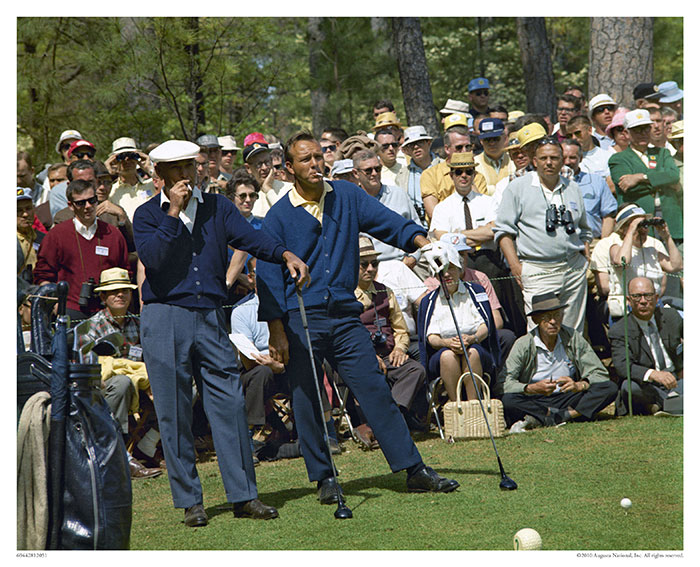
Similarly, the public scrutiny that Woods' private life is currently enduring exceeds anything that a major sports figure has ever had to deal with (the Woods affair has been on the front page of the New York Daily News for the past ten days straight!). Arnold Palmer -- a far more charismatic sportsman than Woods who is one of the few to rival Woods' wealth and business empire -- candidly admitted several years ago that, during his early days of success on the Tour, he had been less than completely faithful to his beloved late wife, Winnie. Although Palmer was never as indiscrete or arrogant as Woods has been, Palmer was also never subjected to the type of media scrutiny that Woods has endured. The media simply handled such things differently in Palmer's heyday.

Moreover, Woods has been unfairly criticized for his behavior since the scandal broke open on the early morning after Thanksgiving. As I noted on Twitter on the Sunday morning after his early Friday morning car wreck, Woods' silence has been absolutely essential and appropriate to the protection of his family and himself. Although none of us know what really happened leading up to Woods' car wreck, Woods and his wife clearly faced at least the distinct possibility of serious criminal charges.

Under those circumstances, any competent lawyer would have advised Woods and his wife to refrain from saying anything to the police or publicly, as many public relations "experts" were proposing that they do. The bottom line is that Woods has done -- and continues to do -- the right thing by remaining silent.

On the other hand, Woods and his business team have their work cut out for them in attempting to stem the damage to the billion dollar Woods business empire resulting from the affair and the societal reaction to it. Woods' main sponsors have stood by him so far, and I suspect that Nike -- his main sponsor from the beginning of his career -- will continue to support him.

But that Woods' sponsors are staying with him now does not mean that they are going to renew their contractual arrangements with him.

You see, Woods has earned most of that billion dollar net worth by parleying his nearly unrivaled record of excellence on the golf course to sponsors who have wanted to associate with that excellence.

What will those sponsors do -- particularly in fast-changing and dynamic advertising markets -- when excellence they previously associated with has been transformed into a joke?

That, my friends, is literally uncharted territory.

Finally, in one key respect, Woods' ordeal is similar to the one that former federal district judge Sam Kent endured over the past couple of years.

That is, how did the life of one of the most phenomenal athletes of our time come to this?

Where were Woods' "friends" who knew about his risky behavior and his thinly-veiled insecurities that were manifested in such behavior?

Why did these "friends" not intervene and help him before it was too late?

The reality is that Tiger Woods may not have any real friends.

And that might just be the saddest tragedy of this entire sordid affair.

Posted by Tom at 12:01 AM | Comments (2)

December 8, 2009

Society's New Lepers

Leper colony The increasingly draconian nature of child pornography laws in the U.S. has been a frequent topic on this blog over the years.

In an effort to punish child predators, the laws have become so broadly interpreted and enforced that many citizens have become branded as child predators and forced to serve long prison sentences merely as a result of viewing child pornography.

Even after serving severe sentences, the victims of this modern day witch hunt are demonized further by being branded as child predators for life and prevented by law from living in anything but the least desirable neighborhoods in many communities.

As this NPR/All Things Considered article (H/T Doug Berman) explains, a Florida minister is trying to do something constructive for the society's new lepers:

More than 20 states, including Florida, limit where convicted sex offenders can live — keeping them away from schools, parks and other places where children congregate.

In Miami, dozens of homeless sex offenders live under a bridge because there are few, if any, options nearby. But 90 miles away, there's a community dedicated to housing sex offenders. [.  .  .]

This is the church at Miracle Park, a community mostly made up of sex offenders. Dick Witherow is their pastor. [.  .  .]

Witherow once had a ranch for sex offenders in Okeechobee County. But zoning law changes forced that facility to close. His search for another spot brought him here, to a small community he renamed Miracle Park. It's a collection of duplexes about 3 miles east of the town of Pahokee, in rural Palm Beach County.

It's surrounded on every side by sugar cane fields. About 40 of those living there now are sex offenders. [.  .  .]

Witherow has authored a book about sex offenders called The Modern Day Leper. He says he could have worn the same label as the men at Miracle Park. He was 18 years old when he met his first wife. She was just 14, and before long she was pregnant. A judge allowed them to get married but told Witherow he could have been charged with statutory rape.

"If that would have happened in today's society, I would have been charged with sexual battery on a minor, been given anywhere from 10 to 25 years in prison, plus extended probation time after that, and then been labeled a sex offender," he says.

Witherow knows that there are those who argue that's what should have happened.

Something to think about during a season that celebrates the birth of a savior who embraced the lepers of his day.

Posted by Tom at 12:01 AM | Comments (0)

December 7, 2009

2009 Weekly local football review

Kubiak (AP Photo/Stephen Morton; previous weekly reviews for this season are here)

Texas Longhorns 13 Nebraska 12

Has any team ever gone through an undefeated season and been in position to win the national championship with a more unimpressive offensive line than 2nd-ranked Texas (13-0)?

If there has been one, I can't remember it.

Nevertheless, the Horns overcame an inspired Nebraska (9-4) effort and a serious brain fart in the closing seconds to win the Big 12 Championship game and set up another Rose Bowl BCS Championship Game, this time with SEC champ, Alabama (13-0).

After their only truly bad game of the season last week against the Texas Aggies, the salty Texas defense reappeared just in time to bail out the Horns out. It didn't hurt Bthat the Huskers' offensive line is worse than the Longhorns' line.

Bama opened as a four point favorite over the Horns in the national championship game, but Texas has a reasonable chance to pull off its second national championship in five years. The initial line is a bit skewed by the Tide's impressive win over Florida (12-1) and the Horns' difficulties against Nebraska, but Bama has had its own consistency problems this season. Plus, a dynamic of such big games is that there often is a psychological advantage to the team playing as an underdog.

I expect the game to be close with the Horns having a reasonable chance of pulling it out if they can control Bama's punishing ground game and figure out some way of giving Horns' QB Colt McCoy enough time to distribute the ball to Texas' talented group of receivers.

But in the meantime, Bama's defensive front will be licking their chops to get after Texas' offensive line. Thank goodness for Texas that Bama doesn't have Nebraska DT Ndamukong Suh.

East Carolina 38 Houston Cougars 32

In a game that was as entertaining as the Texas-Nebraska game was not, the Cougars (10-3) spirited comeback effort in the Conference USA Championship game was snuffed out in the final minute as QB Case Keenum's pass bounced off his receiver's shoulder in the end zone and into the hands of an East Carolina (9-4) safety.

The teams were evenly matched and neither team's defense could consistently stop the other's offense. So, the game came down to turnovers, and the Cougars had three more (4) than the Pirates (1). The most costly one was bad throw that Keenum made at the beginning of the 4th quarter that was intercepted to set up the Pirates' TD that extended the lead to 11.

But not widely reported in the mainstream media is the fact that an outrageously horrendous call by the officiating crew led to one of the interceptions and may well have cost the Cougars the game.

While leading 13-7 and driving deep in East Carolina midway through the 2nd quarter, the Cougars quick-snapped while the Pirates' defense had at least 13 players on the field. Thinking that he had a "free" play because of the obvious penalty, Keenum threw the ball into the end zone trying for a TD, but the ball was intercepted. No problem though because of the penalty, right?

Not so fast. Not only did the officiating crew not throw a flag on the play, they ignored the clear video evidence (it's a reviewable call) of 13 Pirate defenders on the field when UH Coach Kevin Sumlin challenged the call on the field.

So, rather than Houston having the ball deep in Carolina territory ready to go up 20-7, the officials gave the Pirates the ball first and ten on their 20.

ESPN commentators Ron Franklin and Gary Cunningham were incredulous over the blown call. To make matters worse, the officiating crew proceeded to call at least two other "too many men on the field" penalties on the Pirates' defense at much less important stages of the game. Go figure.

As usual, Keenum was again phenomenal (56/75 for 527 yds/5 TD's/3 INT) and cemented his performance this season as one of the greatest of any QB in NCAA history.

Also, Houston WR James Cleveland came back from an injury that had sidelined him the past two games to catch an incredible 19 passes for 241 yds and 3 TD's.

Due to Conference USA's poor bowl tie-ins, the Cougars are again slated to play Air Force (7-5) this bowl season in the Armed Forces Bowl in Ft. Worth on New Year's Even afternoon. The game will be a replay of Houston's win over Air Force in last season's game.

There are a bunch of teams in bigger bowl games that are glad that they don't have to play this Houston team.

Jaguars 23 Texans 18

Does this sound familiar?

The Texans (5-7) start lethargically, fall far behind, battle back gamely, but ultimately shoot themselves in the foot and lose.

Key note to Coach Kubiak -- Chris Brown does not remind anyone of Paul Hornung on the halfback pass play.

The Texans begin playing out their eighth straight string next Sunday at Reliant Stadium against Seattle (4-7). My over/under for actual attendance -- 40,000.

Finally, the Texas Aggies (6-6) will play Georgia (7-5) in Shreveport's Independence Bowl on the evening of December 28th.

Posted by Tom at 12:01 AM | Comments (3)

December 6, 2009

"I hate rude behavior in a man. Won't tolerate it."

Lonesome Dove Below is the latest In the continuing series of excellent scenes (previous here and here) from the outstanding television mini-series of Larry McMurtry's Pulitzer Prize-winning novel, Lonesome Dove.

In this one, Tommy Lee Jones as Capt. Woodrow F. Call delivers one of the most frightening beatings in the history of cinema to a scout for a U.S. Army troop who attempts to take by force a horse from one of Call's men. That's Houston's Danny Kamin playing the part of the U.S. Army Captain who directs his men to gather up what's left of the scout after Call is done with him.

The title to this post -- which is Call's brief post-beating explanation to the dumbfounded townsfolk of the reason for his rather drastic action -- is my wife's and my favorite line from the movie.

Posted by Tom at 12:01 AM | Comments (2)

December 5, 2009

Opera Krispies

As noted several times over the years, some of the most creative product generated for television are commercials. And as this Rice Krispies commercial from the 1960's reflects, creativity in commercials is not a new phenomena.

Posted by Tom at 12:01 AM | Comments (0)

December 4, 2009

Shelby Foote

I would enjoy listening to the late Shelby Foote reading a phone book.

Posted by Tom at 12:01 AM | Comments (0)

December 3, 2009

"He's got enough cotton in his mouth to knit a sweater"

Lee Trevino - PGA That's how Lee Trevino describes a golfer who is choking under pressure.

But as noted in this outstanding Jaime Diaz/Golf Digest interview of the now 70 year-old Trevino, Merry Mex didn't choke much during his career on the PGA Tour.

Winner of 29 Tour events, Trevino won six majors (Jack Nicklaus finished in second place in four of them!) and probably would have won several more had he not been badly injured by an on-course lightning strike in 1975. After Ben Hogan and Byron Nelson, there has been no better Texas golfer than Lee Trevino.

Trevino remains a genuine character. Here are a few gems from the interview:

On Jack Nicklaus:

"In those days, when Jack parked his car he was already four under."

On handling tournament pressure:

"Pressure was never really there for me.  .  .  . Where I came from, and where I'd gotten, I was playing with house money."

Who is better? Jack or Tiger?:

"[T]o answer your question—and I bite my lip every time I say this—Tiger's better."

On winning the 1984 PGA at Shoal Creek:

Going into the last round, on the practice putting green, I broke everyone up.

Herman [Mitchell, Trevino's longtime caddy] has got the gout, he's in a bad mood, and we're walking to the first tee, and some guy in the gallery yells at me:

"What do you feed that caddie?"

I look at the guy and say: "Rednecks!"

And Herman says: "And I'm getting hungry, too!"

Posted by Tom at 12:01 AM | Comments (1)

December 2, 2009

"But not me"

kurt-vonnegut My favorite novel of the late Kurt Vonnegut is Slaughterhouse Five, the haunting, semi-biographical story of a U.S. prisoner-of-war who endured the Allied fire-bombing of Dresden, Germany near the end of World War II.

I was reminded of Vonnegut and his fine novel by one of the most interesting sites that I've come across this year -- Letters of Note, which passes along "correspondence deserving of a wider audience."

This Letters of Note post provides Vonnegut's first letter to his parents that got through to the U.S. after he had been captured by the Nazis in 1944 and then freed by the Russians in 1945. It is a fascinating tale of his capture, the suffering he and his fellow prisoners endured as POW's, and his almost as harrowing repatriation.

An appropriate story to reflect upon as our federal government commits even more of our soldiers to a far off land.

Posted by Tom at 12:01 AM | Comments (1)

December 1, 2009

Kay Bailey's health care finance confusion

Kay Bailey What exactly is Texas Senator Kay Bailey Hutchison's political appeal?

She has never seemed to me to have a particularly good grasp of even basic issues. But I never dreamed that she actually supported universal health insurance even while mimicking the GOP party line against such a mandate all these years.

Uwe Reinhardt provides the Senate subcommittee context for Hutchinson's revelation:

[Hutchison] was proposing that women should not have to decide between spending $250 of their own money to get a mammogram or go without it, and that the key here is to get someone else — either public or private health insurance — to pay for it.

I cannot recall a clearer statement of unreserved support for universal and comprehensive health insurance for America and a more straightforward definition of rationing health care.

I am sure that she would extend her remarkable dictum on rationing to cover routine screening for other cancers as well — e.g., to colonoscopies for colon cancer, to P.S.A. tests and biopsies for prostate cancer or to regular examinations for thyroid cancer.

Furthermore, I would assume that her concern for timely medical attention extends even beyond cancer to the prevention of all serious illnesses — e.g., the control of blood pressure for Americans with hypertension through drug therapy or the prevention of diabetes.

In a nutshell, whether she realized it or not, hers is a clear clarion call for comprehensive, universal health insurance in America.

I don't agree with Senator Hutchison's viewpoint regarding universal coverage. However, I understand it and acknowledge that it's not an unreasonable position. I just don't think it's the best way to control the cost of health care services and products.

But why isn't she honest about her true position?

Posted by Tom at 12:01 AM | Comments (3)